
Ingredient Portrait
Jojoba oil skin – wax that works with you
Jojoba oil is not a regular oil, and that is exactly why people keep coming back to it. It comes from simmondsia chinensis seeds and is made mostly of wax esters that resemble the skin’s own sebum. For some skin types, that makes it a neat way to support balance without feeling heavy or greasy.

Why does jojoba oil skin feel so different?
Jojoba is technically a liquid wax, not a classic plant oil. Its main building blocks are wax esters, not triglycerides, which gives it a different texture, better oxidative stability, and a feel that often sits closer to skin lipids than many conventional oils. Its comedogenic factor is generally considered low, but skin is not a spreadsheet.
Mechanistically, jojoba can form a light, breathable film that helps reduce the sensation of tightness and supports the skin barrier. When skin is stripped by harsh cleansing or over-exfoliation, that matters. The goal is not to smother skin, but to give it enough lipid support to stop panicking and overcompensating.
Mainstream skincare often treats skin like it needs to be scrubbed into submission. Jojoba takes a less aggressive route: more sebum-like, less noisy. If your skin likes it, great. If it doesn’t, there is no prize for forcing a “perfect” routine around a single trendy ingredient.
How to use jojoba well
Start with two drops
Warm 2–3 drops between your palms and press onto slightly damp skin. That is often enough to get the balancing effect without making your face feel coated.
Use it as the last step
Apply jojoba at night as your final layer, or mix one drop into your cream. It helps seal in moisture without the heavy feel people associate with richer oils.
Patch test first
If you are clog-prone, test it on one area for 1–2 weeks before using it all over. Low comedogenic factor is useful, but your skin gets the final vote.
Dial down the cleansing
If your skin feels tight after washing, the problem may be the cleanser, not the lack of actives. Switch to a gentler routine and see whether jojoba becomes more useful.
Use on dry patches
For flaky areas, 1–2 drops after serum or cream can be enough. Jojoba tends to work best when skin is already lightly hydrated and needs help holding onto that water.

How to actually get skin back on track
Jojoba oil can be a smart add-on if your skin likes a sebum-like touch. It is especially useful when you want less tightness and fewer signs that your routine is fighting your face. But it works best as part of a calmer routine, not as a fix for everything skincare has overdone.
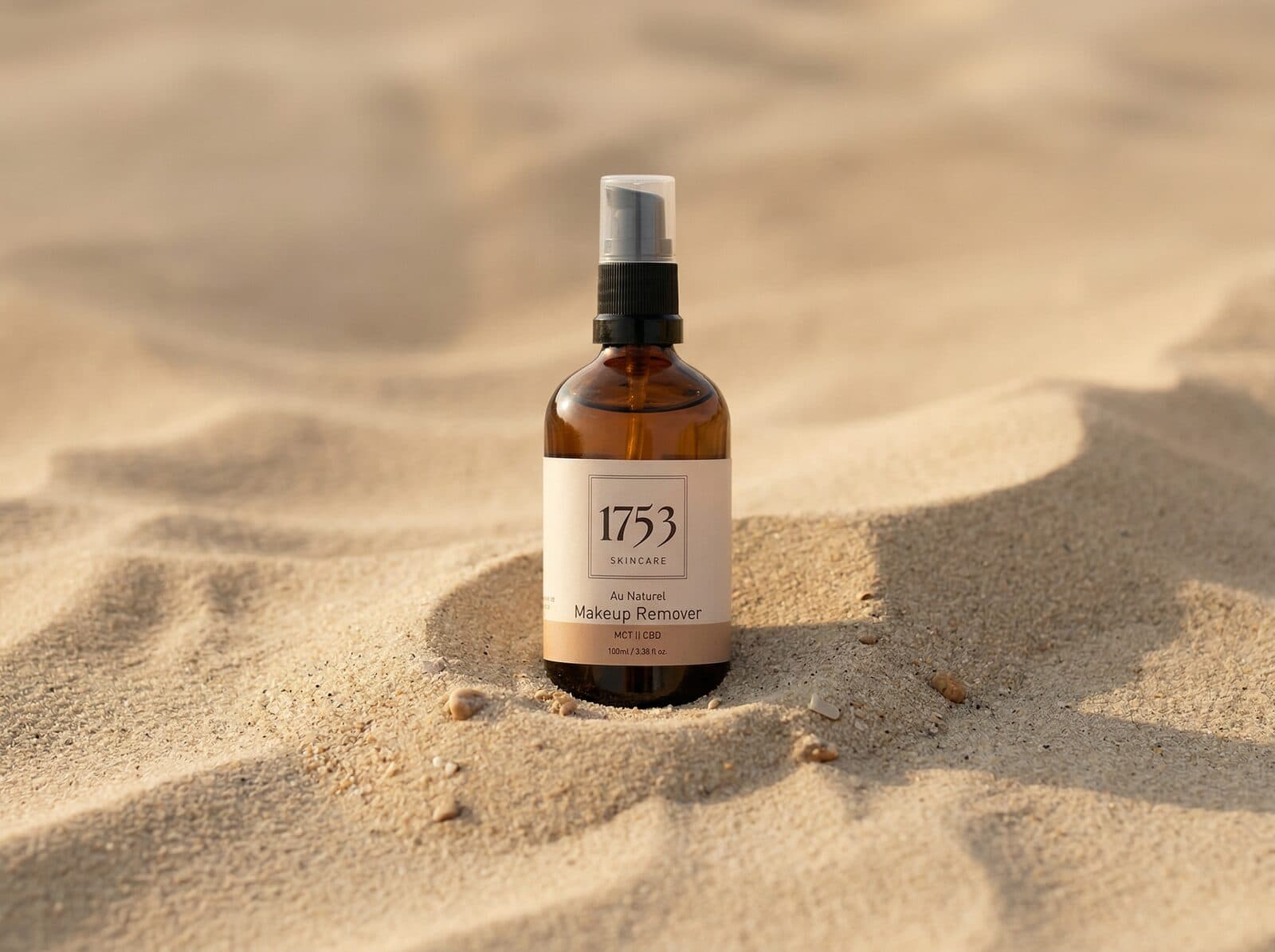
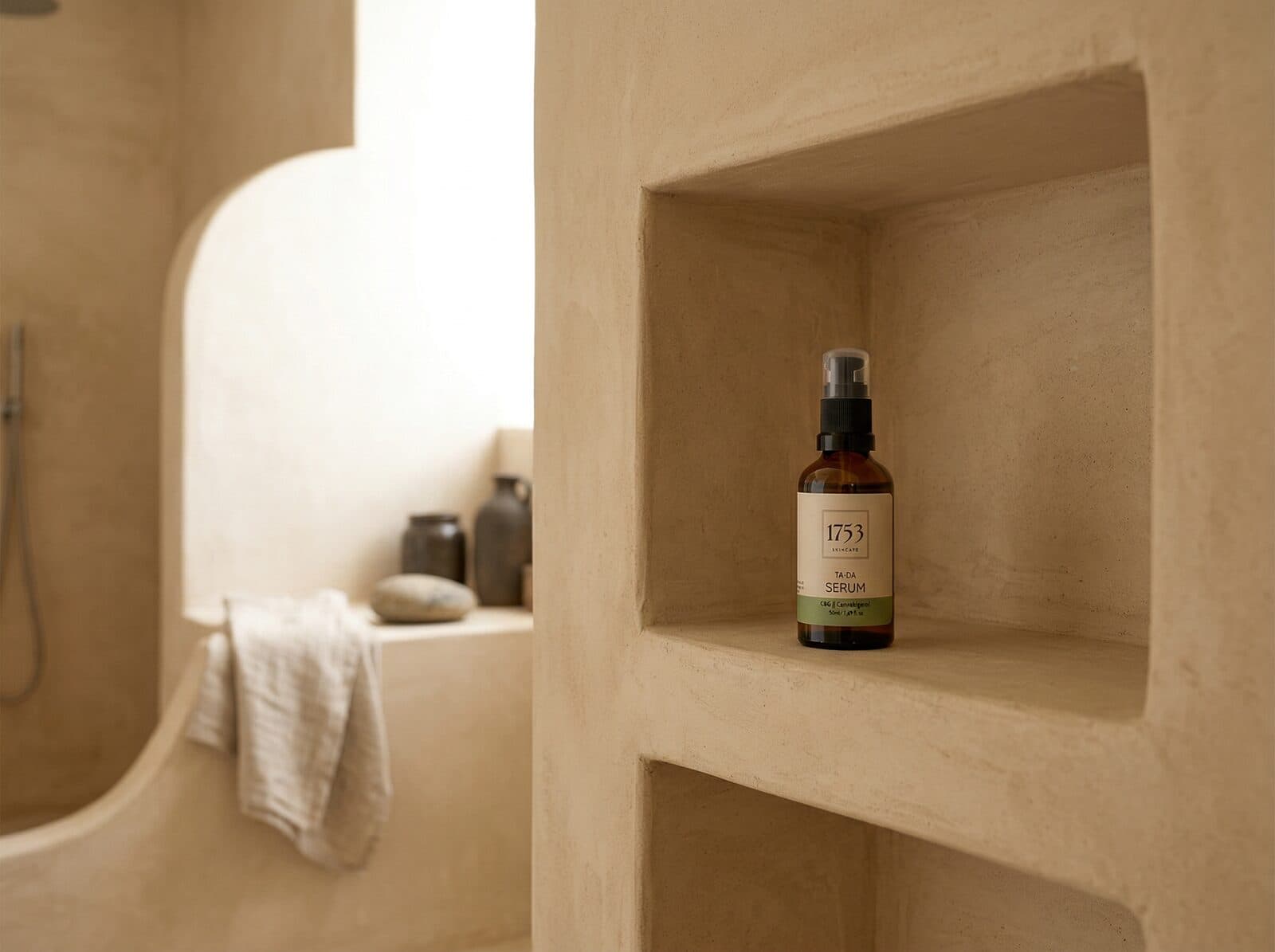
At 1753, we often choose a different route. Au Naturel Makeup Remover uses MCT instead of jojoba for gentle cleansing that does not leave skin in a greasy mess. If you want post-cleanse support, The ONE helps regulate the skin, while I LOVE is the soothing CBG serum for skin that gets irritated or feels out of sync. Jojoba can absolutely complement that setup if your skin tolerates it.
The real win is not piling on more steps. It is choosing the right kind of lipid support in the right amount. If jojoba oil skin is your thing, use it with intention. If not, a simpler cannabinoid-led routine may do the job with less guesswork and less clutter on the shelf.
Frequently asked questions
Is jojoba oil good for all skin types?
Not always, but it often suits combination, dehydrated, or slightly imbalanced skin. Because it resembles sebum, many people find it lightweight and easy to wear, though personal tolerance matters more than ingredient hype.
Is jojoba oil comedogenic?
It is usually considered low on the comedogenic scale, but that is not a guarantee. If you clog easily, patch test first and give it a couple of weeks before deciding.
How is jojoba different from a normal oil?
Jojoba is actually a liquid wax made of wax esters from simmondsia chinensis. Most plant oils are triglycerides, so jojoba tends to be more stable and often feels more skin-like.
Can I use jojoba with 1753 products?
Yes, if your skin likes it. Some people add jojoba on top of a serum or facial oil, but Au Naturel already handles gentle cleansing with MCT, and The ONE plus I LOVE cover a lot of ground for balance.
Sources
- Oláh A, Tóth BI, Borbíró I, et al. Cannabidiol exerts sebostatic and antiinflammatory effects on human sebocytes. J Clin Invest 2014;124(9):3713–3724.
- Lin TK, Zhong L, Santiago JL. Anti-Inflammatory and Skin Barrier Repair Effects of Topical Application of Some Plant Oils. Int J Mol Sci 2017;19(1):70.
- Tóth KF, Ádám D, Bíró T, Oláh A. Cannabinoid signaling in the skin: therapeutic potential of the c(ut)annabinoid system. Molecules 2019;24(5):918.
Article reviewed by Christopher Genberg, founder of 1753 SKINCARE.
Related articles
Ingredient Portrait
squalane for skin – the stable cousin
Squalane is one of those ingredients that doesn’t shout, but often makes skin feel calmer and more c...
Ingredient Portrait
cbd for skin – less noise, more balance
CBD for skin is interesting because it doesn’t try to bully the skin into behaving. It works with th...
Ingredient Portrait
cbg for skin – the mother cannabinoid that calms and renews
CBG usually lives in CBD’s shadow, but skin can tell the difference. This is the cannabinoid that ma...
Skin Streaming
Minimalist 5 step routine – why less can do more
Skincare has become too much of everything: too many steps, too much exfoliation, too much cleansing...
CBG Skincare
CBG for acne – the mother cannabinoid your skin deserves
You've tried everything – cleansers, acids, antibiotics. But have you tried giving your skin what it...
CBG Skincare
CBG for dry skin – build a barrier that holds
Dry skin is rarely about not drinking enough water. It's about a barrier that leaks. CBG helps the s...