
Skin Conditions
Sensitive skin treatment – for those who react to everything
You've tried everything. Hypoallergenic, fragrance-free, dermatologically tested – and your skin still reacts. Sensitive skin isn't about finding the right product. It's about understanding why your skin is sensitive in the first place.

Why is your skin so sensitive?
Sensitive skin isn't a diagnosis – it's a symptom. An estimated 60–70 percent of women and 50 percent of men describe their skin as sensitive, but behind the label lie different causes. Weakened skin barrier, overuse of active ingredients, undiagnosed rosacea, or contact allergy – all produce similar symptoms.
Modern beauty ideals have created a paradox. We bombard our skin with acids, retinol, vitamin C serums, niacinamide, peptides – all in pursuit of perfection. The result? Skin becomes thinner, more sensitive, and more reactive. The phenomenon has a name: over-exfoliation and compromised skin barrier. Ironically, products meant to improve the skin make it worse.
Sensitive skin needs one thing above all: to be left alone. Fewer products, gentler ingredients, and time to recover. The barrier must be given a chance to rebuild before you add anything new.
Principles for sensitive skin
Simplify your routine drastically
If you're using more than three products a day, you might be using too many. Scale back to cleanser, one treatment oil, and sunscreen. Let your skin breathe.
Stop exfoliating
Sensitive skin doesn't need more exfoliation – it needs the exact opposite. Pause all acids and physical scrubs for at least four weeks and see what happens.
Test one product at a time
Introduce new products at least a week apart. If you change everything at once, you'll never know what helped or what irritated.
Avoid fragrance consistently
Perfume – natural or synthetic – is the most common cause of skin irritation. Read ingredient lists and avoid anything with fragrance, parfum, or essential oils high on the list.
Listen to your skin, not trends
Just because everyone is talking about retinol or AHA acids doesn't mean your skin needs them. Sensitive skin has its own rules – respect them.

Gentle cannabinoids that build resilience
The endocannabinoid system controls the skin's pain signaling, inflammatory response, and barrier function. Sensitive skin often has a dysregulated ECS, causing normal stimuli – temperature changes, products, touch – to be perceived as threats.
TA-DA Serum with concentrated CBG is our gentlest and most targeted product. CBG has been shown to modulate pain signals in the skin and calm overactive nerve endings without numbing. That's precisely what sensitive skin needs – not a wall against the outside world, but a better toolkit to handle it.
DUO TA-DA and Au Naturel Makeup Remover complement with CBD support and gentle cleansing. All without fragrance, alcohol, SLS, or other known irritants. Every ingredient earns its place – nothing superfluous, nothing provocative.
Products we recommend
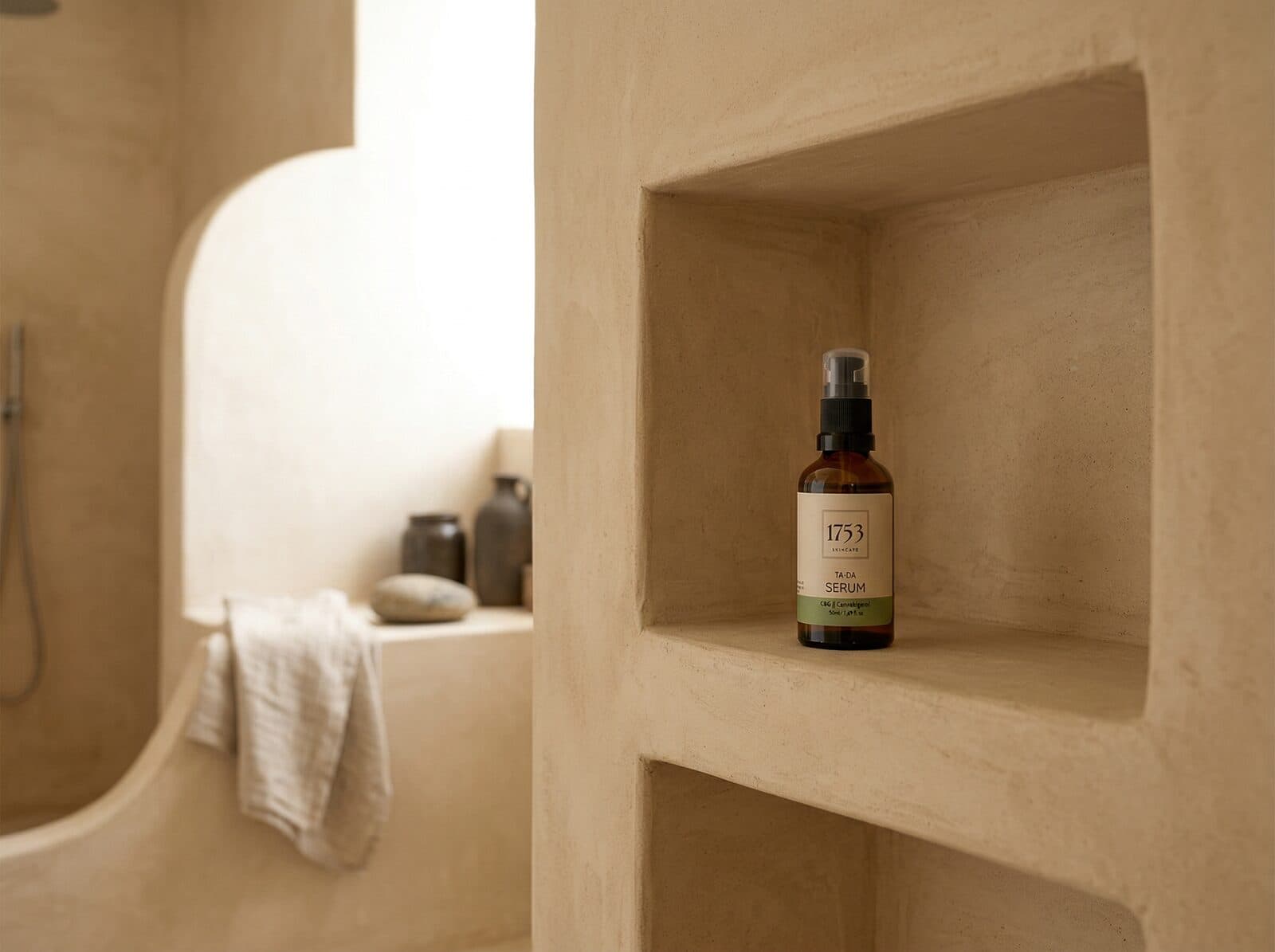
TA-DA Serum
A CBG-powered serum that seals in moisture and adds glow, whatever the season.
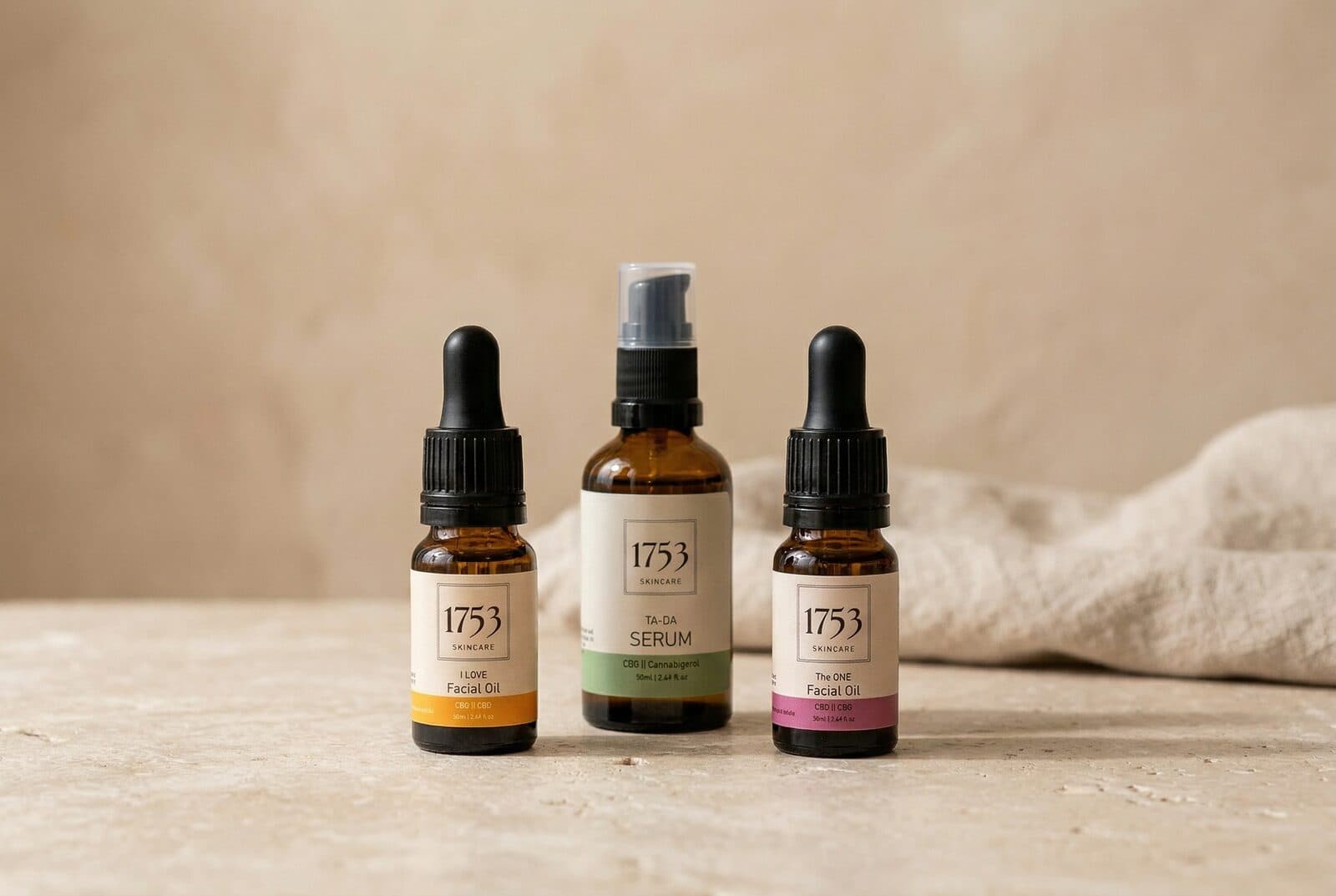
 Save €60
DUO kit + TA-DA Serum
The full routine in one: three products that help skin become calmer, stronger and more resilient.
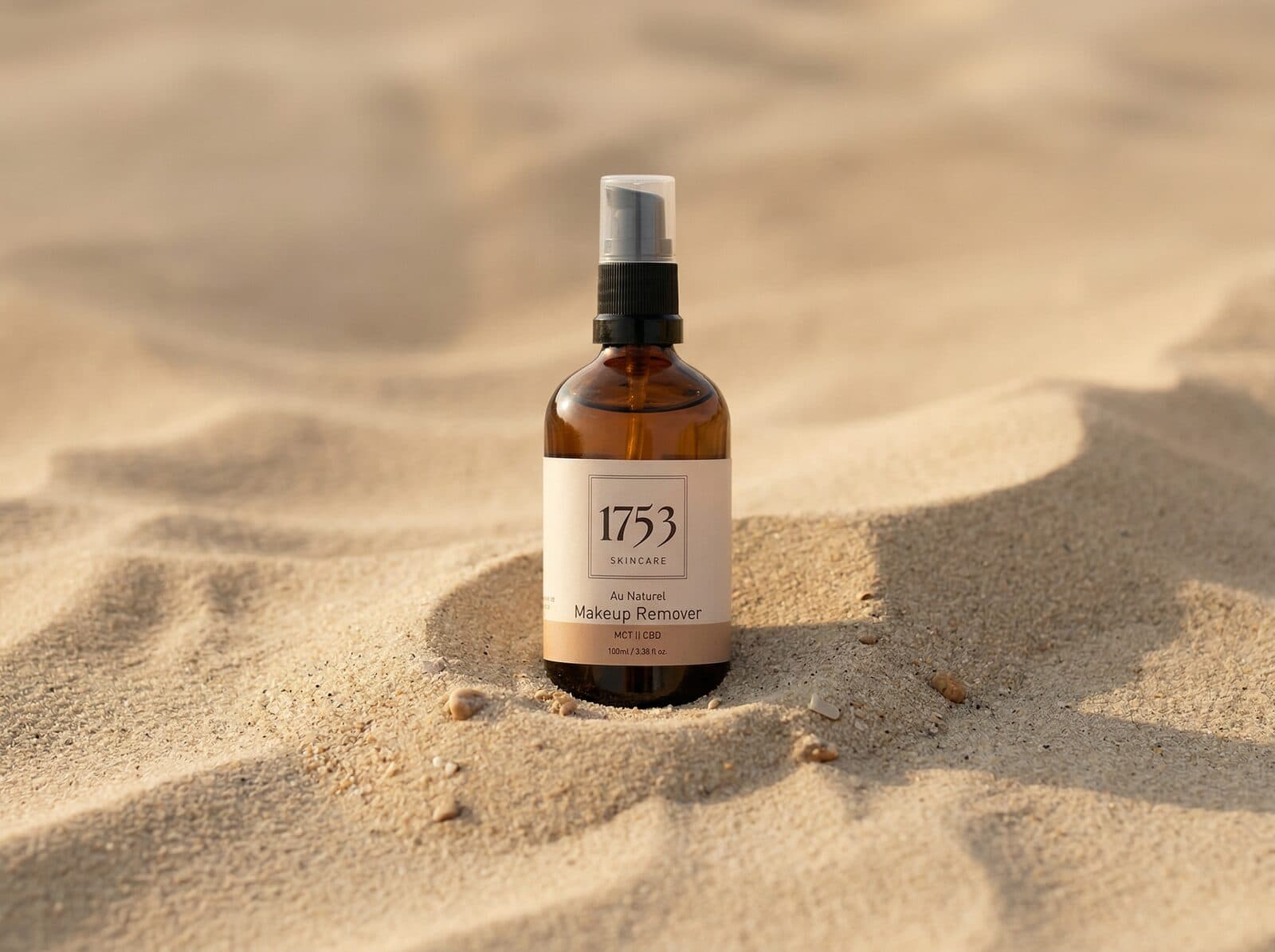
Au Naturel Makeup Remover
A cleansing oil with MCT and CBD that removes makeup and buildup without stripping your skin bare.
Frequently asked questions
How do I know if I have sensitive skin or just a damaged barrier?
If your skin has become more sensitive over the years, especially after intensive skincare routines, it's likely barrier damage. Truly sensitive skin tends to have been reactive since childhood. Regardless of cause, the treatment is the same: simplify and strengthen.
Could I react to CBD products?
It's uncommon but not impossible. Always do a patch test on the inside of your forearm 24 hours before applying to your face. Our products have minimal ingredient lists specifically to minimize risk.
How long does it take to build tolerance?
The skin barrier typically needs 4–6 weeks of consistent, gentle treatment to repair. During that time, it may feel like nothing is happening – but it is, beneath the surface.
Do I need to stop all other products?
Not necessarily, but we recommend scaling back to a minimum during the recovery phase. Once the barrier is strengthened, you can cautiously introduce other products one at a time.
Sources
- Byrd AL, Belkaid Y, Segre JA. The human skin microbiome. Nat Rev Microbiol 2018;16(3):143–155.
- Salem I, Ramser A, Isham N, Ghannoum MA. The Gut Microbiome as a Major Regulator of the Gut-Skin Axis. Front Microbiol 2018;9:1459.
- Lin TK, Zhong L, Santiago JL. Anti-Inflammatory and Skin Barrier Repair Effects of Topical Application of Some Plant Oils. Int J Mol Sci 2017;19(1):70.
Article reviewed by Christopher Genberg, founder of 1753 SKINCARE.
Related articles
Skin Condition
Melasma treatment – why the patches keep coming back
Melasma is not just “a bit of pigmentation.” It’s the skin reacting to hormones, UV and sometimes ev...
Skin Barrier
Restore Skin Barrier – stop stripping, start rebuilding
A damaged barrier is rarely a mystery. More often, the stratum corneum has lost its mortar-model bal...
Skin Condition
Keratosis pilaris – why skin turns bumpy
Tiny bumps on the upper arms, thighs, or buttocks are not proof that your skin is failing. Keratosis...
Lifestyle & Skin
Sun protection and skincare – the only anti-aging you truly need
UV radiation accounts for up to 80 percent of visible skin aging. Wrinkles, dark spots, sagging – th...
Skincare Routine
Best skincare routine – your skin needs less than you think
The skincare industry wants you to believe you need ten steps, twelve products, and half an hour in ...
Evening Routine
Evening skincare routine – give your skin the best conditions to repair
While you sleep, your skin works at full capacity. Cell renewal accelerates, blood flow increases, a...