
V-ZONE
decolletage sun – the age clue we miss
We watch our face closely, but decolletage sun often gives the game away first. The skin in the V-zone is thinner, has fewer sebaceous glands, and faces cumulative UV day after day. The result is texture, unevenness, and that tired surface people try to cover instead of understand.

Why does the décolletage age so fast?
Skin anatomy is not kind to this area. The décolletage has thinner skin than the face, less protective sebum, and often poorer circulation than people assume. That makes it more vulnerable to photoaging: collagen breaks down, elasticity drops, and fine lines show up earlier.
UV exposure is not just a summer issue. Cumulative UV damage builds over time, through clouds, car windows, and everyday walks. Research consistently shows that repeated low-level sun exposure changes both texture and tone long before the skin feels “sun damaged”.
Yet the area is often treated as if it could handle the same harsh routines as the forehead. Strong cleansing, aggressive exfoliation, and too many actives can leave the surface drier and more reactive. If you want to understand decolletage sun, start with anatomy, not with another brutal step.
Practical ways to protect it
Cleanse gently
Treat the décolletage like delicate skin, not a surface to scrub clean. A gentle cleanse protects the barrier and helps prevent that tight, dry feel that makes texture more visible.
Extend your routine
What you apply to the face often belongs on the neck and chest too. Think in zones, not in product categories. This skin has fewer sebaceous glands and needs less drama, not more.
Reduce sun exposure
Shade, clothing, and daily SPF do more against cumulative UV than occasional damage control. The V-zone gets plenty of indirect sun while driving, sitting outside, or moving through the day.
Use fewer actives
The décolletage rarely benefits from being overtreated. If the skin already feels thin or rough, strip back the extras and let the barrier settle for a while.
Play the long game
Photoaging builds over years, not weekends. Small daily habits beat big panic moves, especially in areas like the V-zone where texture changes show up early.

How to actually care for it
The smartest response to decolletage sun is to stop overcomplicating the area. A gentle cleanse with Au Naturel Makeup Remover is enough when the skin only needs to remove sunscreen, sweat, and the day without being stripped bare. On sensitive body areas, less usually does more.
After cleansing, The ONE works beautifully as a simple, skin-regulating face oil across the décolletage too. Small drops go a long way on skin with a thinner barrier and lower sebum output. It helps the area feel softer and more balanced without turning your routine into a shelf of extras.
If you want a routine that actually makes sense, think: cleanse gently, hydrate lightly, protect from UV, and leave the skin alone. For some, the DUO kit is the natural next step when balance and a fuller cannabinoid profile feel right. Not magic. Just sensible care for a zone that has spent too long being ignored.
Products we recommend
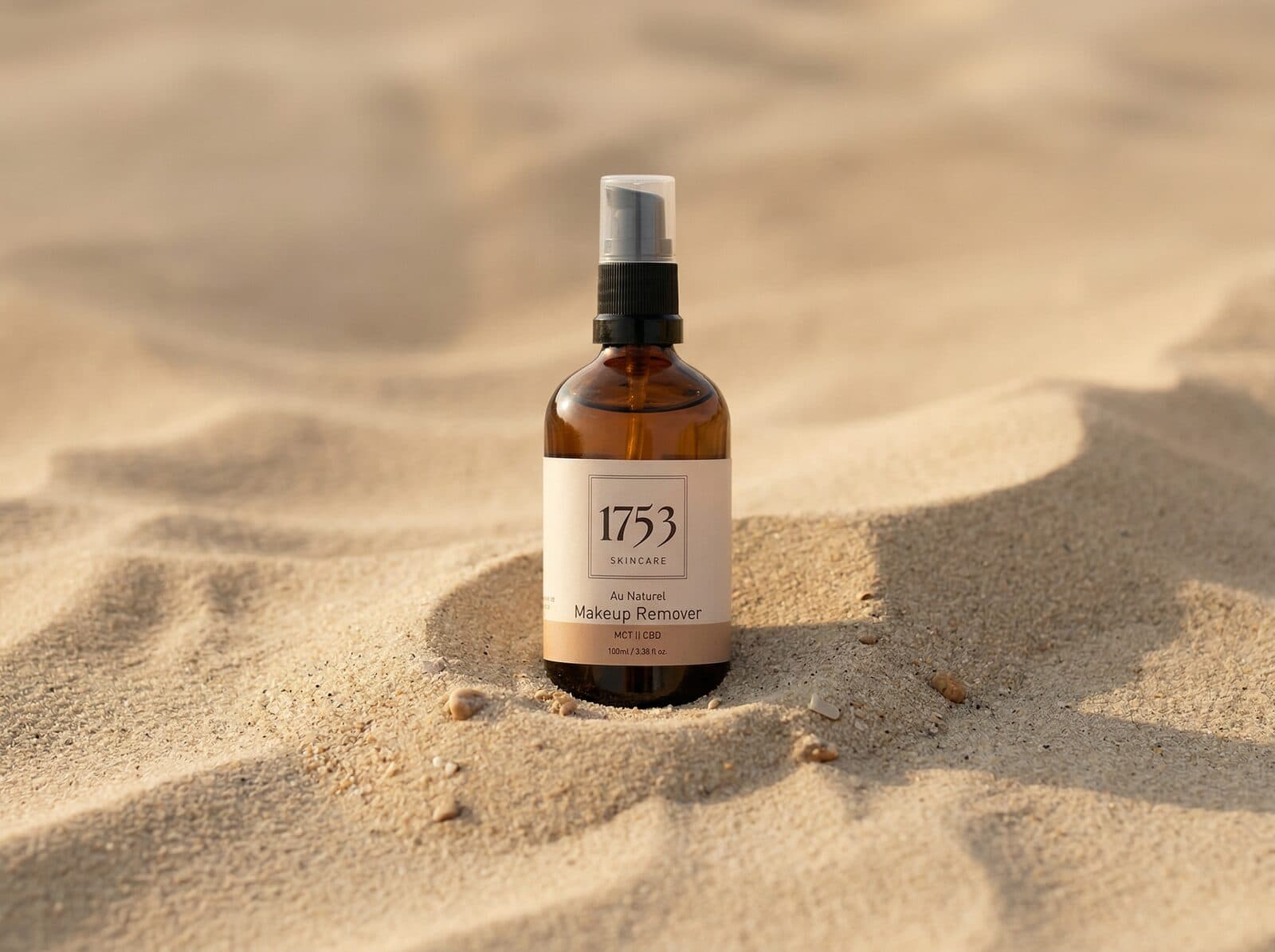

Au Naturel Makeup Remover
A cleansing oil with MCT and CBD that removes makeup and buildup without stripping your skin bare.

 Save €34
DUO kit
Two face oils, one for morning and one for evening. Simple skincare that works with your skin, not against it.
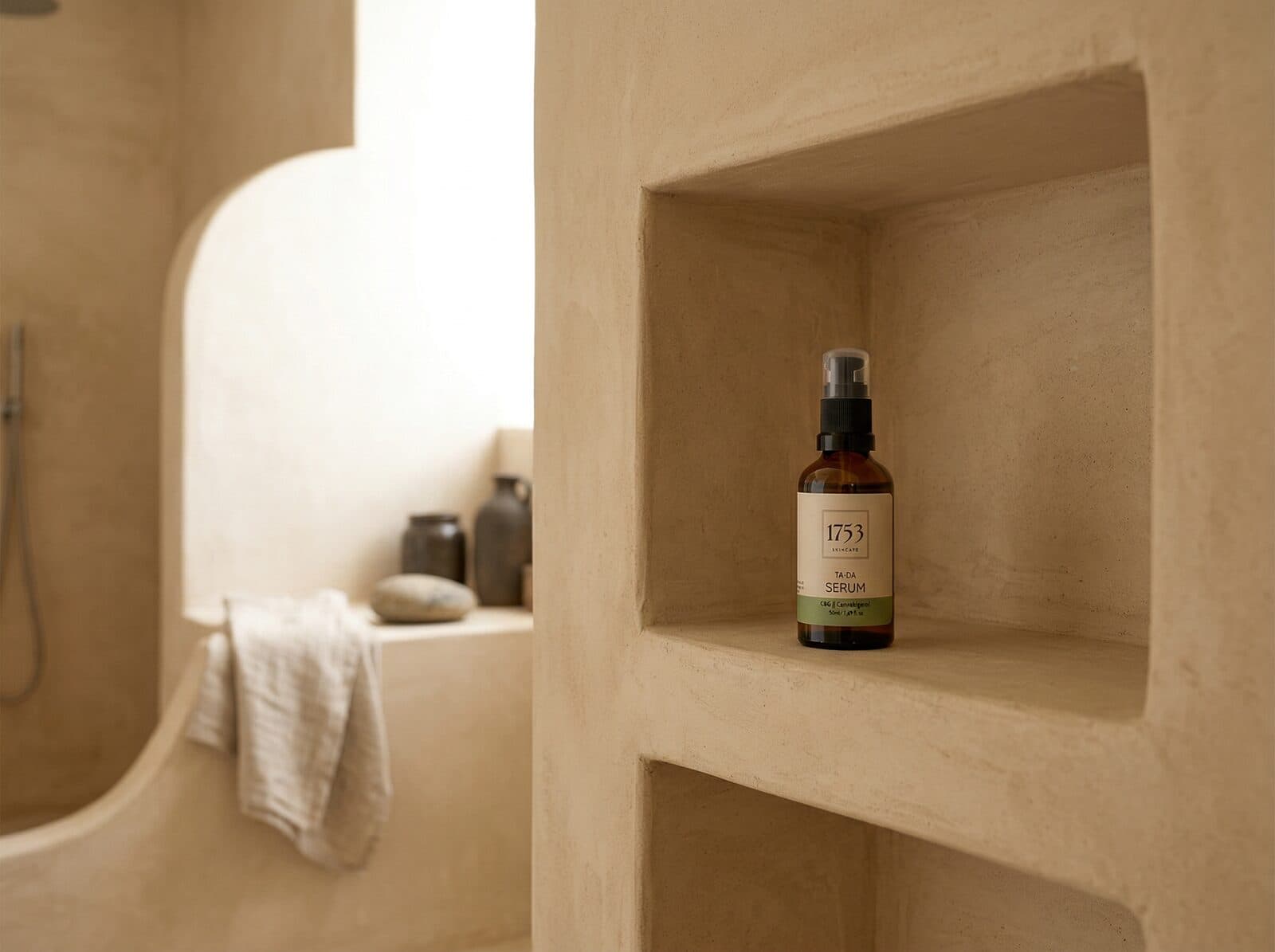

TA-DA Serum
A CBG-powered serum that seals in moisture and adds glow, whatever the season.
Frequently asked questions
Why does the décolletage show age first?
The V-zone has thinner skin, fewer sebaceous glands, and a lot of cumulative UV exposure. That combination makes photoaging appear early as texture, lines, and uneven tone.
Can I use face products on my chest?
Often, yes. The décolletage is a sensitive body area that usually benefits from the same gentle, uncomplicated products you’d use on the face.
Do I need to exfoliate the décolletage?
Not by default. If the skin is dry, thin, or reactive, harsh exfoliation is often the wrong move. Start with gentle cleansing, sun protection, and a simple routine.
How often should I protect it from the sun?
Every day the area is exposed, not just on beach days. Cumulative UV also comes from ordinary life, and that slow exposure is what leaves the deepest mark.
Sources
- Proksch E, Brandner JM, Jensen JM. The skin: an indispensable barrier. Exp Dermatol 2008;17(12):1063–1072.
- Lin TK, Zhong L, Santiago JL. Anti-Inflammatory and Skin Barrier Repair Effects of Topical Application of Some Plant Oils. Int J Mol Sci 2017;19(1):70.
Article reviewed by Christopher Genberg, founder of 1753 SKINCARE.
Related articles
Hand Care
Natural hand care – for skin that never gets a break
Your hands show everything: washing, sanitiser, wind, and UV. The skin is thin, often lower in oil g...
Foot Care
Foot care dry heels - less friction, more relief
Dry heels usually do not need harsher treatment. They need less friction, less dehydration and a rou...
Neck Care
Neck cream wrinkles – stop treating the neck like an afterthought
The neck is not just “more face.” It has thinner skin, fewer sebaceous glands and constant exposure ...
Skin Barrier
Restore Skin Barrier – stop stripping, start rebuilding
A damaged barrier is rarely a mystery. More often, the stratum corneum has lost its mortar-model bal...
Skin Condition
Keratosis pilaris – why skin turns bumpy
Tiny bumps on the upper arms, thighs, or buttocks are not proof that your skin is failing. Keratosis...
Skin Streaming
Minimalist 5 step routine – why less can do more
Skincare has become too much of everything: too many steps, too much exfoliation, too much cleansing...