
SKIN SCIENCE
CB1 CB2 receptors skin – let the skin lead for once
Skin is not a passive surface. It has its own signalling network, where CB1 and CB2 help shape calm, sebum and immune response. Once you understand that, skincare stops being about stripping harder and starts being about supporting the skin’s own logic.

Why do we keep treating skin like dirt on a surface?
CB1 and CB2 are cannabinoid receptors in the skin’s endocannabinoid system. When phytocannabinoids interact with receptor signalling, they can influence how keratinocytes mature, how sebocytes produce sebum, and how skin responds to stress. It is not magic, just layered biology.
Research from 2020–2025 suggests this system matters for barrier function and inflammatory balance. Some studies point to CB2 as especially relevant in immune regulation, including in dendritic cells, while CB1 appears more tied to sebum dynamics and the skin’s day-to-day rhythm. That makes the system interesting in oily, reactive and out-of-balance skin.
Yet mainstream skincare still leans the other way: harsh cleansing, aggressive exfoliation and constant stimulation. The problem is simple — stressed skin rarely gets calmer from being attacked again. It usually needs signals that say: slow down, reset, regulate. That is exactly where cannabinoid receptors start to make sense.
Five smarter moves
Stop over-cleansing
If your skin feels tight after washing, you have already gone too far. Choose a cleanser that lifts away debris without stripping lipids, especially if you are both shiny and sensitive.
Read skin as a system
Oiliness, redness and dehydration are often signs of dysregulation, not just “bad products”. Think less about drying skin out and more about restoring balance between keratinocytes, sebum and immune activity.
Choose calming signals
Studies on endocannabinoid mechanisms suggest skin responds better to regulation than to over-stimulation. Cannabinoid-based formulas can therefore be more relevant than yet another strong active promising fast results.
Be cautious with exfoliation
Too much exfoliation disrupts the barrier and can trigger more oil, more irritation and more reactivity. A skin that is already inflamed rarely needs more acids; it needs better recovery.
Keep the routine consistent
What often works best is simple, repeated over time. A stable routine with gentle cleansing, a skin-regulating oil and a calming serum does more for signalling than chasing trends.

How to support CB1 and CB2 in real life
If you want to work with skin signalling instead of against it, choose formulas that respect the barrier. 1753 uses phytocannabinoids from certified hemp in safer formulas: The ONE combines CBD and MCT in a skin-regulating facial oil, while I LOVE brings CBG in a calming, antibacterial serum. It is not maximalism; it is precision.
For skin that turns shiny, red or uneven too easily, The ONE can help soften the feel of overactivity, while I LOVE fits when you want to give the skin a quieter pace. Together in the DUO kit, they deliver a full cannabinoid spectrum that mirrors the idea behind CB1 and CB2: different signals are needed to keep the system balanced.
When skin feels especially stressed or aging, Ta-DA serum adds an antioxidant cocktail with CBG and adaptogens. It is the same idea, taken one step further: less noise, more regulation. You do not need to over-treat skin to see change; you need to give it better instructions.
Products we recommend
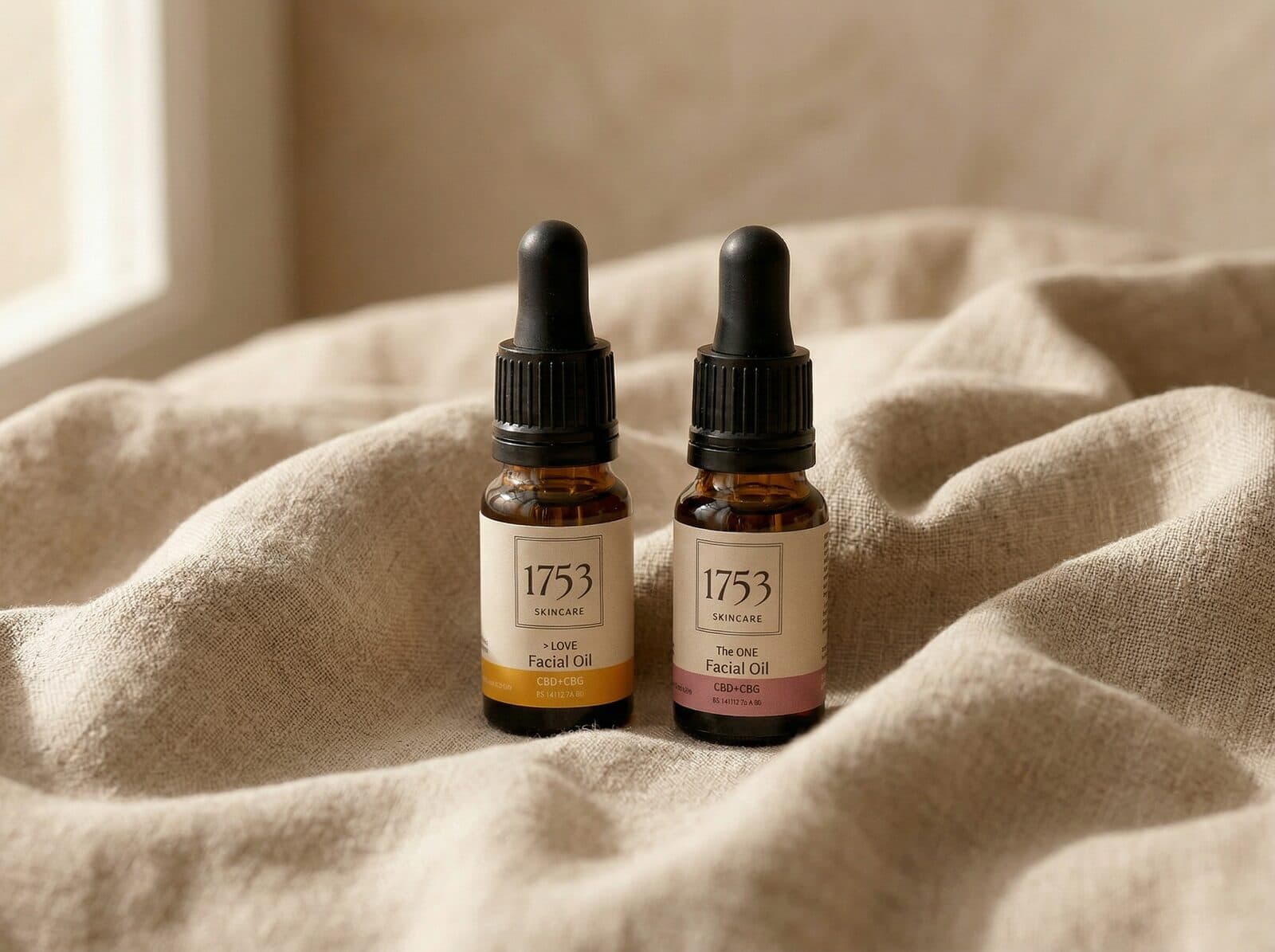
 Save €34
DUO kit
Two face oils, one for morning and one for evening. Simple skincare that works with your skin, not against it.
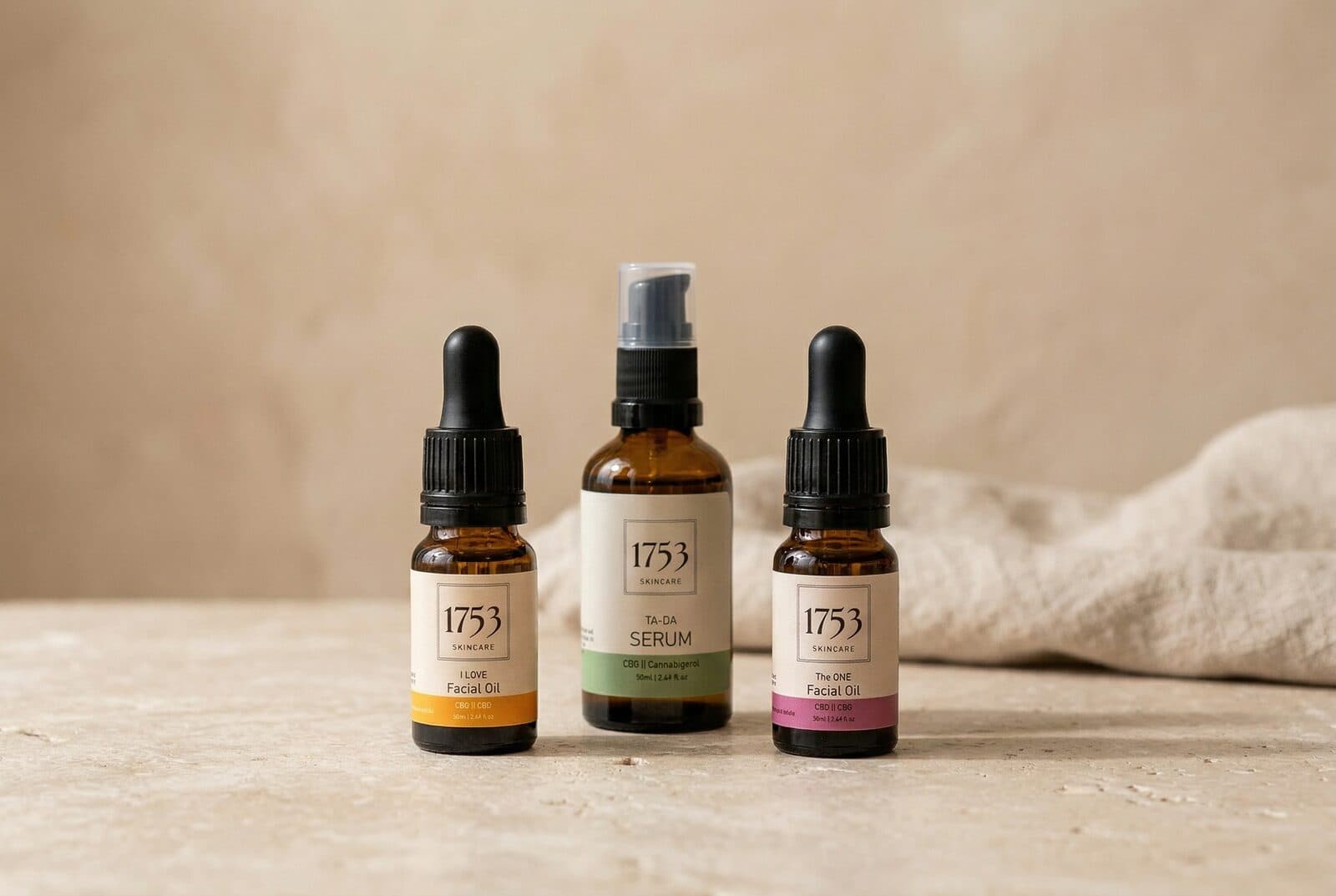
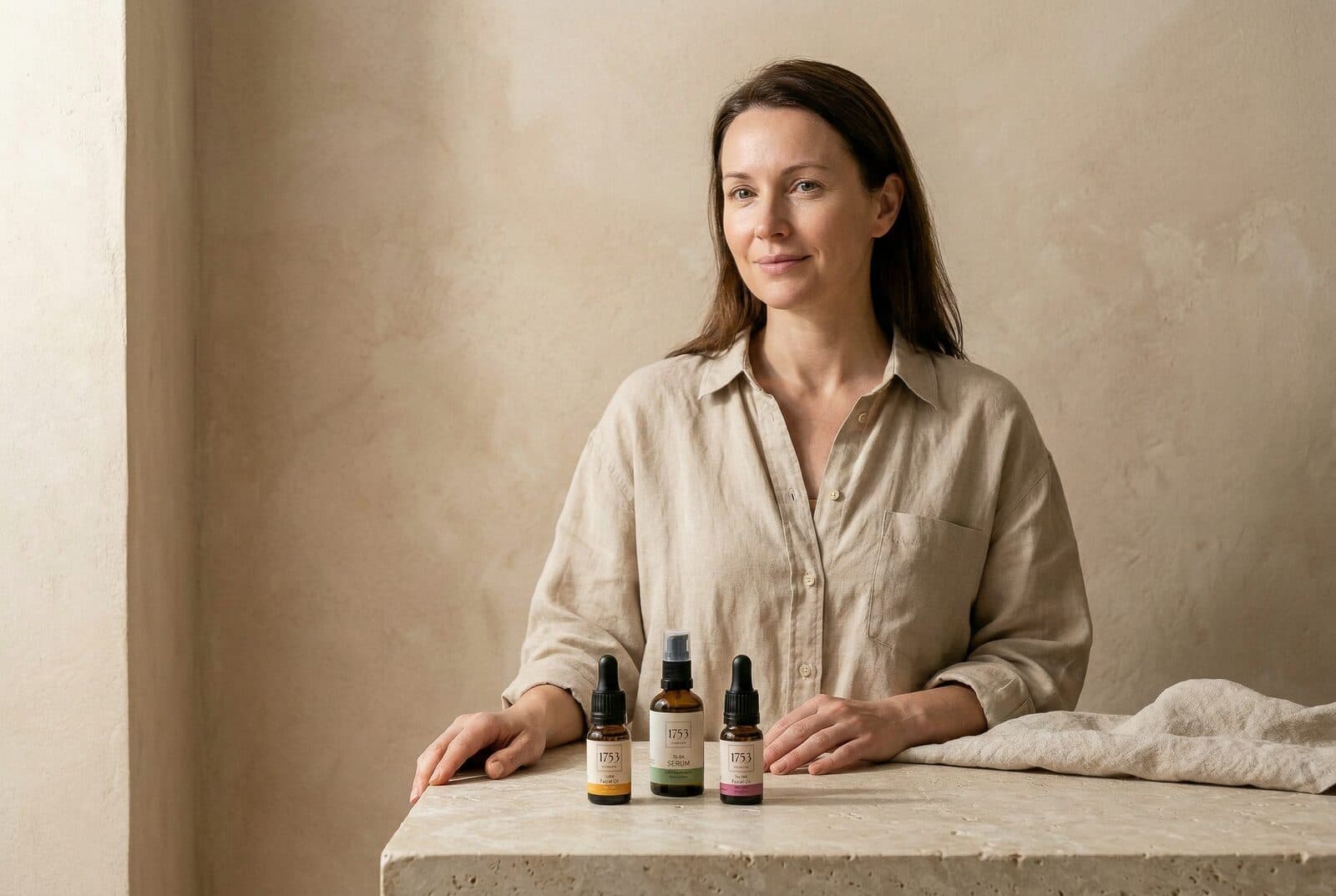 Save €60
DUO kit + TA-DA Serum
The full routine in one: three products that help skin become calmer, stronger and more resilient.
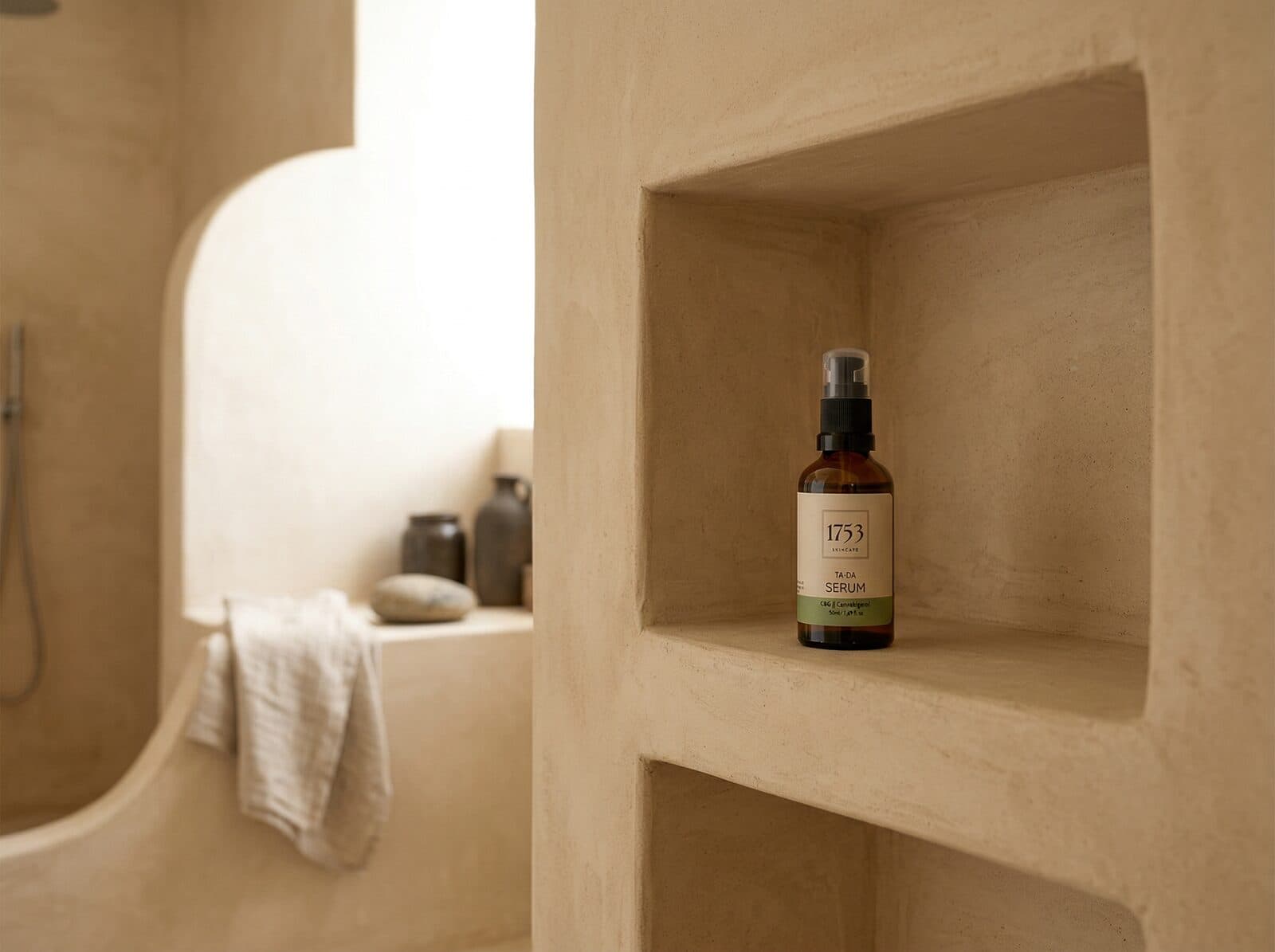
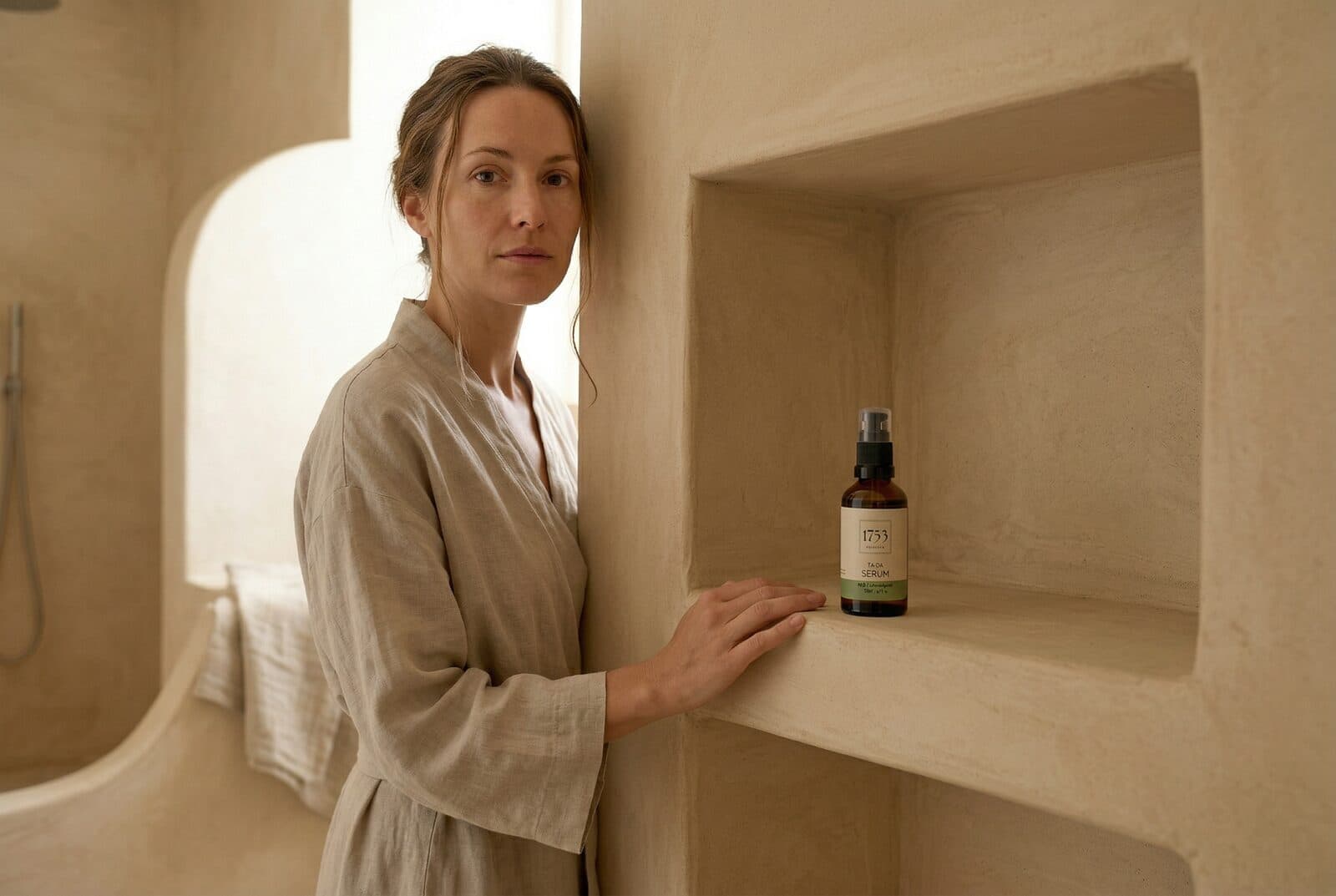
TA-DA Serum
A CBG-powered serum that seals in moisture and adds glow, whatever the season.
Frequently asked questions
What are CB1 and CB2 in skin?
They are cannabinoid receptors that belong to the skin’s endocannabinoid system. They help regulate signals linked to sebum, immune response and the barrier’s everyday work.
Why mention keratinocytes and sebocytes?
Keratinocytes build the outer barrier, while sebocytes produce sebum. When their signalling goes off, skin can become drier, oilier or more reactive than usual.
How do dendritic cells fit in?
Dendritic cells are part of the skin’s immune system and help detect threats. CB2 is often linked to immune balance, which is why these cells matter in the research.
Are cannabinoids better than acids?
Not better in every case, but often more sensible when skin is stressed. Acids can help, yet too much exfoliation tends to disrupt more than it solves.
Sources
- Bíró T, Tóth BI, Haskó G, Paus R, Pacher P. The endocannabinoid system of the skin in health and disease. Trends Pharmacol Sci 2009;30(8):411–420.
- Tóth KF, Ádám D, Bíró T, Oláh A. Cannabinoid signaling in the skin: therapeutic potential of the c(ut)annabinoid system. Molecules 2019;24(5):918.
- Byrd AL, Belkaid Y, Segre JA. The human skin microbiome. Nat Rev Microbiol 2018;16(3):143–155.
Article reviewed by Christopher Genberg, founder of 1753 SKINCARE.
Related articles
Science
Endocannabinoid system skin guide – your skin’s built-in calm
Your skin is not just a surface. It is a living control system trying to stay calm, resilient, and b...
Science
ECS and stress – your body’s built-in brake
Stress is not just a mindset problem. It starts as a biological chain reaction: the HPA axis fires, ...
SCIENCE
cbd bioavailability skin – not just sitting there
CBD on skin is not the same as CBD through skin. One acts where it lands; the other tries to cross t...
Ingredient Portrait
cbd for skin – less noise, more balance
CBD for skin is interesting because it doesn’t try to bully the skin into behaving. It works with th...
Ingredient Portrait
cbg for skin – the mother cannabinoid that calms and renews
CBG usually lives in CBD’s shadow, but skin can tell the difference. This is the cannabinoid that ma...
Ingredient Portrait
Shea butter skin – rich, warm, not for everyone
Shea butter is one of skincare’s most loved butters, and one of the most misunderstood. It comes fro...