
SCIENCE
cbd bioavailability skin – not just sitting there
CBD on skin is not the same as CBD through skin. One acts where it lands; the other tries to cross the barrier and travel farther. That difference shapes what you can realistically expect from a formula, a texture, and a routine.

Topical or transdermal – which one are you actually using?
The outermost skin barrier, stratum corneum, is designed to keep things out. CBD is lipid soluble, which helps it mix with the skin’s fatty environment and interact with the lipids in that barrier. But being fat-soluble does not mean it automatically penetrates deeply. It only means it has a better chance of entering the right environment.
Research from 2020–2025 suggests that topical CBD often remains in the upper dermal layers, where it can act locally on skin signalling pathways, including inflammatory processes and receptor-rich areas. Transdermal delivery is a different challenge: the goal is to cross the barrier and achieve measurable levels deeper in the skin or even in circulation. That usually requires carriers, penetration enhancers, and far more sophisticated formulation work than a standard face oil.
This is where skincare marketing gets sloppy. “Absorbed” sounds impressive, but it says nothing about where it’s absorbed, how much gets through, or what happens next. If you want skin benefits rather than lab drama, you need to understand the difference between putting something on skin and actually moving it through skin.
Think about it this way
Match the goal
Do you want local skin support, or are you trying to reach deeper layers? Topical CBD is usually the more realistic choice for surface and upper-layer skin needs, while transdermal delivery demands a very different formula.
Look at the carrier
CBD’s lipid solubility means oils and emulsions matter. A good carrier can improve distribution across the skin’s lipids, but it cannot magically override the stratum corneum barrier.
Focus on delivery, not noise
A high percentage is not the same as a well-delivered ingredient. A smaller amount in a smart formula can be more meaningful than a flashy number in a sloppy base.
Do not over-strip the skin
Over-exfoliation and harsh cleansing weaken the barrier and make skin more reactive. A calmer barrier tends to respond to topical ingredients in a more predictable way.
Judge by real life
What matters is how your skin feels over days and weeks: less tightness, less reactivity, a more even surface. Not whether the product description sounds technical.
How to actually use CBD on skin
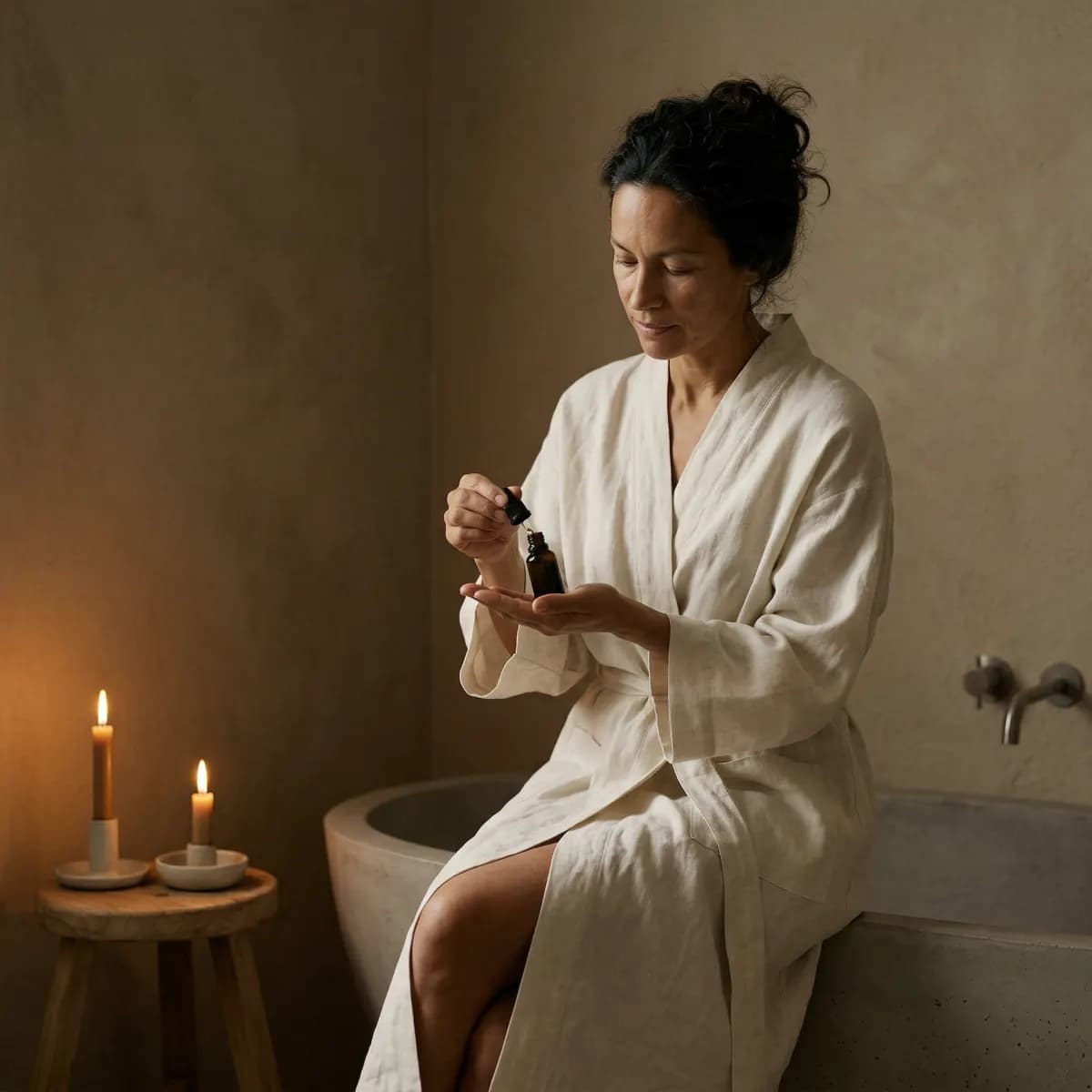
If you want to use CBD in a way that makes sense, start by respecting the skin barrier. The ONE is built as a skin-regulating face oil where CBD works topically alongside MCT, a light carrier that helps spread the oil smoothly without weighing skin down. That is not a promise of transdermal magic. It is a serious topical strategy.
I LOVE with CBG is a good fit when skin needs calm and a less aggressive routine. In preclinical work and newer reviews, CBG has been linked to inflammatory balance and microbial support, which makes it relevant for skin that gets irritated easily. Together, The ONE and I LOVE create a broader cannabinoid spectrum in an everyday routine without turning skincare into a science project.
If you want antioxidant support as well, Ta-DA serum combines CBG with adaptogens in a formula aimed at protection, recovery, and anti-ageing support. 1753 uses phytocannabinoids from certified hemp in safer formulas because skincare should feel considered, not loud. Less friction. Less overclaiming. Just formulas that respect the barrier and work with skin, not against it.
Products we recommend
 Save €34
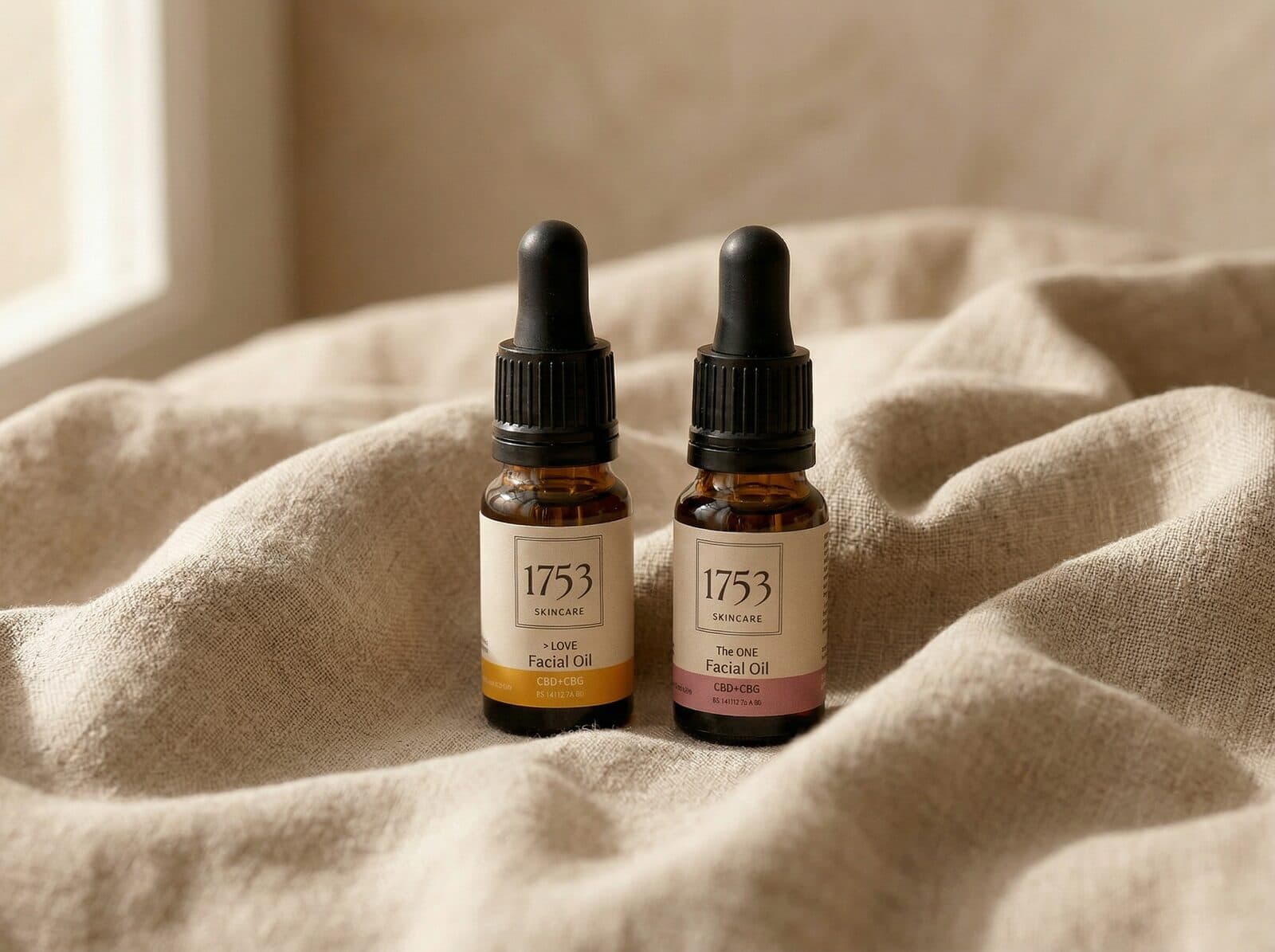
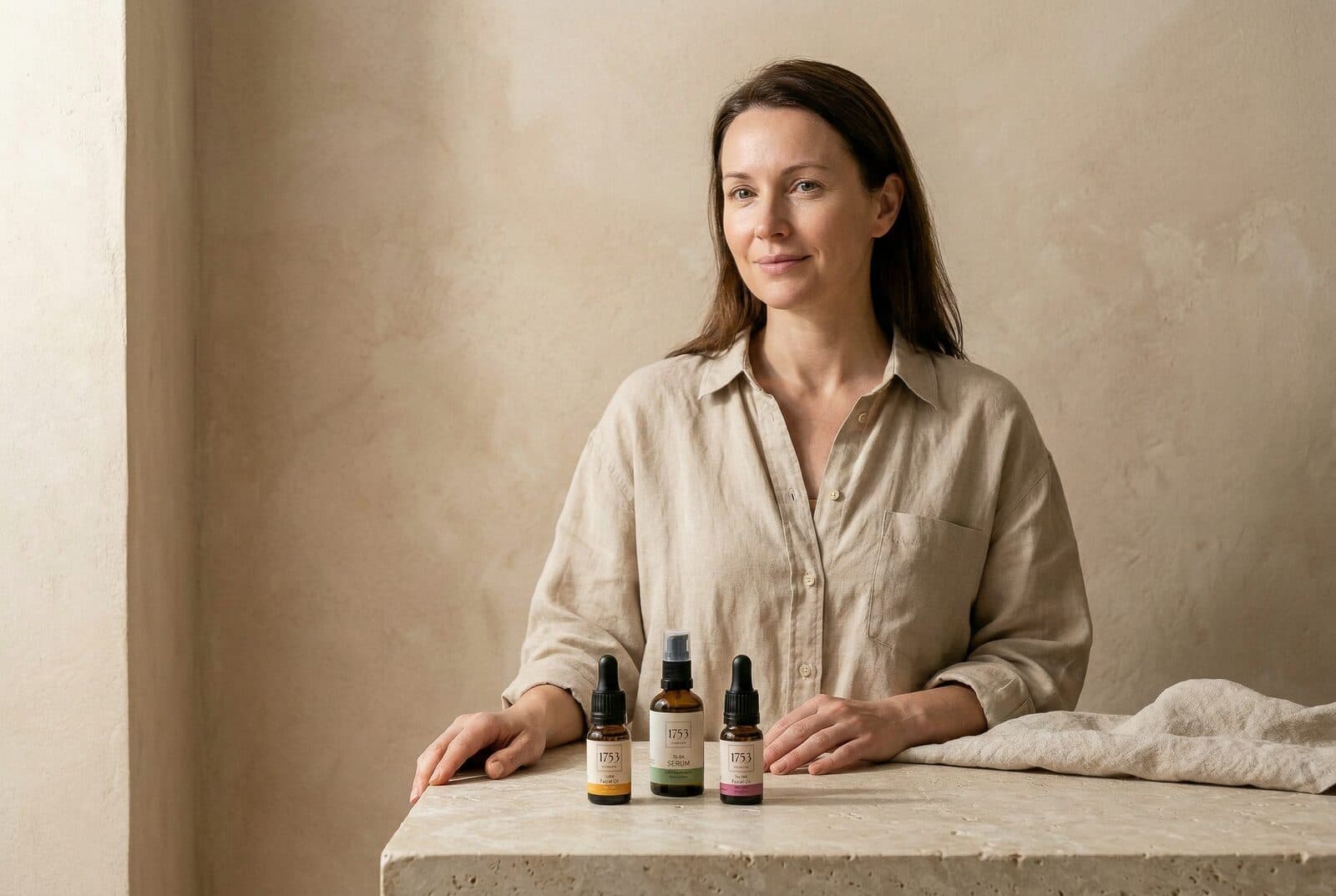
DUO kit
Two face oils, one for morning and one for evening. Simple skincare that works with your skin, not against it.
 Save €60
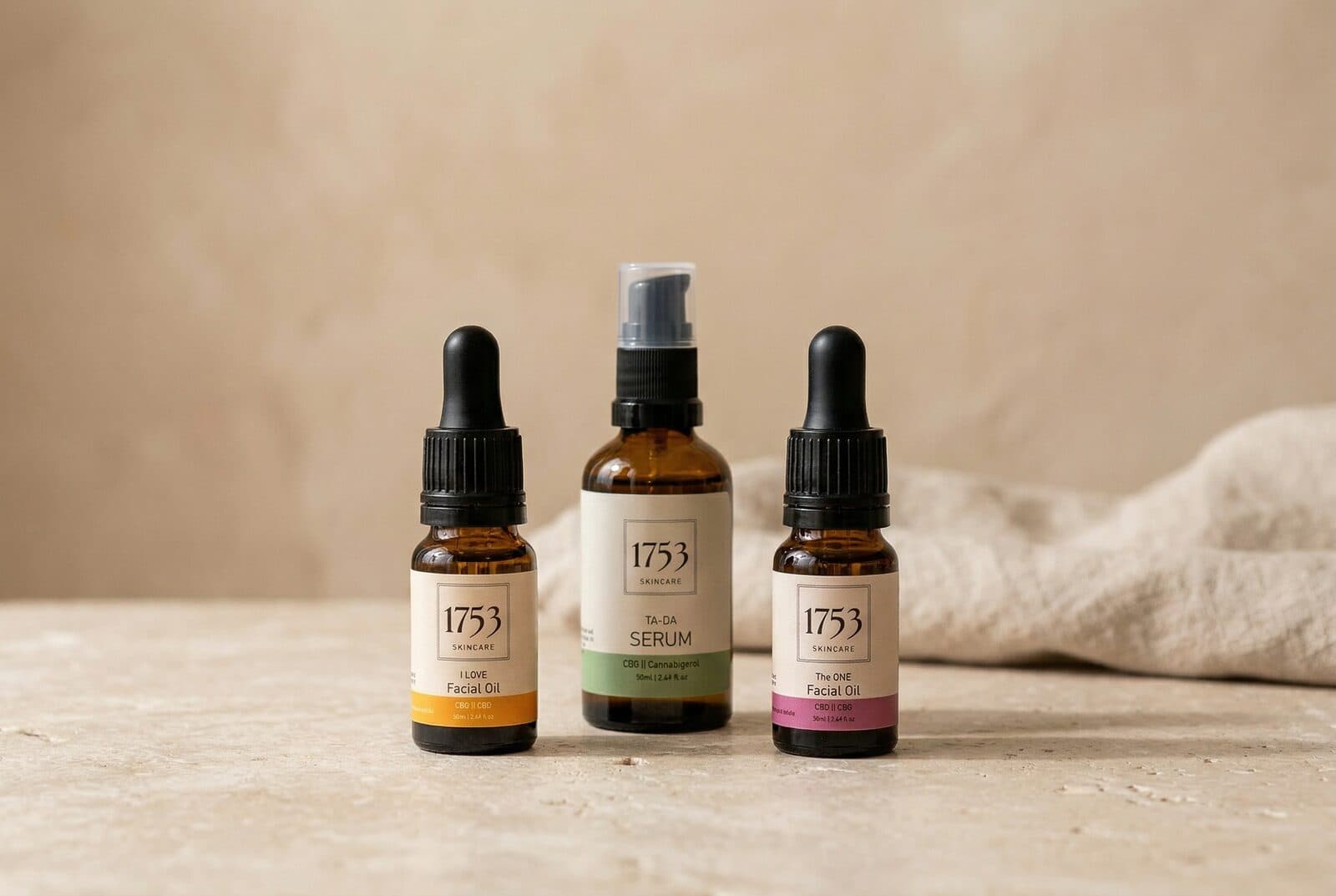
DUO kit + TA-DA Serum
The full routine in one: three products that help skin become calmer, stronger and more resilient.
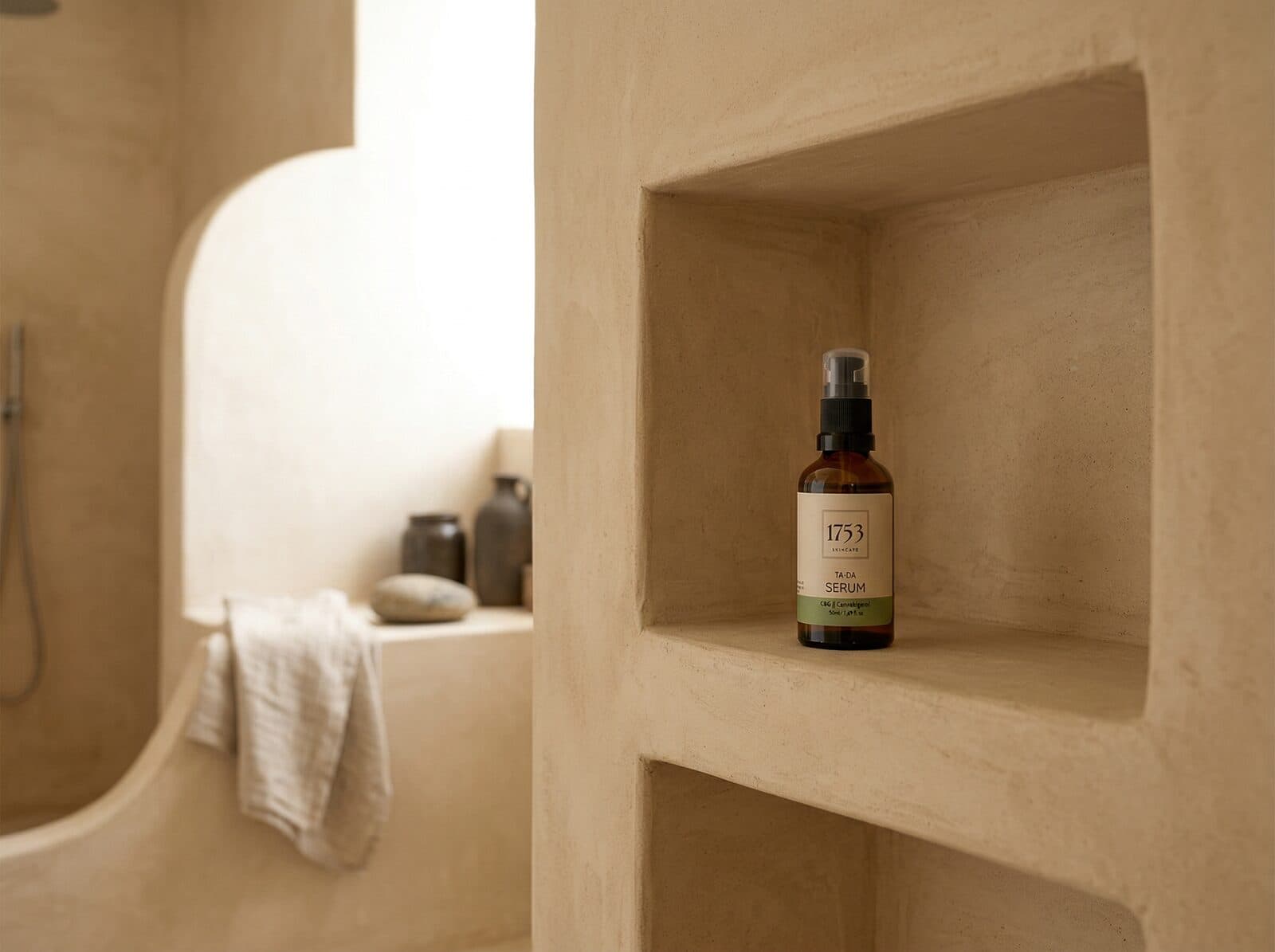
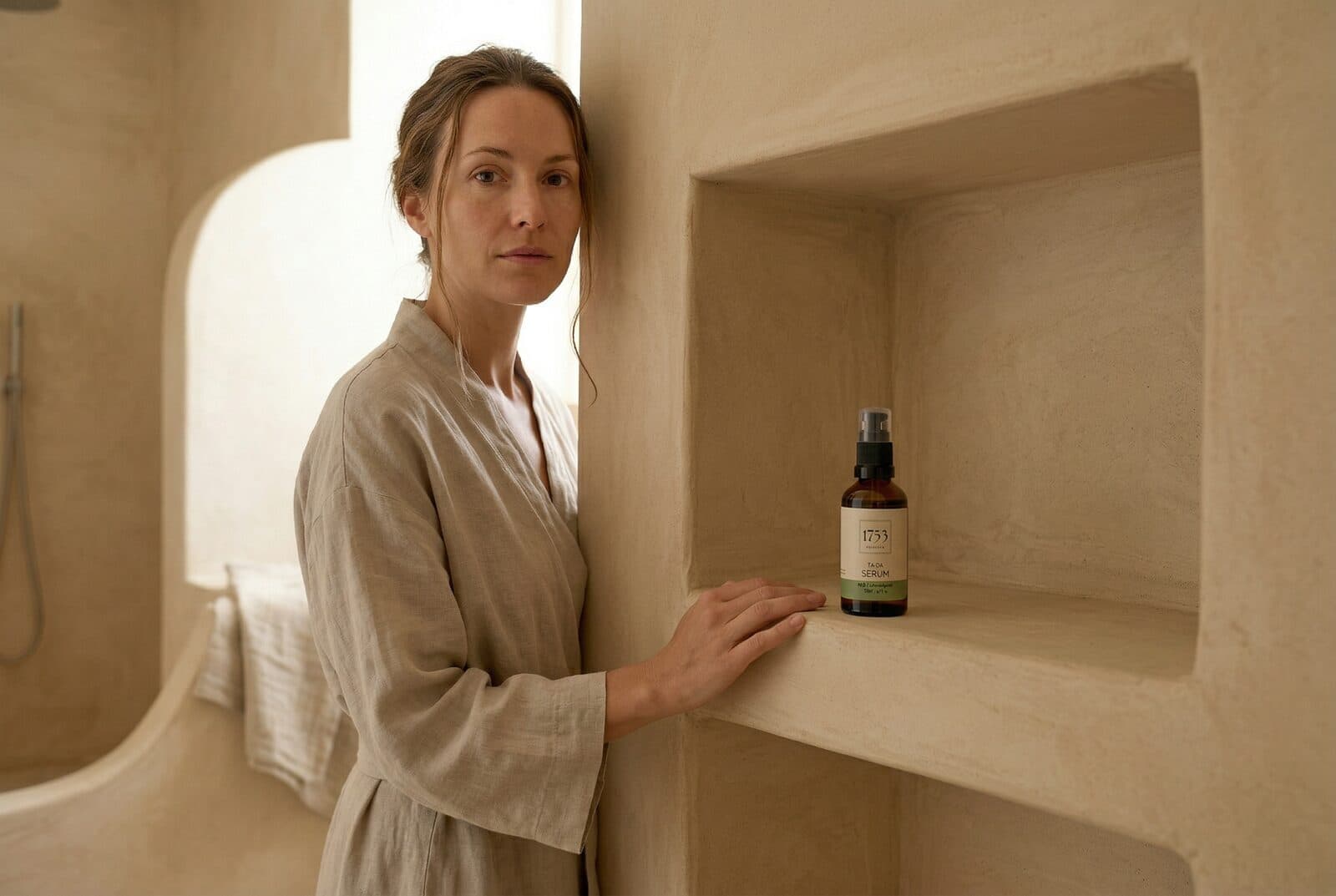
TA-DA Serum
A CBG-powered serum that seals in moisture and adds glow, whatever the season.
Frequently asked questions
Is CBD better topically or transdermally?
It depends on the goal. Topical CBD is usually more relevant for the skin surface and upper layers, while transdermal delivery is for situations where you want the ingredient to pass the barrier more systemically. They are not the same thing.
Why does lipid solubility matter?
CBD is lipid soluble, so it fits better into the skin’s fatty environment than water-based ingredients do. That helps with distribution in the stratum corneum, but it does not mean it automatically goes deep or crosses fast.
What is the reservoir effect?
Reservoir effect means some of the ingredient stays in the upper skin layers and acts like a local depot. For topical products, that can be useful because the skin stays in contact with the ingredient longer instead of losing it immediately.
How do I know if a product is serious?
Look at the formula, not only the CBD number. A serious product is clear about its purpose, carrier, and use, and does not claim transdermal performance if it is really topical. A good routine also feels practical in real life.
Sources
- Bíró T, Tóth BI, Haskó G, Paus R, Pacher P. The endocannabinoid system of the skin in health and disease. Trends Pharmacol Sci 2009;30(8):411–420.
- Tóth KF, Ádám D, Bíró T, Oláh A. Cannabinoid signaling in the skin: therapeutic potential of the c(ut)annabinoid system. Molecules 2019;24(5):918.
- Byrd AL, Belkaid Y, Segre JA. The human skin microbiome. Nat Rev Microbiol 2018;16(3):143–155.
Article reviewed by Christopher Genberg, founder of 1753 SKINCARE.
Related articles
Science
Endocannabinoid system skin guide – your skin’s built-in calm
Your skin is not just a surface. It is a living control system trying to stay calm, resilient, and b...
SKIN SCIENCE
CB1 CB2 receptors skin – let the skin lead for once
Skin is not a passive surface. It has its own signalling network, where CB1 and CB2 help shape calm,...
Science
ECS and stress – your body’s built-in brake
Stress is not just a mindset problem. It starts as a biological chain reaction: the HPA axis fires, ...
Ingredient Portrait
cbd for skin – less noise, more balance
CBD for skin is interesting because it doesn’t try to bully the skin into behaving. It works with th...
Ingredient Portrait
cbg for skin – the mother cannabinoid that calms and renews
CBG usually lives in CBD’s shadow, but skin can tell the difference. This is the cannabinoid that ma...
Ingredient Portrait
Shea butter skin – rich, warm, not for everyone
Shea butter is one of skincare’s most loved butters, and one of the most misunderstood. It comes fro...