
Comparison
synthetic vs plant – not a war, just different tools
Not everything plant-based is gentle. Not everything synthetic is bad. If you want to know what your skin actually responds to, look at biocompatibility, consistency and purity — not romance or fear.

Do you need a side, or the right function?
The synthetic vs plant debate often gets stuck in vibes: “natural” sounds safe, “synthetic” sounds like a lab. But skin cares more about molecular shape, dose and formula stability than about whether an ingredient grew in soil or was made in a reactor.
Synthetic ingredients can offer high purity and excellent consistency from batch to batch. Plant-based ingredients, on the other hand, can bring a more complex mix of compounds that sometimes works more naturally with skin biology. Both camps have strengths — and both can fail when they’re handled carelessly.
That’s why the old dogma that “stronger cleansing is better” or “more actives are always better” so often misses the point. For some skin types, less friction, fewer disruptive ingredients and better biocompatibility are exactly the goal. The real question is not what sounds prettier, but what actually works in everyday life.
How to think smarter
Read the form
Look at how an ingredient is built, not just where it comes from. A well-made synthetic can be more skin-friendly than a raw plant extract that changes from batch to batch.
Value stability
If a product is used every day, predictable performance matters. Synthetic ingredients often win on precision, while plant-based ones may win on broader complexity.
Choose low friction
Tired, reactive or overworked skin often does better with simple, gentle formulas. The more you push skin, the more resistance you may get back.
Compare the whole formula
A good ingredient can be ruined by a bad system. Check cleansing, carriers and supporting ingredients together, not just the hero name on the front.
Think biocompatibly
Ask what skin actually recognizes and tolerates over time. That is often where plant-based and synthetic meet: in the need for something that works without getting in the way.

How to actually choose well
If you want maximum precision, purity and predictability, synthetic can be the smarter route. If you want more naturally occurring compounds and a formula that feels more alive on skin, plant-based can be more compelling. The point is that both can be excellent — when they’re made properly.
For skin that gets stressed by too much, too fast, a simple routine with low irritation is often the win. That’s where The ONE and I LOVE fit naturally: CBD + CBG creates a rare, balanced complement where skin-regulating support meets calming, antibacterial direction without unnecessary noise.
If you want to go further, Ta-DA serum adds antioxidant support and adaptogens, while Au Naturel Makeup Remover shows how gentle cleansing can still be effective. This isn’t anti-synthetic. It’s pro-skin. And that’s usually where the best solution starts.
Products we recommend
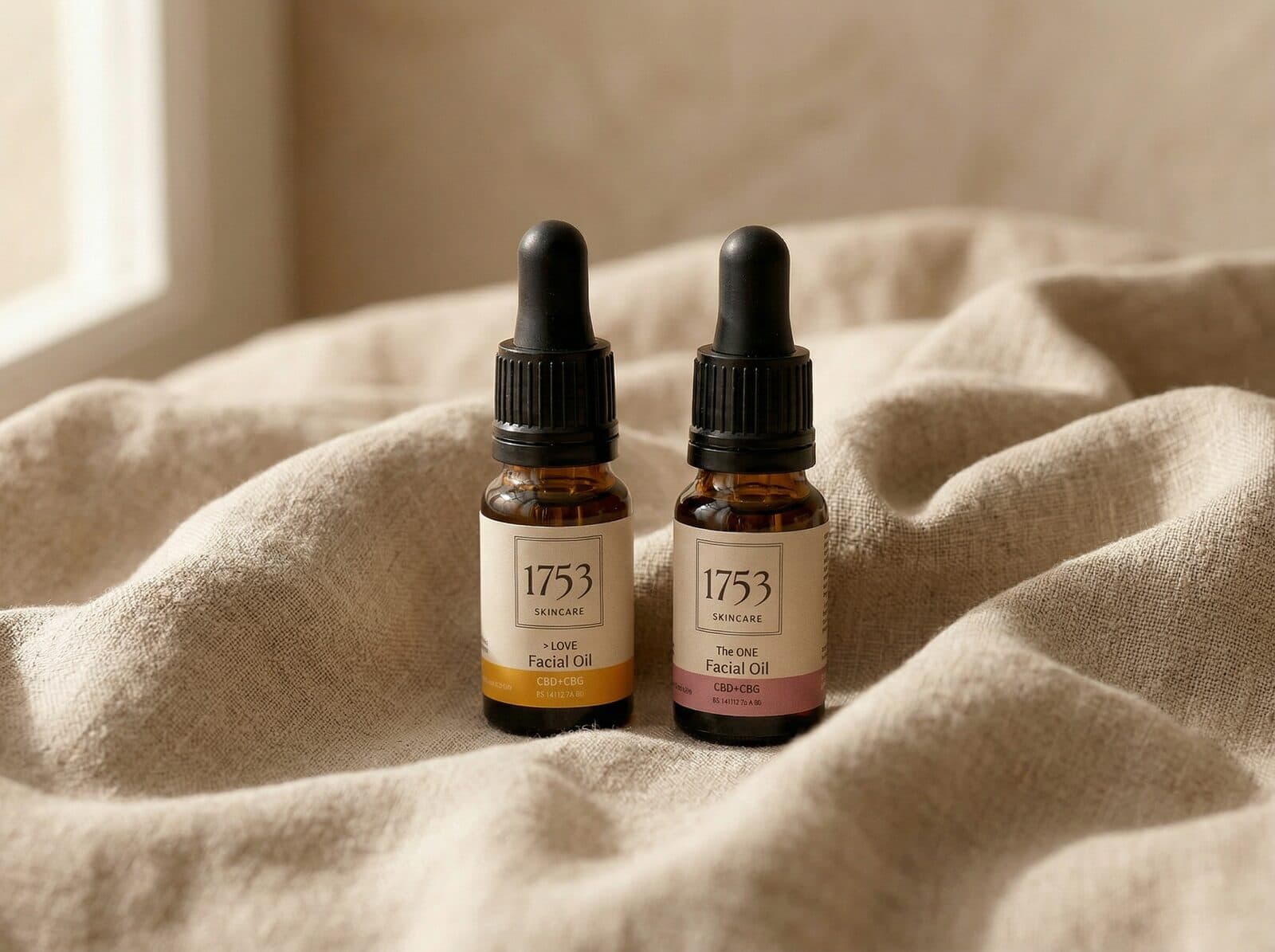
 Save €34
DUO kit
Two face oils, one for morning and one for evening. Simple skincare that works with your skin, not against it.
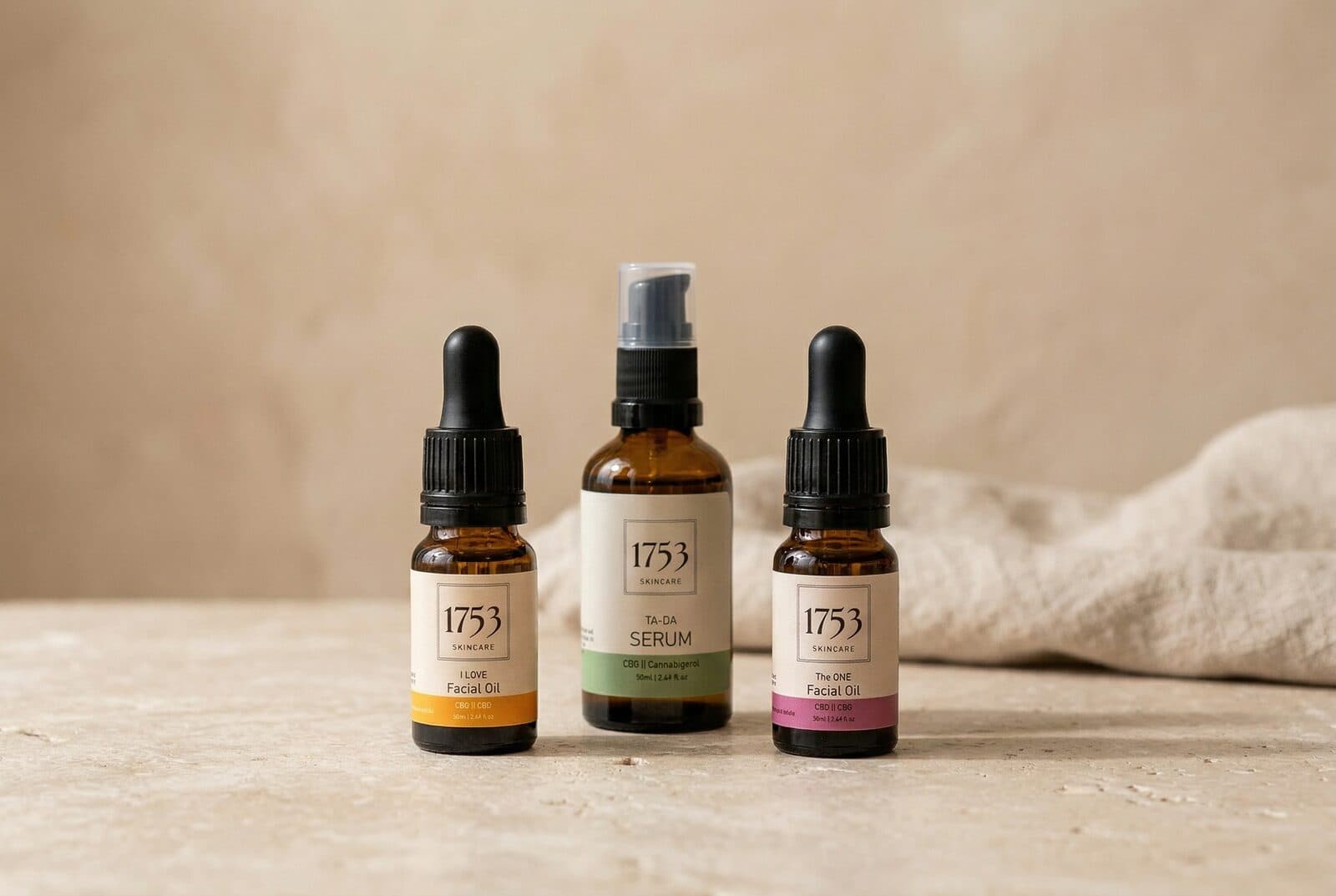
 Save €60
DUO kit + TA-DA Serum
The full routine in one: three products that help skin become calmer, stronger and more resilient.
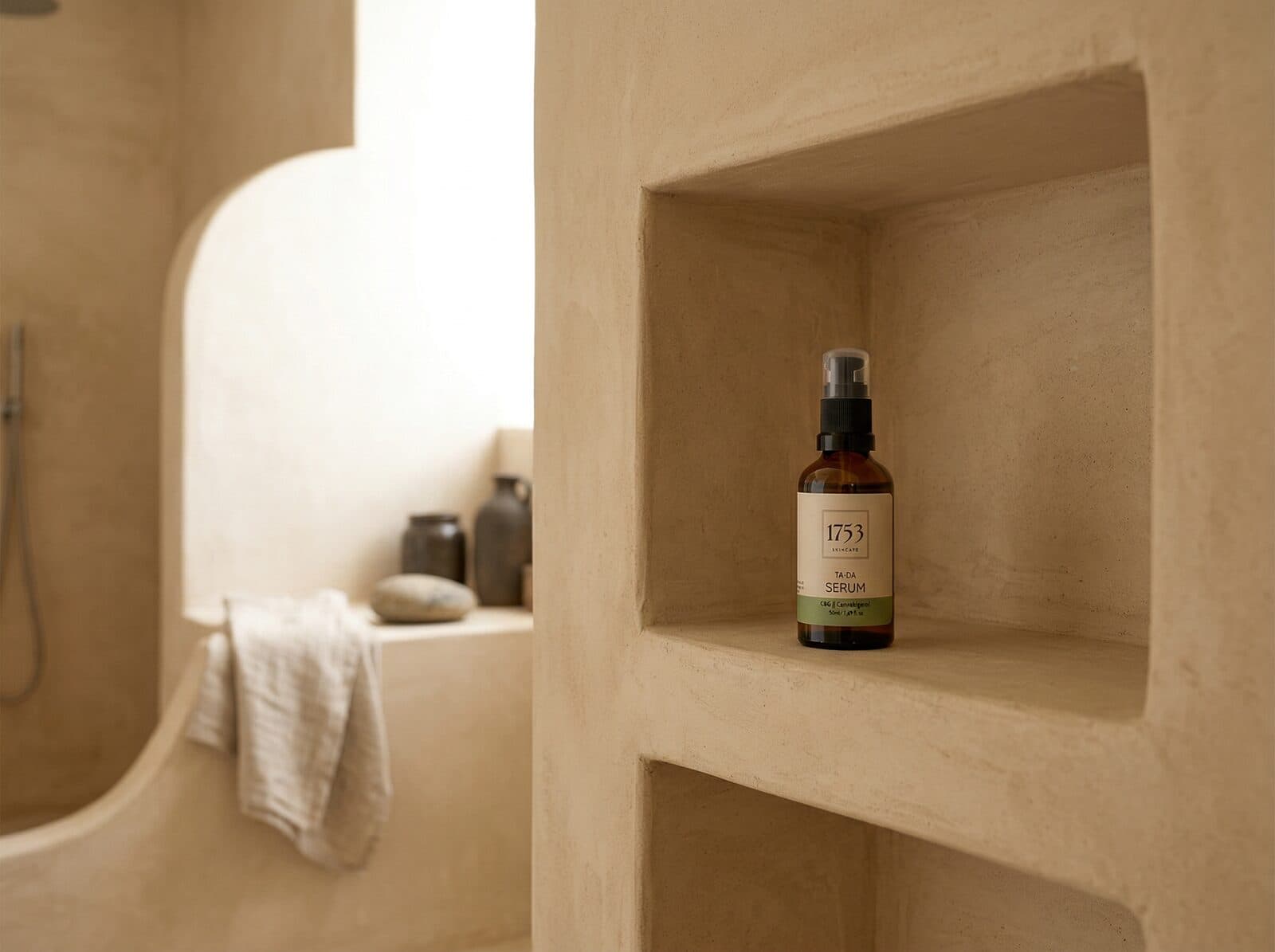
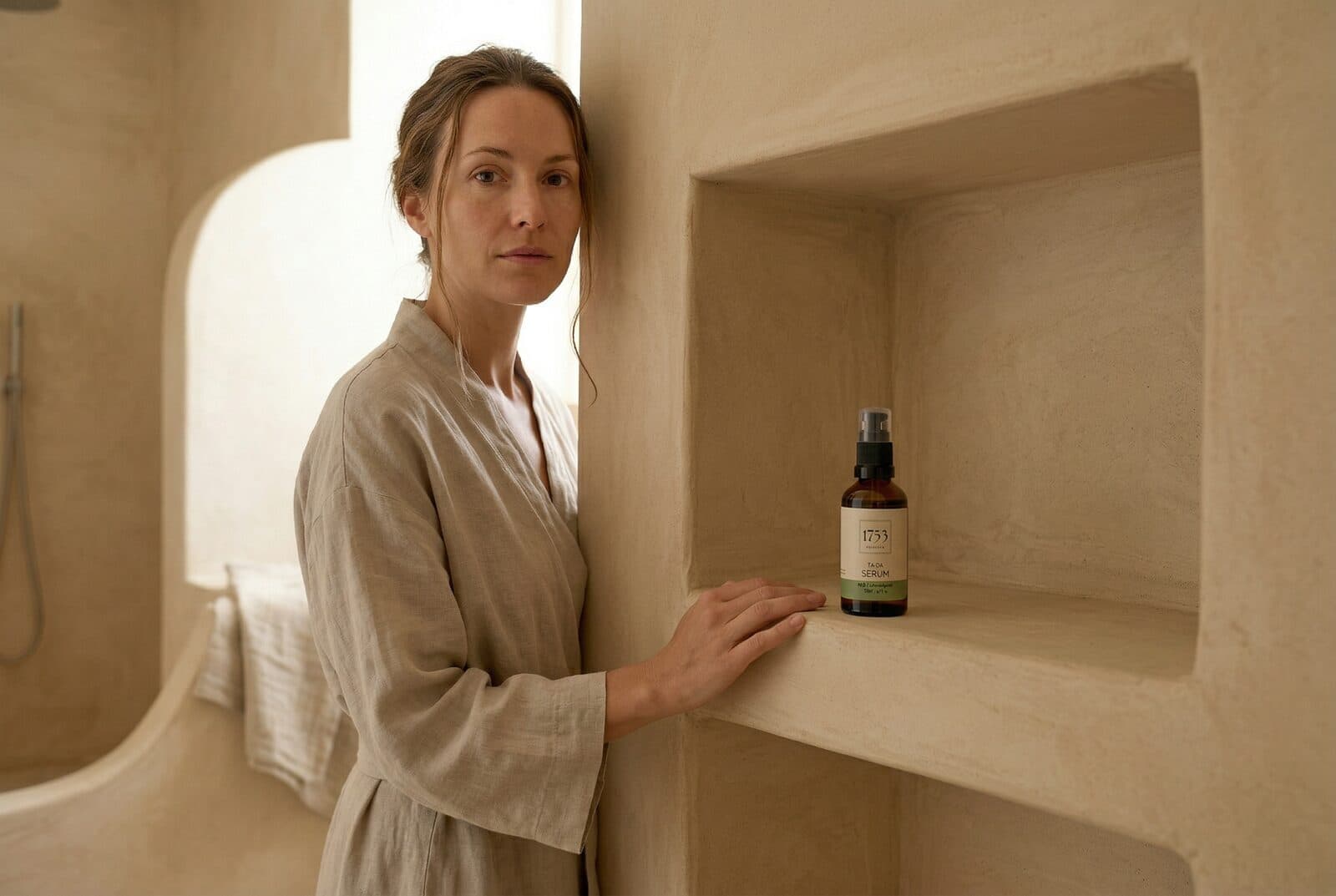
TA-DA Serum
A CBG-powered serum that seals in moisture and adds glow, whatever the season.
Frequently asked questions
Is plant-based always better for sensitive skin?
No. Plant-based can be more biocompatible for some people, but it can also contain more naturally occurring compounds that irritate. The real test is how your skin responds to the finished formula, not the philosophy behind it.
Why do some people choose synthetic despite the natural trend?
Because synthetic often delivers high precision, high purity and consistent quality from batch to batch. That matters when you want products to behave the same way every time.
Can plant-based ingredients be more effective?
Yes, sometimes. Plants can carry multiple interacting compounds, which may create a different kind of effect. But more complex does not automatically mean better.
Where does 1753 fit into this debate?
As a simple, unusually uncontroversial complement. Whether you lean synthetic or plant-based, 1753’s CBD + CBG offers something easy to live with and hard to overcomplicate.
Sources
- Oláh A, Tóth BI, Borbíró I, et al. Cannabidiol exerts sebostatic and antiinflammatory effects on human sebocytes. J Clin Invest 2014;124(9):3713–3724.
- Tóth KF, Ádám D, Bíró T, Oláh A. Cannabinoid signaling in the skin: therapeutic potential of the c(ut)annabinoid system. Molecules 2019;24(5):918.
Article reviewed by Christopher Genberg, founder of 1753 SKINCARE.
Related articles
COMPARISON
cbd vs retinol – same conversation, different jobs
CBD and retinol are often grouped together, but they do not behave the same way. Retinol pushes cell...
Comparison
cbd vs hyaluronic acid – hydration or calm?
This is not a fight between two good ingredients. Hyaluronic acid draws water in. CBD works more aro...
COMPARISON
cbd vs niacinamide – two ways to less shine
If your skin is oily but also easily irritated, it is easy to get stuck between two classics: cbd vs...
Ingredient Portrait
cbd for skin – less noise, more balance
CBD for skin is interesting because it doesn’t try to bully the skin into behaving. It works with th...
Ingredient Portrait
cbg for skin – the mother cannabinoid that calms and renews
CBG usually lives in CBD’s shadow, but skin can tell the difference. This is the cannabinoid that ma...
Ingredient Portrait
Shea butter skin – rich, warm, not for everyone
Shea butter is one of skincare’s most loved butters, and one of the most misunderstood. It comes fro...