
Skin Barrier
Stratum corneum science – the roof that keeps skin in
The outermost layer of skin sounds dryly technical, but the idea is simple: stratum corneum is your roof. Corneocytes are the bricks, and the intercellular lipids are the mortar. When that structure works, skin tends to feel calmer, softer, and far less reactive.

Why do we keep treating skin like it needs to be stripped?
A lot of mainstream skincare still runs on the same tired script: cleanse harder, exfoliate more, strip more oil, then buy a product to fix the fallout. But stratum corneum is not dead debris to be removed. It is a functional barrier where corneocytes are packed like bricks and surrounded by ceramides, cholesterol, and free fatty acids. That is the classic brick and mortar model.
When this barrier is disrupted, transepidermal water loss rises, which simply means water escapes more easily through the skin. Reviews and studies from 2020 to 2025 keep showing that harsh surfactants, over-cleansing, and frequent exfoliation can disturb lipid organization in the stratum corneum and make skin more sensitive. The result is familiar: tightness, redness, stinging, and that “everything suddenly burns” feeling.
The point is not to do more. It is to stop making the barrier work overtime. Once you understand that the surface of skin is a living defense system, not a dirty film, the whole approach changes.
Practical ways to support the barrier
Cleanse more gently
Choose a cleanser that does not aggressively dissolve your own lipids. If your skin feels tight after washing, that is not “clean” skin — it is a barrier under pressure.
Respect the mortar
The stratum corneum likes balance between water and lipids. Less stripping, less squeaky-clean drama, more support for the structure that actually keeps skin comfortable.
Exfoliate less often
Daily polishing is rarely the answer. Too many acids or scrubs can weaken corneocyte cohesion and leave the barrier more leak-prone.
Use calming actives
When skin is stressed, it usually needs fewer aggressive actives and more ingredients that help it settle down. Think repair mode, not attack mode.
Simplify the routine
Cold weather, dry indoor air, and too many products can all push the barrier too far. Reduce the noise until skin stops complaining.

How to actually care for stratum corneum
The most sensible way to support stratum corneum is to stop sabotaging it. A gentle cleanse and a routine that helps preserve lipids will usually do more than another stack of “actives” promising miracles. Skin responds better to consistency than to cosmetic chaos.
This is where 1753 SKINCARE makes sense. The ONE, with CBD and MCT, is made to feel skin-regulating and soft rather than heavy. I LOVE, the CBG serum, is a smart option when skin feels irritated and needs calm. And Ta-DA serum brings an antioxidant cocktail with CBG and adaptogens when you want support without overload.
It is not magic; it is sensible skin care. Phytocannabinoids from certified hemp, used in safer formulas, can fit into a routine that works with the skin’s biology instead of bulldozing it. Because the problem with the roof is rarely that it is too weak. Usually, we have been washing away the mortar and calling it progress.
Products we recommend
 Save €34
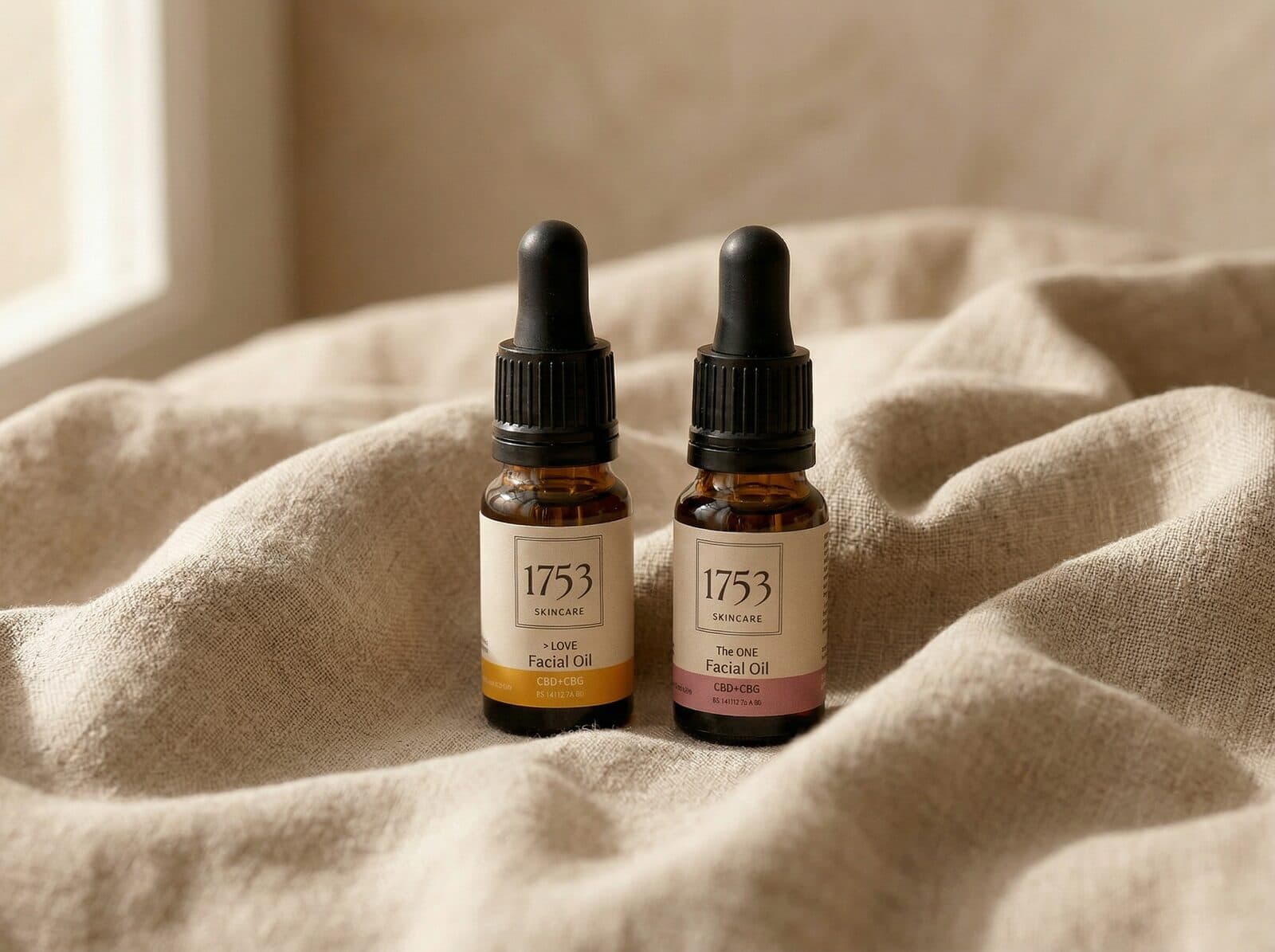
DUO kit
Two face oils, one for morning and one for evening. Simple skincare that works with your skin, not against it.
 Save €60
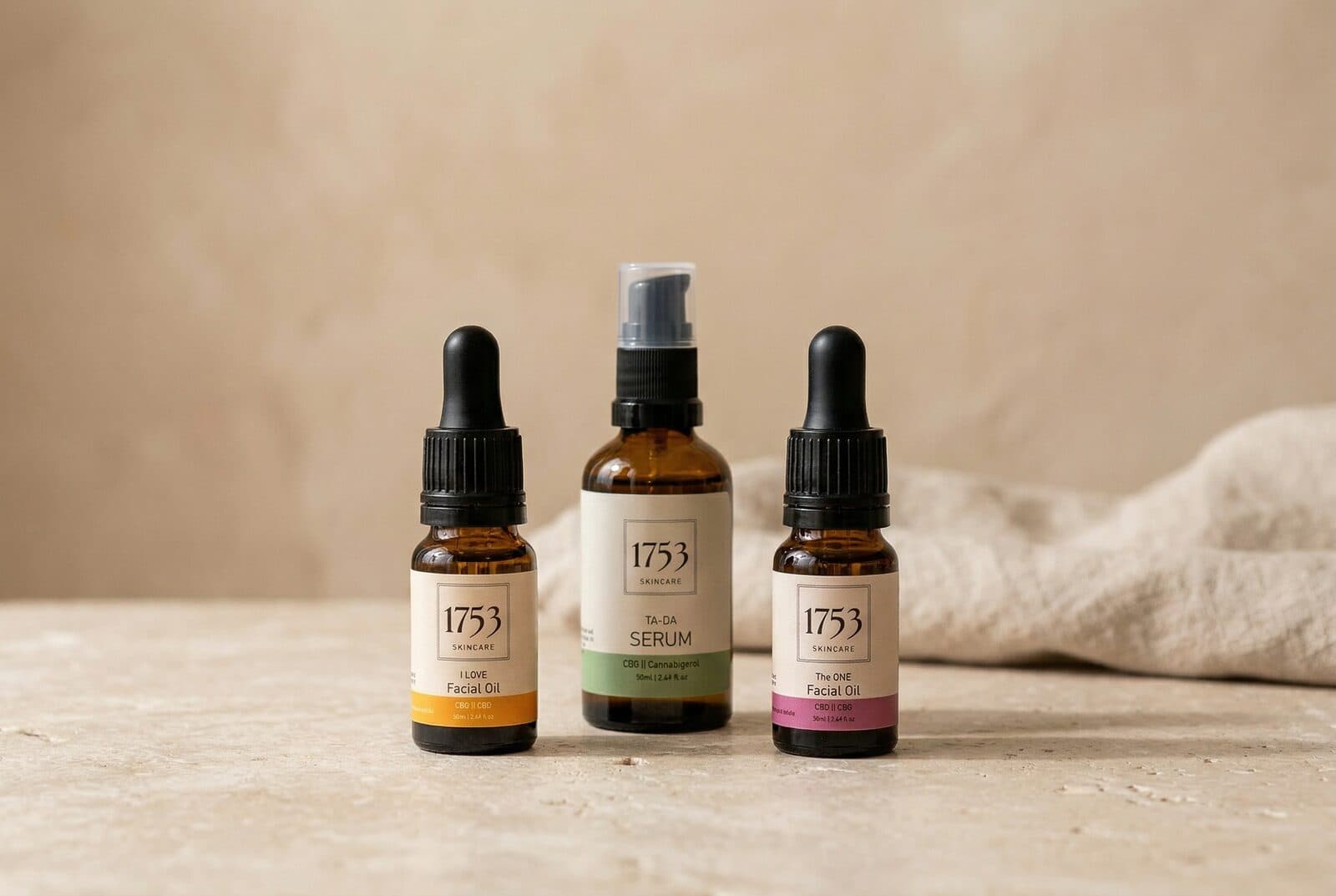
DUO kit + TA-DA Serum
The full routine in one: three products that help skin become calmer, stronger and more resilient.
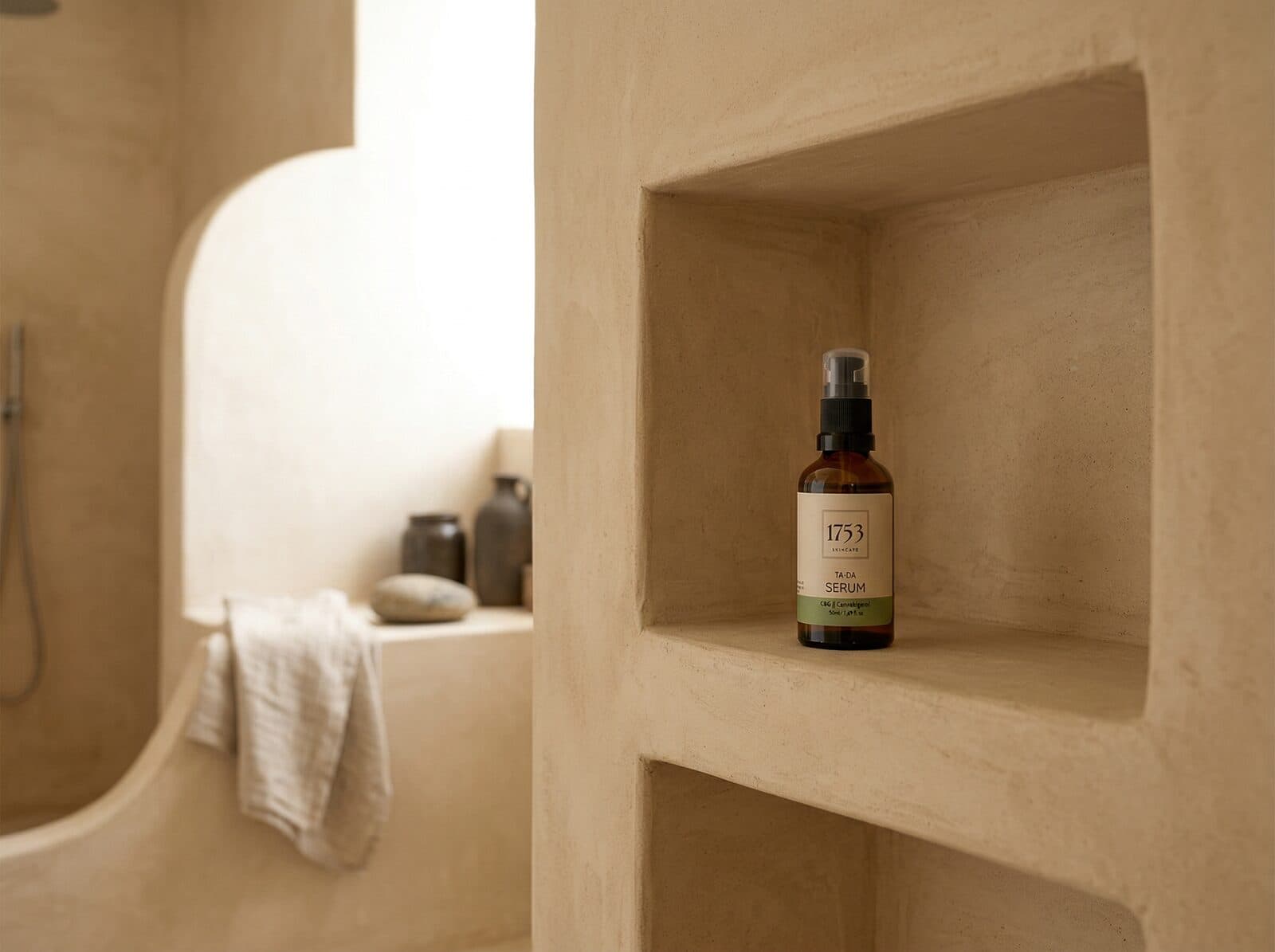
TA-DA Serum
A CBG-powered serum that seals in moisture and adds glow, whatever the season.
Frequently asked questions
What is the stratum corneum?
It is the outermost layer of the skin and the main barrier against water loss and irritants. Think corneocytes as bricks and intercellular lipids as the mortar holding everything together.
Why does weak barrier function make skin sensitive?
When the stratum corneum is disrupted, more water escapes and outside irritants get in more easily. That can lead to tightness, redness, stinging, and a more reactive feel overall.
Is exfoliation always a bad idea?
No, but overdoing it often backfires. Research from the past few years suggests that frequent or harsh exfoliation can disturb lipids and weaken the barrier more than people expect.
Where do CBD and CBG fit in?
In skincare, they are used as part of calmer, more supportive formulas. When the goal is to respect the barrier rather than push it, they can be a thoughtful choice.
Sources
- Bíró T, Tóth BI, Haskó G, Paus R, Pacher P. The endocannabinoid system of the skin in health and disease. Trends Pharmacol Sci 2009;30(8):411–420.
- Tóth KF, Ádám D, Bíró T, Oláh A. Cannabinoid signaling in the skin: therapeutic potential of the c(ut)annabinoid system. Molecules 2019;24(5):918.
- Byrd AL, Belkaid Y, Segre JA. The human skin microbiome. Nat Rev Microbiol 2018;16(3):143–155.
Article reviewed by Christopher Genberg, founder of 1753 SKINCARE.
Related articles
Science
Endocannabinoid system skin guide – your skin’s built-in calm
Your skin is not just a surface. It is a living control system trying to stay calm, resilient, and b...
SKIN SCIENCE
CB1 CB2 receptors skin – let the skin lead for once
Skin is not a passive surface. It has its own signalling network, where CB1 and CB2 help shape calm,...
Science
ECS and stress – your body’s built-in brake
Stress is not just a mindset problem. It starts as a biological chain reaction: the HPA axis fires, ...
Ingredient Portrait
cbd for skin – less noise, more balance
CBD for skin is interesting because it doesn’t try to bully the skin into behaving. It works with th...
Ingredient Portrait
cbg for skin – the mother cannabinoid that calms and renews
CBG usually lives in CBD’s shadow, but skin can tell the difference. This is the cannabinoid that ma...
Ingredient Portrait
Shea butter skin – rich, warm, not for everyone
Shea butter is one of skincare’s most loved butters, and one of the most misunderstood. It comes fro...