
Ingredient Portrait
Peptides skin – signals, not hype
Peptides sound technical because they are. But in skincare they’re mostly tiny messengers trying to help skin do its job better, not forcing it into overdrive. Here we break down what peptides actually are, how the different types work, and when they’re smart—or just expensive fluff.

Are peptides skin care, or just polished marketing?
Peptides are short chains of amino acids, essentially small fragments of proteins. In skincare they show up as signal peptides, carrier peptides or neurotransmitter peptides. Signal peptides like Matrixyl try to encourage collagen production and support the extracellular matrix, while copper peptides act more like delivery systems for copper, a mineral involved in repair-related enzyme activity.
The catch is that peptides are often sold like a shortcut to firmer skin. They are not. A peptide has to stay stable in the formula, survive contact with the outer skin barrier and be used at a sensible dose to have any meaningful shot at influencing signaling. That’s why some peptide products look brilliant on paper but disappoint in real life, especially when the formula is crowded with too many actives.
Compared with harsh exfoliation or aggressive acid routines, peptides are more nuanced. They don’t bully the skin; they try to communicate with it. That’s exactly why they’re interesting if you want to support collagen, elasticity and repair without trashing your barrier along the way.
How to use peptides wisely
Pick a named peptide
Look for products that name the peptide clearly, such as Matrixyl, Argireline or copper peptide. Vague “peptide complex” labels often tell you more about branding than about performance.
Stay consistent
Peptides are not a quick fix. Use them morning and night for 8–12 weeks before deciding if they’re doing anything. Signaling takes time; mirror drama after two days tells you nothing.
Apply on clean skin
Use peptide serums after a gentle cleanse, on dry or lightly damp skin. If your skin is already stressed, don’t immediately stack them with strong acids or high-dose retinoids.
Respect stability
Keep the product cool and close the cap properly. Some peptides are sensitive to light, air and pH, so a sloppy formula can be far less impressive than the ingredient list suggests.
Pair with barrier care
Peptides work best when skin isn’t in crisis mode. Combine them with mild cleansing and barrier-supporting hydration so the skin can actually respond to the signals.

How to actually make it work
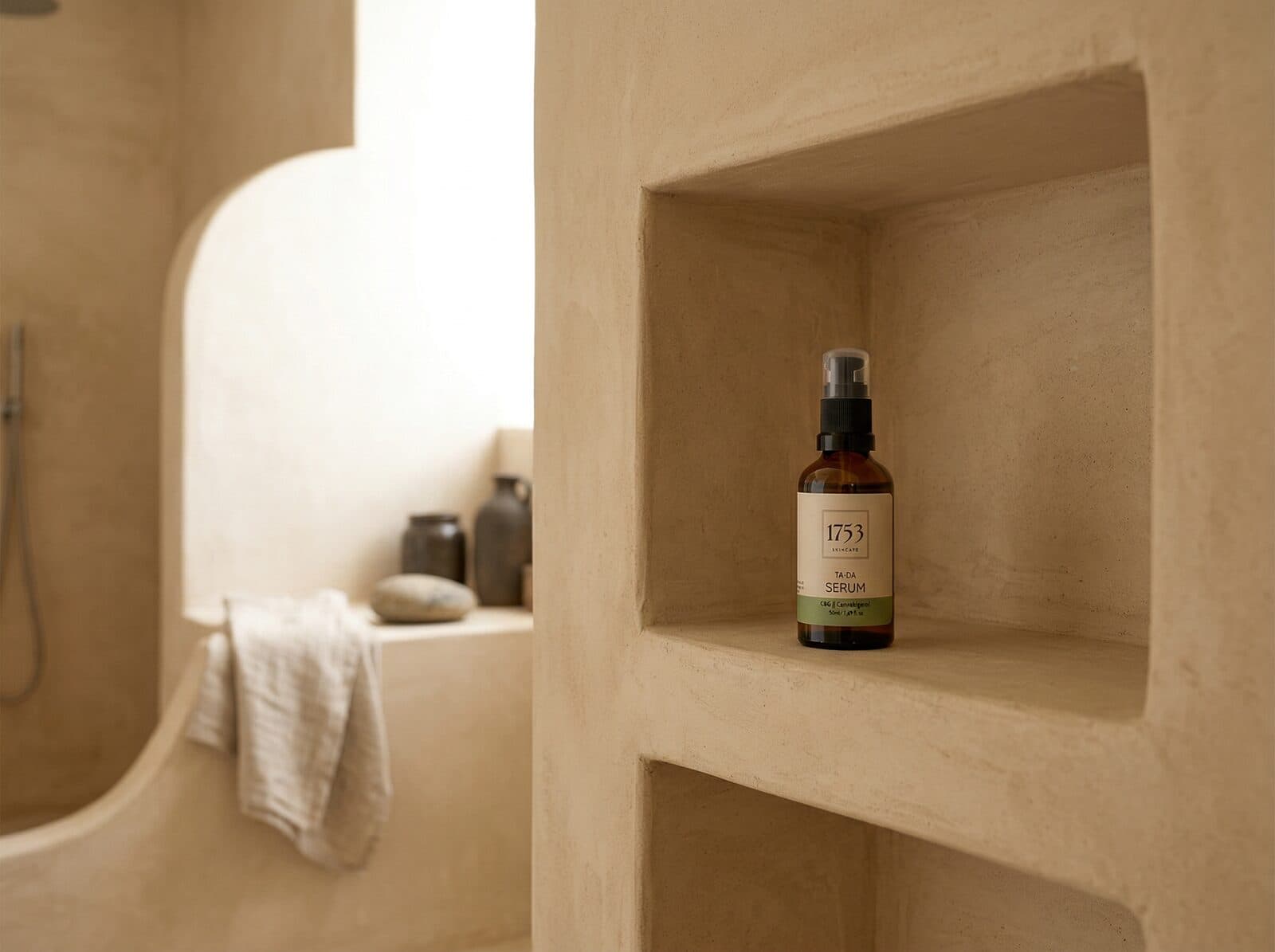
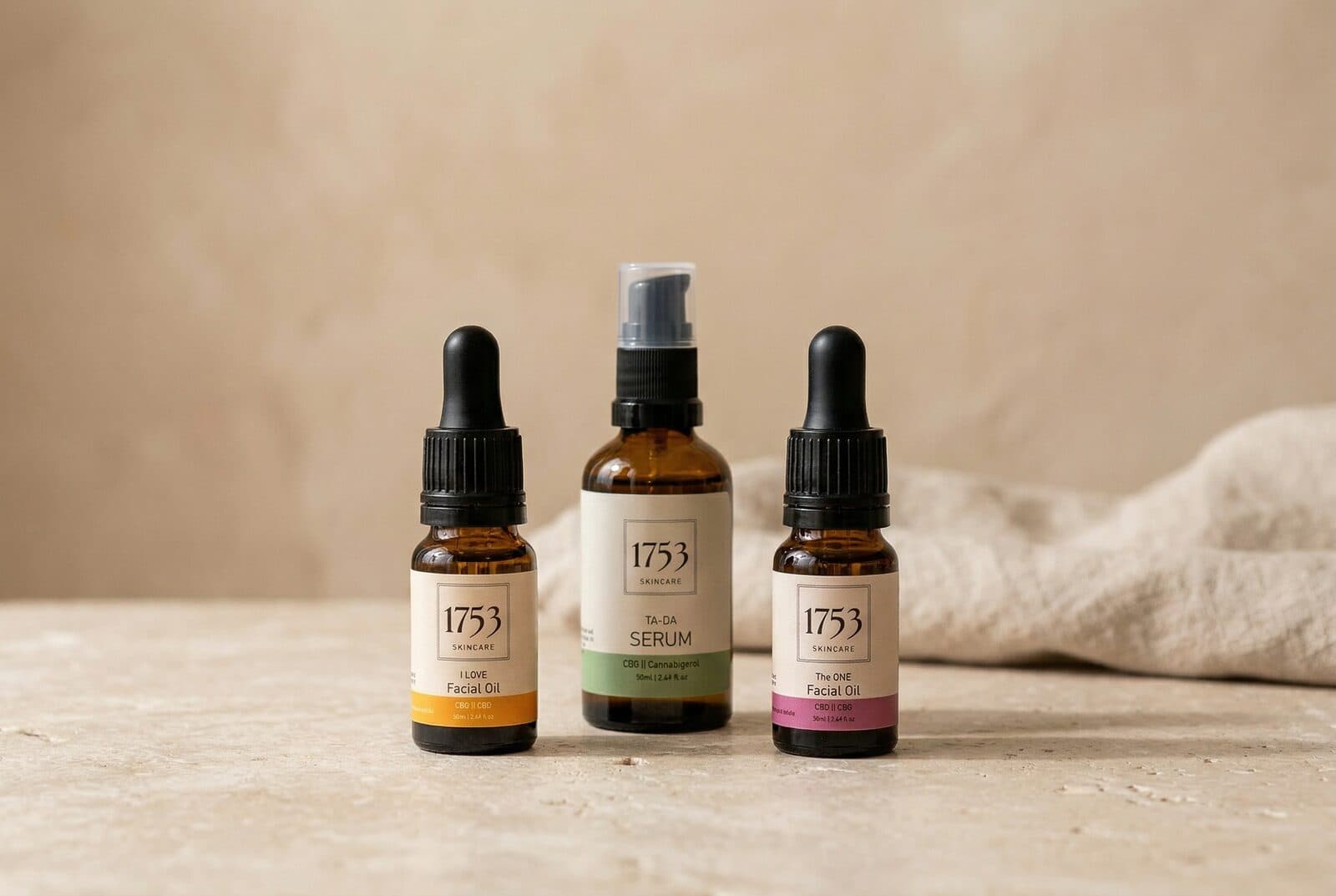
If you want to use peptides properly, choose a product with a clear peptide role and a formula that doesn’t fight itself. Ta-DA serum is interesting because CBG signals through the ECS, the skin’s own communication network, instead of relying on a single peptide fraction. That makes it broader in scope and less mechanical than many classic anti-age solutions.
If you want to keep your routine simple, The ONE and I LOVE give skin a calmer base: the oil helps regulate, the serum helps soothe stress and imbalance, and that often makes skin more responsive to any kind of signaling. If your skin is reactive after too much exfoliation or too many actives, start there before chasing yet another “super peptide.”
If you still want to test the peptide route, think long game: use them consistently, twice daily if your skin tolerates it, and give them time. Peptides are not magic. But in a well-formulated product, on skin that isn’t constantly irritated, they can be a smart way to talk to skin instead of arguing with it.
Frequently asked questions
What are peptides in skincare?
They’re short amino-acid chains that can act as signals, carriers or neuromodulating ingredients. In skincare, they’re used to support collagen, repair and a smoother-looking expression.
Are Matrixyl and Argireline the same thing?
No. Matrixyl is mainly a signal peptide linked to collagen support, while Argireline is usually marketed as a neurotransmitter peptide aimed at expression lines. They work differently.
How long until peptides show results?
Think weeks, not days. Usually 8–12 weeks of consistent use is a fair window before judging whether your skin is responding.
Can peptides be used with other actives?
Yes, but it depends on the formula and your skin’s tolerance. If your skin is stressed, it’s smarter to start with gentle cleansing, hydration and calming steps rather than stacking everything at once.
Sources
- Oláh A, Tóth BI, Borbíró I, et al. Cannabidiol exerts sebostatic and antiinflammatory effects on human sebocytes. J Clin Invest 2014;124(9):3713–3724.
- Lin TK, Zhong L, Santiago JL. Anti-Inflammatory and Skin Barrier Repair Effects of Topical Application of Some Plant Oils. Int J Mol Sci 2017;19(1):70.
- Tóth KF, Ádám D, Bíró T, Oláh A. Cannabinoid signaling in the skin: therapeutic potential of the c(ut)annabinoid system. Molecules 2019;24(5):918.
Article reviewed by Christopher Genberg, founder of 1753 SKINCARE.
Related articles
Ingredient Portrait
cbd for skin – less noise, more balance
CBD for skin is interesting because it doesn’t try to bully the skin into behaving. It works with th...
Ingredient Portrait
cbg for skin – the mother cannabinoid that calms and renews
CBG usually lives in CBD’s shadow, but skin can tell the difference. This is the cannabinoid that ma...
Ingredient Portrait
Retinol facts, minus the marketing fog
Retinol is not magic. It can improve texture and tone, but it can also bring dryness, irritation and...
How to
Natural retinol alternatives – when your skin wants results, not punishment
Retinol has been crowned the answer to everything, but skin rarely cares about trends. If you’re sen...
COMPARISON
cbd vs retinol – same conversation, different jobs
CBD and retinol are often grouped together, but they do not behave the same way. Retinol pushes cell...
Comparison
cbd vs hyaluronic acid – hydration or calm?
This is not a fight between two good ingredients. Hyaluronic acid draws water in. CBD works more aro...