
Ingredient Portrait
Niacinamide guide – the hype, the effect, the red face
Niacinamide has become skincare’s polite do-it-all ingredient, but that doesn’t mean every face loves it. Here we break down what B3 actually does, why some people flush red, and why less is often smarter than more.

Is niacinamide really for everyone?
Niacinamide is a form of vitamin B3, also known as nicotinamide. In skincare, it’s used to support the barrier, help regulate sebum and improve the look of uneven pigmentation, but the real-world effect depends on the formula, the percentage and your own skin. Studies suggest it can help reduce excess shine and support a more resilient barrier by improving the skin’s ability to hold on to moisture.
The problem is that the ingredient has been sold like a miracle, when in practice it’s a balancing act. Higher concentrations, often around 10 percent or more, can irritate some skin types and trigger redness, tingling or a flush. That’s not your skin “getting used to it”; sometimes it’s just your skin asking for less.
Conventional skincare loves to put niacinamide in everything, as if more always means better. But for many people, 2 to 5 percent is enough. If your skin is reactive, prone to redness, or already busy with acids and retinoids, niacinamide can easily become one more unnecessary stressor.
How to use niacinamide wisely
Start low
Choose 2 to 5 percent if you want to test niacinamide. That’s often enough for sebum regulation and a more even-looking complexion without turning your face into a science experiment.
Try it solo first
Use it on its own for 2 to 3 weeks before layering in more actives. That way you can actually tell whether redness, stinging or dryness comes from niacinamide.
Apply after cleansing
Use it on clean, dry skin once a day at first. If your skin stays calm, you can build up to morning and night, but only if it genuinely tolerates it.
Avoid stacking irritants
Already using acids, strong vitamin C or retinoids? Then niacinamide may be too much for some barriers. Less overlap usually means better results.
Watch real signals
Less shine, a smoother look and fewer flare-ups are reasonable signs it suits you. If your skin feels hot, red or tight, step back instead of forcing a trend.

How to handle it without stressing skin
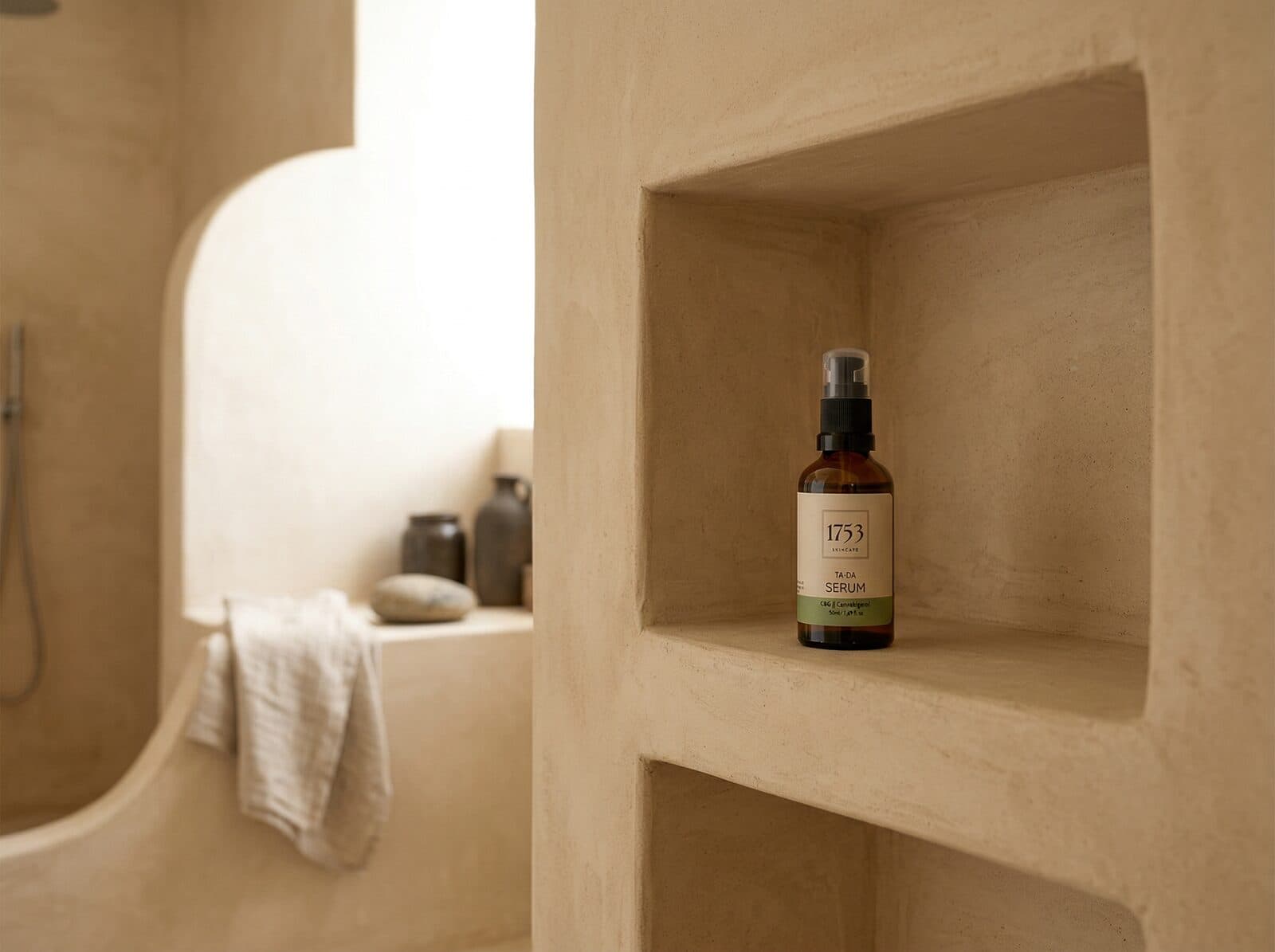
If you want that calmer, more balanced skin feel but don’t want to gamble on B3 flushing, it makes sense to look beyond niacinamide. Ta-DA serum works with CBG and adaptogens instead, offering a different way to support skin balance without relying on nicotinamide, which can trigger some people.
It’s not the same molecule, and that’s the point. In 1753’s world, CBG is used to help skin feel less overwhelmed, while adaptogens support a more resilient feel in skin that gets reactive easily. If you want sebum regulation but already know B3 can make you red, this is the more sensible lane.
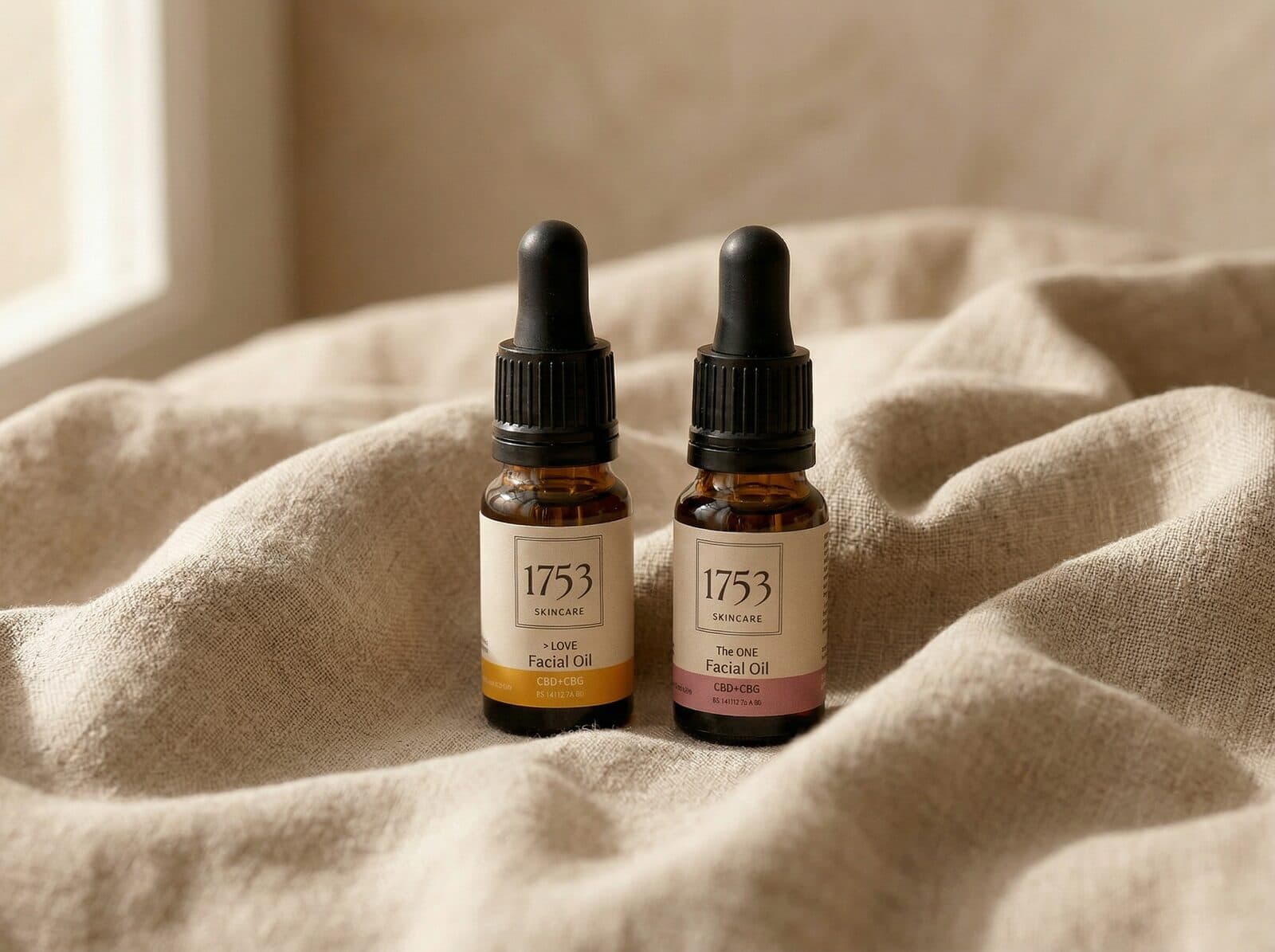
If you want to keep the routine simple, The ONE can help soften and support the skin, while I LOVE is a calm step when skin feels both shiny and annoyed. For a more complete setup, DUO Ta-DA is the obvious choice when you want results without overloading skin with unnecessary actives.
Frequently asked questions
What is niacinamide, exactly?
Niacinamide is vitamin B3 in a skincare-friendly form. It’s used to support the barrier, reduce visible oiliness and even out tone, but it’s not automatically gentle for everyone.
Why do some people flush from niacinamide?
Usually it’s about a too-high concentration, sensitive skin, or a formula that doesn’t suit you. In some cases niacinamide can be associated with nicotinic acid-related flushing, which looks like sudden redness.
How much niacinamide is enough?
For most people, 2 to 5 percent is plenty. Higher numbers don’t automatically mean better results and can raise the risk of irritation, especially if your skin is already stressed.
What if I can’t tolerate niacinamide?
Then it’s worth switching lanes. If you want balance without B3 flushing, Ta-DA serum is a smart alternative because it uses CBG and adaptogens for a different kind of skin support.
Sources
- Oláh A, Tóth BI, Borbíró I, et al. Cannabidiol exerts sebostatic and antiinflammatory effects on human sebocytes. J Clin Invest 2014;124(9):3713–3724.
- Lin TK, Zhong L, Santiago JL. Anti-Inflammatory and Skin Barrier Repair Effects of Topical Application of Some Plant Oils. Int J Mol Sci 2017;19(1):70.
- Tóth KF, Ádám D, Bíró T, Oláh A. Cannabinoid signaling in the skin: therapeutic potential of the c(ut)annabinoid system. Molecules 2019;24(5):918.
Article reviewed by Christopher Genberg, founder of 1753 SKINCARE.
Related articles
Ingredient Portrait
cbd for skin – less noise, more balance
CBD for skin is interesting because it doesn’t try to bully the skin into behaving. It works with th...
Ingredient Portrait
cbg for skin – the mother cannabinoid that calms and renews
CBG usually lives in CBD’s shadow, but skin can tell the difference. This is the cannabinoid that ma...
Ingredient Portrait
Shea butter skin – rich, warm, not for everyone
Shea butter is one of skincare’s most loved butters, and one of the most misunderstood. It comes fro...
Comparison
AI skin analysis online vs a dermatologist – which should you choose?
Both help you understand your skin, but in different ways. An AI skin analysis is fast, free and obj...
Guide
How to read your 15 skin metrics
A radar chart full of numbers can feel overwhelming. But each metric tells you something concrete ab...
How to
Natural retinol alternatives – when your skin wants results, not punishment
Retinol has been crowned the answer to everything, but skin rarely cares about trends. If you’re sen...