
Wellness Skin
coffee skin – not the villain
Coffee is not automatically bad for skin. What often causes trouble is the way we drink it: fast, on an empty stomach, under pressure, and with too little water or sleep. Let’s unpack the antioxidant power, the caffeine effect, and the cortisol stack without the usual fear-mongering.

Is coffee upsetting your skin, or is your routine doing it?
Coffee contains polyphenols, which act as antioxidants, so it is not just a habit but also a biologically active drink. Still, if you stack several cups quickly, especially while stressed, caffeine can contribute to a short cortisol spike. That is not a disaster on its own, but for skin already living in a high-stress state, it can show up as reactivity, dullness, or that tight, thirsty feeling.
The dehydration story is also oversold. In normal amounts, coffee does not dry out skin overnight. What usually matters more is the full context: poor sleep, not enough food, and a nervous system that never really stands down. That is the HPA axis at work, and skin is one of the first places to show it.
So the real question is not whether coffee is allowed. It is whether your skin is reacting to coffee itself, or to the way coffee fits into your day. Ask yourself: does your skin feel tight after cup three, or after you skipped lunch, ran on deadlines, and forgot water until late afternoon?
How to test what your skin reacts to
Delay the first cup
Have coffee after breakfast, not before. Waiting 60–90 minutes after waking can help you avoid stacking caffeine on top of your natural cortisol peak.
Check skin, not hype
At around 2 p.m., ask: is my skin actually tight, or am I just overstimulated? That one question helps separate dehydration, stress and caffeine buzz.
Eat before the next cup
Coffee on an empty stomach can feel sharper for the nervous system. Add protein and fat first, and caffeine is less likely to behave like a cortisol stack.
Match each cup with water
One glass of water per coffee is a simple checkpoint, not a moral rule. The point is to give your skin a fair baseline, not to wage war on coffee.
Set a caffeine cutoff
Stop 8 hours before bed if sleep gets lighter. Poor sleep is usually harder on skin than coffee itself, because recovery drops and the stress system stays switched on.

How to actually handle coffee skin
When coffee is part of your rhythm instead of your stress, your skin gets easier to read. Fungtastic supports the body from within, which matters when your days are packed and your HPA axis never quite gets the memo to calm down. It is simple biology: less strain, better recovery conditions.
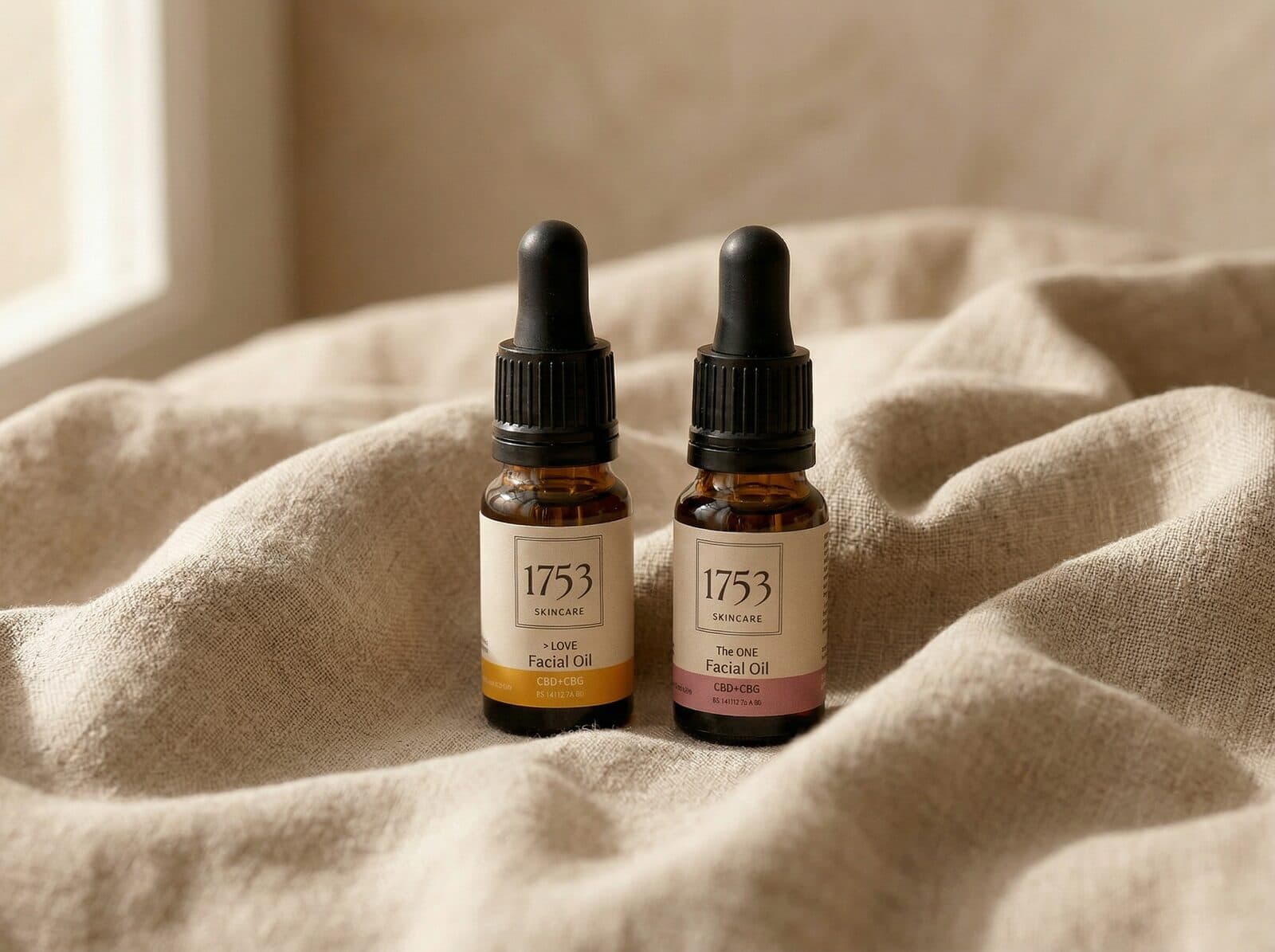
On the outside, the DUO-kit – The ONE and I LOVE – makes sense when skin feels reactive. The ONE, with CBD and MCT, helps skin stay regulated, while I LOVE with CBG is the kind of calming, antibacterial support you reach for when your skin gets irritated too easily. Add Ta-DA serum when you want an antioxidant cocktail with adaptogens, not a shelf full of random actives.
The point is not to blame coffee. It is to stop treating skin like it should tolerate everything. Support the body from within with Fungtastic. Support the skin on the outside with DUO-kit and Ta-DA serum. That is the obvious, non-dramatic way to work with coffee skin instead of against it.
Products we recommend
 Save €34
DUO kit
Two face oils, one for morning and one for evening. Simple skincare that works with your skin, not against it.
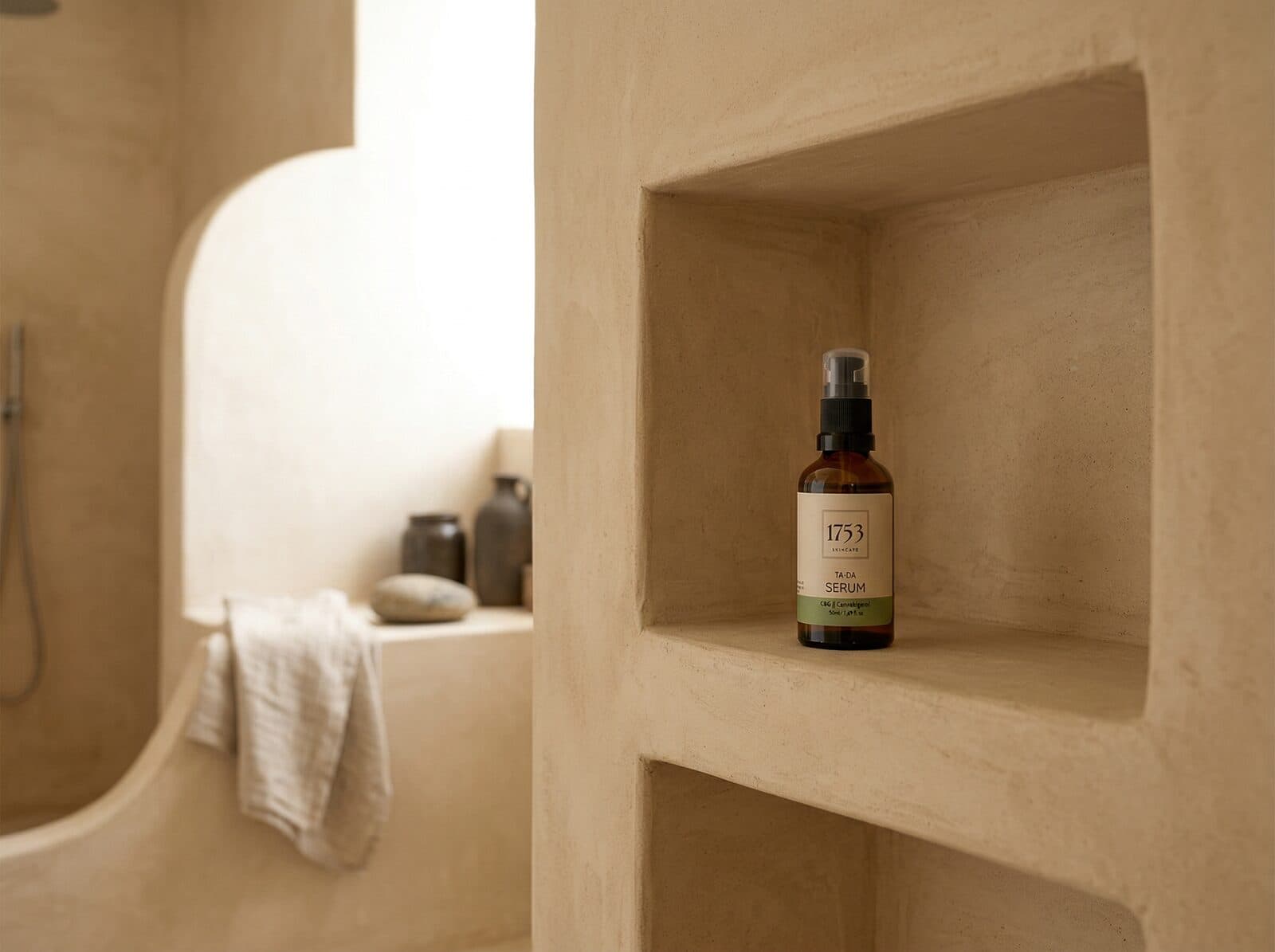
TA-DA Serum
A CBG-powered serum that seals in moisture and adds glow, whatever the season.
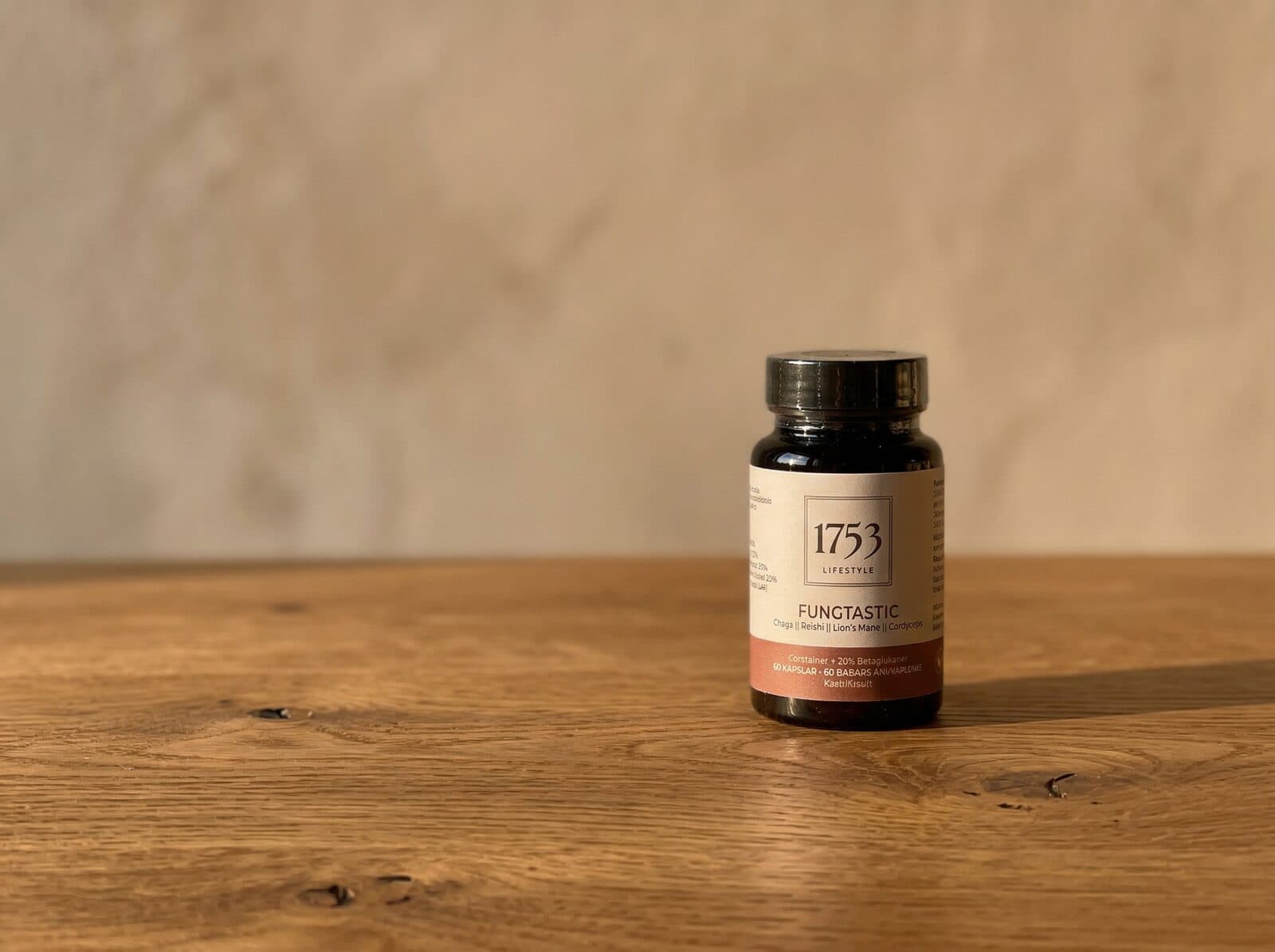
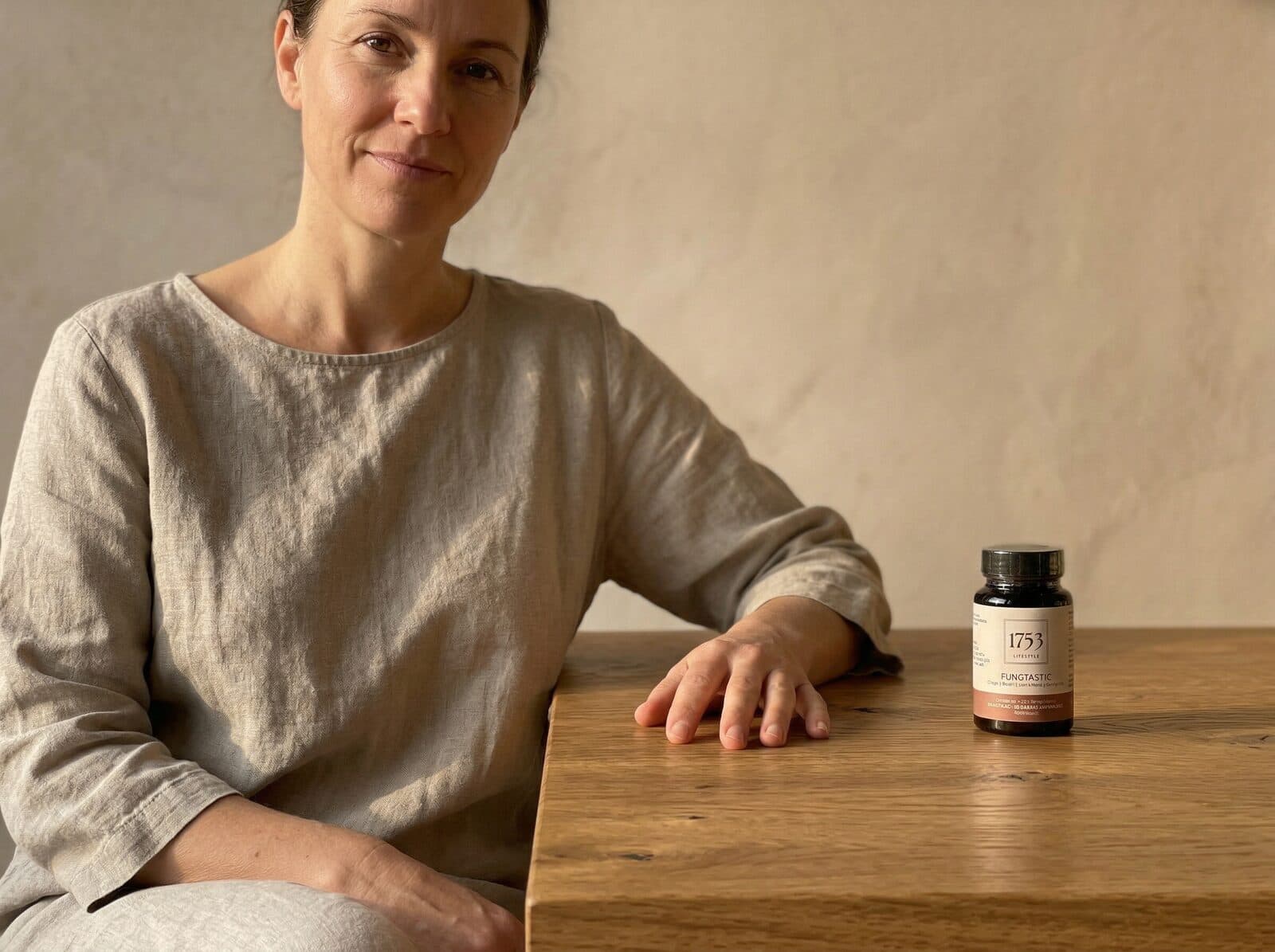
Fungtastic Mushroom Extract
Four mushrooms in one formula to support immunity, focus, energy and sleep from within.
Frequently asked questions
Does coffee dehydrate the skin?
Not in normal amounts, no. What people often notice is really a mix of sleep loss, stress, not enough food and a high cortisol stack, not coffee alone.
Can coffee trigger breakouts?
For some people, indirectly yes. The usual suspects are stress, less sleep and blood sugar swings, so it helps to look at the whole routine rather than coffee in isolation.
When is coffee easiest on skin?
For many, after breakfast and not right after waking. Try waiting 60–90 minutes and see whether your skin feels calmer through the day.
Do I need to quit coffee for better skin?
Not necessarily. Start with timing, food, water and sleep, then give your skin support that matches how it actually behaves.
Sources
- Chen Y, Lyga J. Brain-skin connection: stress, inflammation and skin aging. Inflamm Allergy Drug Targets 2014;13(3):177–190.
- Walker MP, van der Helm E. Overnight therapy? The role of sleep in emotional brain processing. Psychol Bull 2009;135(5):731–748.
- Katta R, Desai SP. Diet and Dermatology: The Role of Dietary Intervention in Skin Disease. J Clin Aesthet Dermatol 2014;7(7):46–51.
Article reviewed by Christopher Genberg, founder of 1753 SKINCARE.
Related articles
Wellness
Sleep skin connection – when the night does the work
Beauty sleep is not a cliché. While you sleep, cortisol drops, growth hormone rises and the body get...
Wellness Axis
Gut skin connection – when the gut shows on your face
Your skin is not a separate island. It listens to your gut, your stress, and the state of your intes...
WELLNESS
Stress skin – when your body hits the alarm button
You usually feel it before you can explain it: redness, tightness, stinging, or a psoriasis flare th...
Lifestyle
Perimenopause and skin – when everything shifts at once
One day your skin feels drier, thinner and suddenly touchy. Adult acne may show up, fine lines look ...
Cyclic Skincare
Menstrual Cycle and Skin – why one routine doesn’t fit all
Your skin doesn’t run on a fixed schedule; it runs with your body. Across the menstrual cycle, hormo...
Postpartum Skin
Postpartum skin – why it changes so much
After pregnancy, skin can feel like it belongs to someone else. Hormones drop, sleep gets broken, an...