
Comparison
cbd vs peptides – two systems, different jobs
CBD and peptides often sit next to each other on the shelf, but they do not speak to skin in the same way. One works through the body’s balancing network, the ECS. The other sends a direct message about repair and collagen. Here’s the real difference.

Which one is stronger – or is that the wrong question?
CBD acts more indirectly, partly through the endocannabinoid system, or ECS, which helps regulate stress, sebum and imbalance in the skin. It is not a quick “build more collagen” signal. It is more like lowering the noise so skin can behave better. Research on CBD in skincare often points to anti-inflammatory and sebum-modulating mechanisms, but results depend on formulation, dose and skin type.
Peptides are different. Signal peptides are short amino acid chains that can prompt skin to act as if repair is needed, which may support collagen stimulation. That is why peptides show up so often in anti-age conversations. The downside? They are more specific, and sometimes more dependent on the rest of the formula actually being well built, otherwise the signal becomes expensive noise.
So the comparison is not “better” or “worse”, but “for what goal?”. If skin is reactive, oily, stressed or easily irritated, CBD may be the more relevant tool. If your main goal is firmness and lines, peptides are usually more targeted. The smart question is not what sounds most advanced, but what your skin actually needs right now.
How to choose the right lane
Read the skin behaviour
If skin gets shiny, red or easily overstimulated, it often needs calm before it needs more actives. In that case, CBD can make more sense than another signal-heavy product.
Start with the goal
If your main aim is firmness and a plumper look, peptides are often the more direct choice. They are designed to talk collagen, not to quiet irritation.
Look at the whole routine
Peptides work best in a formula the skin can actually tolerate. If cleansing is too harsh or the routine too aggressive, the signal matters less than the damage around it.
Choose by tolerance
Sensitive skin often prefers simpler, more regulating products. CBD-based oils can be easier to live with day after day than a heavy anti-age routine packed with actives.
Avoid fake complexity
More actives do not automatically mean better results. Sometimes the most effective move is combining calming support with something that improves daily skin function, not just ambition.

How to solve it without overworking the skin
If you want to pick a side, pick peptides when your main focus is collagen support and a more targeted anti-age feel. Pick CBD when skin needs regulation, balance and less stress. They are different languages, and it is fine to use them for different problems.
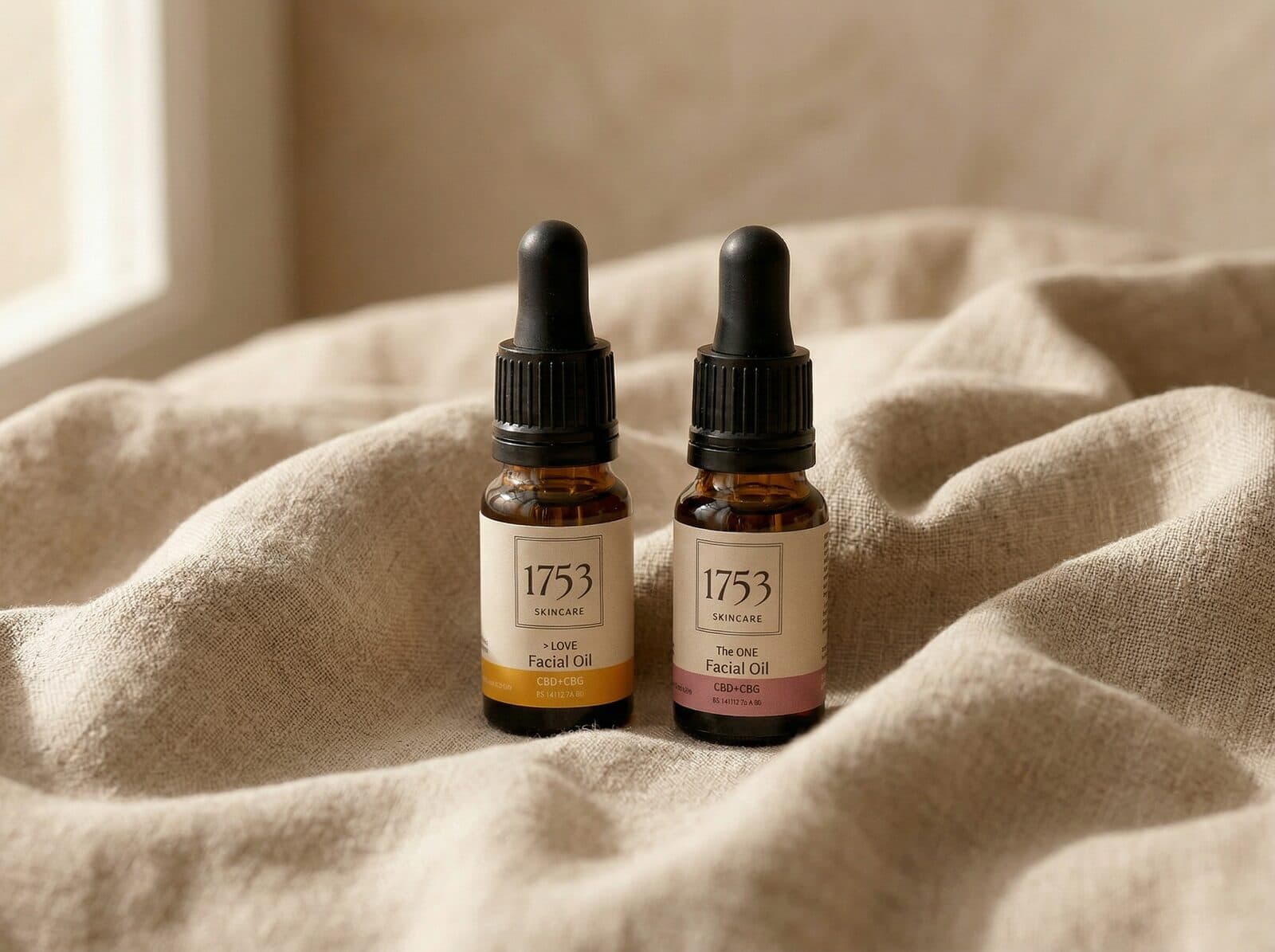
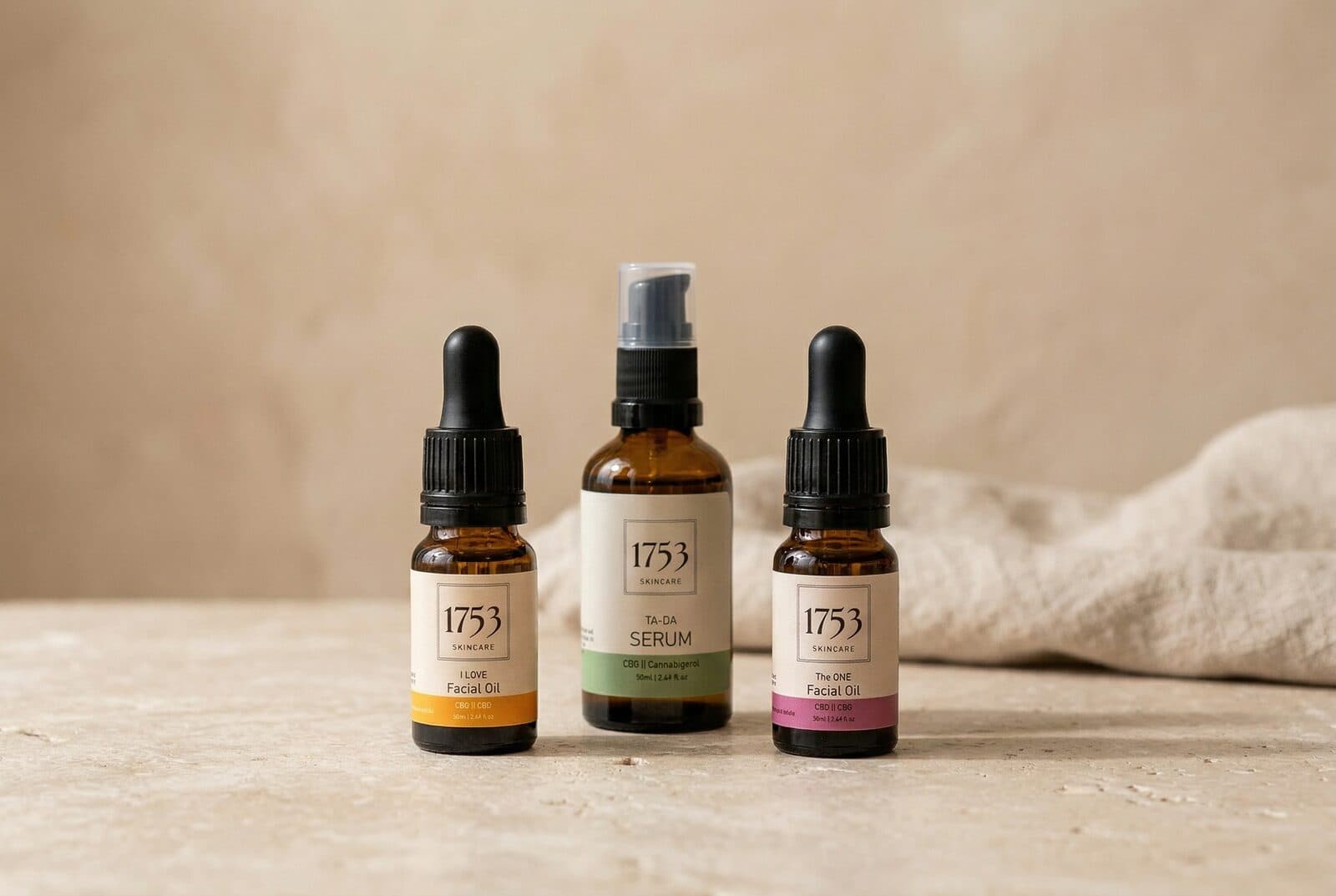
But skin rarely works as a single-track system. That is why 1753’s combination of The ONE and I LOVE is interesting: CBD + CBG gives broader cannabinoid support and works well as a base when skin needs calming and control. Add Ta-DA serum when you want a more active antioxidant and anti-age angle without going all in on harsh solutions.
This is not about replacing peptides with something “miracle-like”. It is a more grounded way to build skincare: first stability, then targeted signals. For many people, that is exactly what makes a routine work long term.
Products we recommend
 Save €34
DUO kit
Two face oils, one for morning and one for evening. Simple skincare that works with your skin, not against it.
 Save €60
DUO kit + TA-DA Serum
The full routine in one: three products that help skin become calmer, stronger and more resilient.
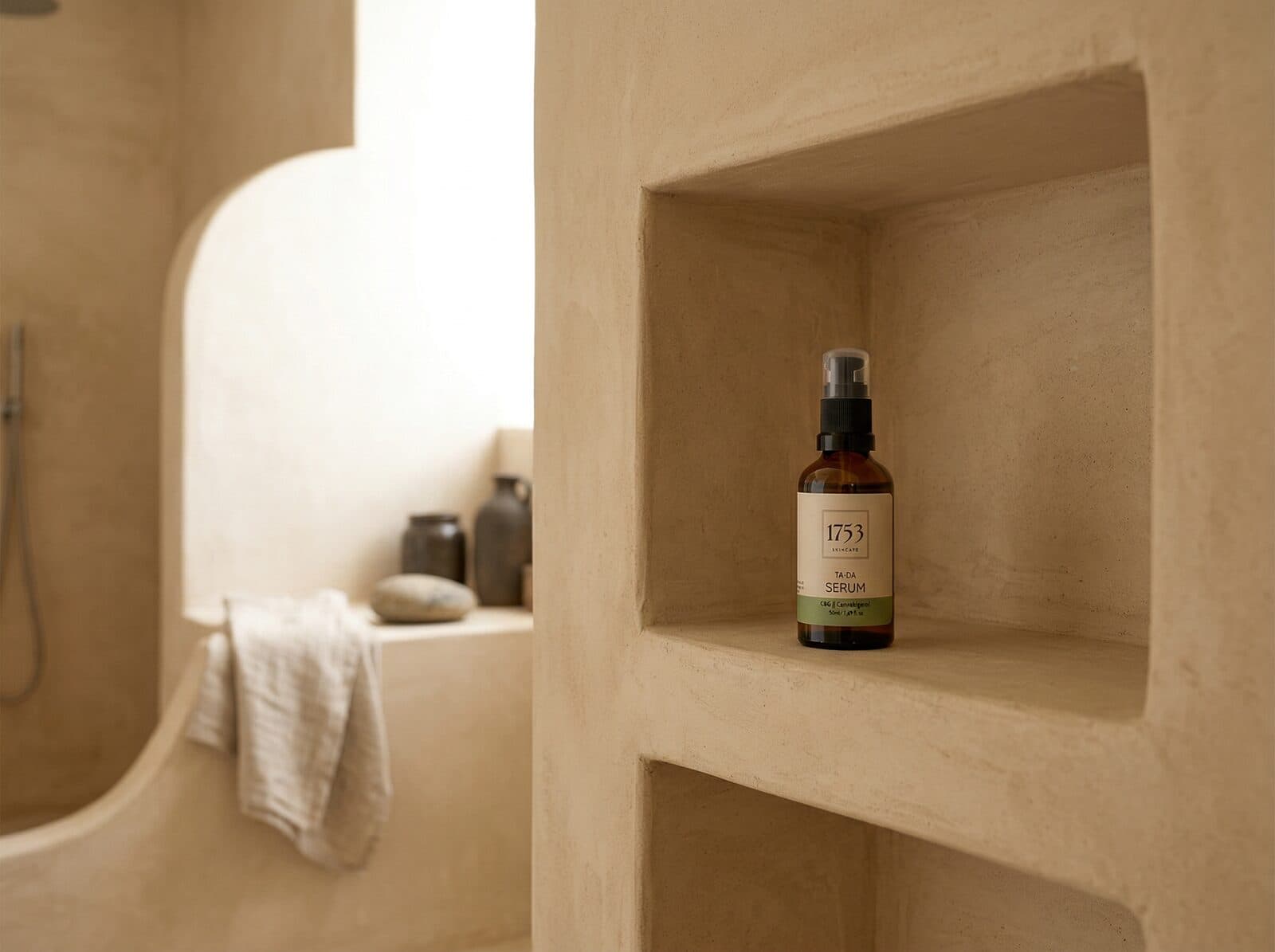
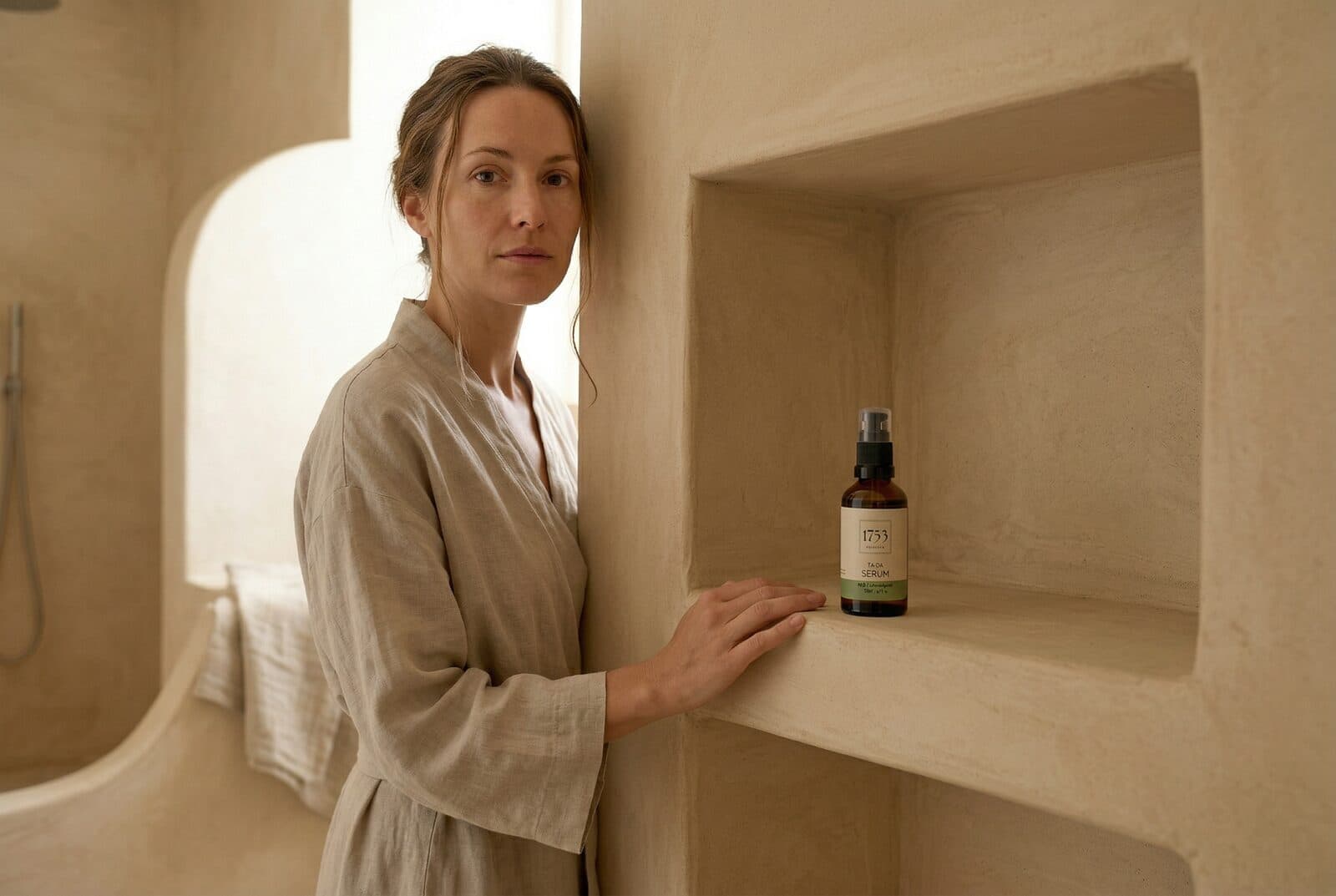
TA-DA Serum
A CBG-powered serum that seals in moisture and adds glow, whatever the season.
Frequently asked questions
Are CBD and peptides interchangeable?
No. CBD is more about regulation and calm, while peptides are more about signalling collagen and firmness. The best choice depends on what your skin needs most right now.
Can you use both together?
Yes, often they work well together if the formula is thoughtful. CBD may help keep skin calm while peptides get better working conditions. The problem is usually not the combo, but overloaded routines.
Are peptides okay for sensitive skin?
Sometimes, yes, but not always. They are often gentler than acids or retinoids, yet they are still active signals. Sensitive skin usually does better when you build slowly and avoid chasing fast results.
What is ECS in skincare?
ECS stands for the endocannabinoid system. In skin, it is linked to balance, sebum and stress responses. CBD interacts with it indirectly, which is a big part of why it feels relevant in skincare.
Sources
- Oláh A, Tóth BI, Borbíró I, et al. Cannabidiol exerts sebostatic and antiinflammatory effects on human sebocytes. J Clin Invest 2014;124(9):3713–3724.
- Tóth KF, Ádám D, Bíró T, Oláh A. Cannabinoid signaling in the skin: therapeutic potential of the c(ut)annabinoid system. Molecules 2019;24(5):918.
Article reviewed by Christopher Genberg, founder of 1753 SKINCARE.
Related articles
COMPARISON
cbd vs retinol – same conversation, different jobs
CBD and retinol are often grouped together, but they do not behave the same way. Retinol pushes cell...
Comparison
cbd vs hyaluronic acid – hydration or calm?
This is not a fight between two good ingredients. Hyaluronic acid draws water in. CBD works more aro...
COMPARISON
cbd vs niacinamide – two ways to less shine
If your skin is oily but also easily irritated, it is easy to get stuck between two classics: cbd vs...
Ingredient Portrait
cbd for skin – less noise, more balance
CBD for skin is interesting because it doesn’t try to bully the skin into behaving. It works with th...
Ingredient Portrait
cbg for skin – the mother cannabinoid that calms and renews
CBG usually lives in CBD’s shadow, but skin can tell the difference. This is the cannabinoid that ma...
Ingredient Portrait
Shea butter skin – rich, warm, not for everyone
Shea butter is one of skincare’s most loved butters, and one of the most misunderstood. It comes fro...