
CBD Skincare
CBD for atopic dermatitis – support your skin's own strength
Atopic dermatitis is a chronic battle between skin and immune system. CBD offers something unique – it calms the immune response without suppressing it, and strengthens the barrier without burdening it.

What is atopic dermatitis?
Atopic dermatitis (AD) is the most common form of eczema and part of the atopic triad – along with asthma and allergic rhinitis. It's a chronic, genetically determined disease affecting both skin barrier function and immune system regulation. Globally, 15–20 percent of children and 1–3 percent of adults are affected.
At the core of AD is a mutation in the filaggrin gene – a protein crucial for skin barrier integrity. When filaggrin is absent or defective, the barrier leaks, allergens penetrate, and the immune system overreacts with a Th2-dominated inflammatory response. Itching is often the most tormenting symptom and can seriously impact sleep and quality of life.
Treatment has traditionally focused on cortisone during flares and emollients for maintenance. Newer biologic drugs like dupilumab have shown promising results but are expensive and reserved for severe cases. The need for safe, effective complements is significant – especially those that support the barrier and calm the immune system simultaneously.
Lifestyle adaptations for atopic dermatitis
Moisturize consistently
Apply emollients at least twice daily – even during symptom-free periods. Preventive barrier care reduces the number and severity of flares. It's the most important habit you can establish.
Identify and avoid triggers
Common triggers include dust mites, pets, detergents, synthetic fabrics, and stress. Systematic elimination brings clarity. Everyone has their own unique triggers.
Control indoor climate
Dry air worsens AD. Keep humidity between 40–60 percent with a humidifier. Avoid overheated rooms – sweat irritates atopic skin.
Support the microbiome
Atopic skin often has an imbalanced microbiome dominated by Staphylococcus aureus. Probiotics (both oral and topical) and mild, pH-balanced products can support healthier bacterial flora.
Prioritize stress management
The psychosomatic component of AD is well-documented. Stress triggers flares and flares cause stress – a vicious cycle. Mindfulness, CBT, and regular exercise can break the pattern.

How CBD helps with atopic dermatitis
CBD's interaction with the endocannabinoid system addresses several core mechanisms of AD. Through CB2 receptors in immune cells, CBD modulates the overactive Th2 response that drives inflammation, without fully suppressing the immune system – a crucial advantage over immunosuppressive treatments.
CBD also supports ceramide production – the lipids that AD skin is deficient in. Research shows CBD can reduce transepidermal water loss and strengthen tight junctions in the skin barrier. The anti-itch effect is mediated via TRPV1 receptors.
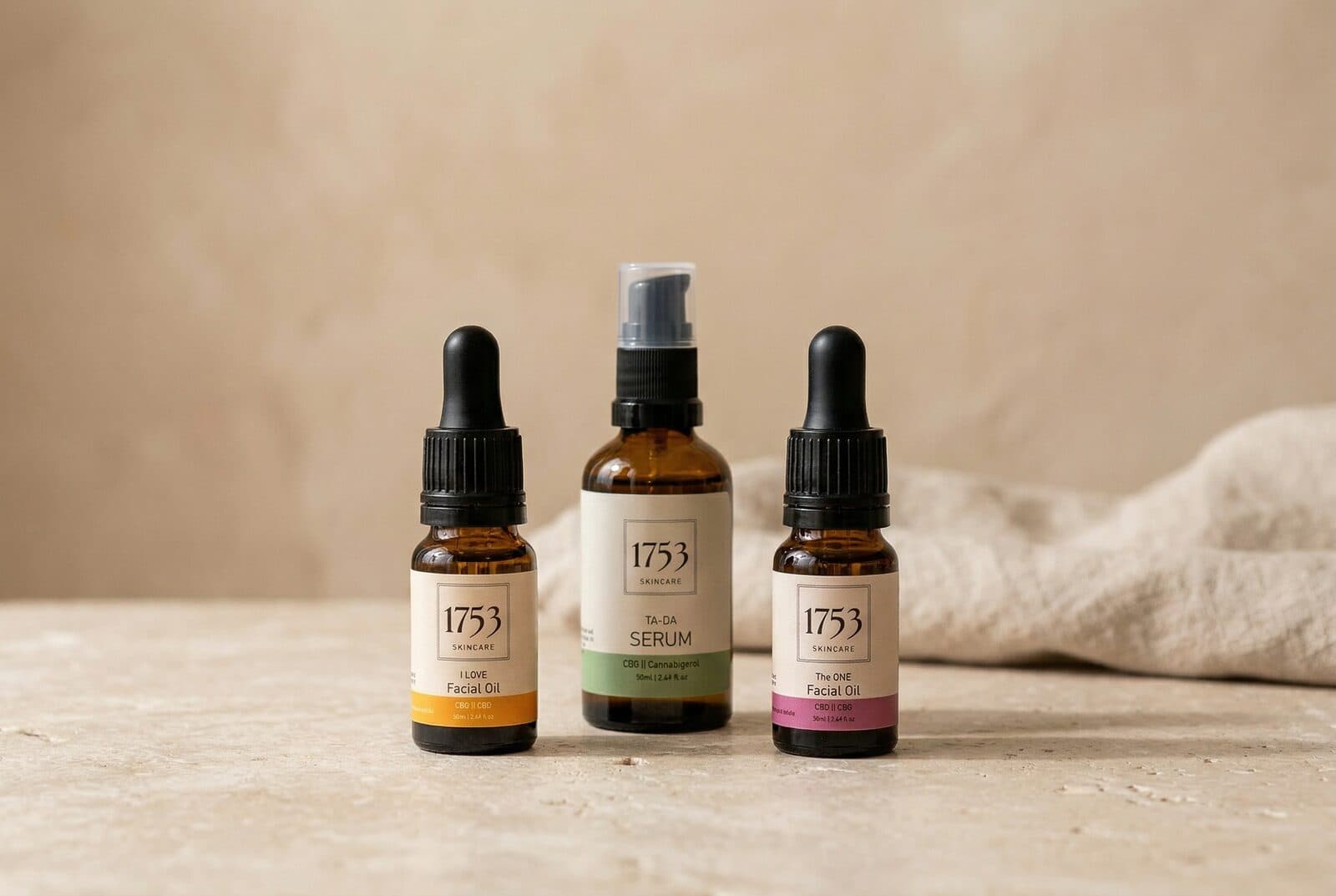
The DUO-kit + TA-DA Serum provides the most comprehensive CBD routine for atopic skin. The ONE (10% CBD) and I LOVE (10% CBD + 5% CBG) deliver daily barrier support, while TA-DA Serum with concentrated CBG can be applied during flares for targeted anti-inflammatory effect. No fragrances, no known irritants – just active ingredients.
Frequently asked questions
Is CBD safe for severe atopic dermatitis?
Our topical products are formulated without common irritants and are generally well-tolerated. For severe AD, we recommend consulting your dermatologist before adding new products, and always patch test first.
Can CBD reduce the need for cortisone?
Some find that regular CBD use reduces cortisone needs during flares. However, it's important not to stop prescribed medications without medical supervision. CBD works best as a complement.
What ingredients do you avoid?
Fragrance, alcohol, preservatives, synthetic colorants, and essential oils. We keep ingredient lists short and transparent. Every ingredient has a clear purpose for skin function.
Sources
- Bíró T, Tóth BI, Haskó G, Paus R, Pacher P. The endocannabinoid system of the skin in health and disease. Trends Pharmacol Sci 2009;30(8):411–420.
- Oláh A, Tóth BI, Borbíró I, et al. Cannabidiol exerts sebostatic and antiinflammatory effects on human sebocytes. J Clin Invest 2014;124(9):3713–3724.
- Tóth KF, Ádám D, Bíró T, Oláh A. Cannabinoid signaling in the skin: therapeutic potential of the c(ut)annabinoid system. Molecules 2019;24(5):918.
Article reviewed by Christopher Genberg, founder of 1753 SKINCARE.
Related articles
CBD Skincare
CBD for eczema – give your skin what it truly needs
Eczema is more than dry skin. It's an immune system overreacting and a skin barrier that leaks. CBD ...
CBD Skincare
CBD for psoriasis – slow down, heal from within
Psoriasis isn't just a skin problem – it's an immune system out of balance. CBD offers a way to work...
CBD Skincare
CBD for dry skin – stop slathering, start repairing
Dry skin isn't a moisture problem – it's a barrier problem. All the moisturizer in the world won't h...
Ingredient Portrait
cbd for skin – less noise, more balance
CBD for skin is interesting because it doesn’t try to bully the skin into behaving. It works with th...
Ingredient Portrait
cbg for skin – the mother cannabinoid that calms and renews
CBG usually lives in CBD’s shadow, but skin can tell the difference. This is the cannabinoid that ma...
Ingredient Portrait
Retinol facts, minus the marketing fog
Retinol is not magic. It can improve texture and tone, but it can also bring dryness, irritation and...