
Skin Biology
Sebum biology – why skin gets oily
Sebum is not dirt, and it is not something your skin needs to be scrubbed into submission. It is your own protective oil layer, built to lubricate, shield and keep the barrier working. Once you understand sebum biology, it gets much easier to stop overdoing skincare and start supporting skin instead.

Why do we keep treating skin oil like the enemy?
Sebum is made in the sebaceous glands and is mainly composed of triglycerides, wax esters, squalene and free fatty acids. This is not random grease. It is a biological blend that helps determine water loss, surface comfort and how the skin meets the outside world.
Research from 2020 to 2025 shows sebum is dynamic: its composition shifts with age, climate, stress and androgen control. Androgens drive oil production, but that is only part of the picture. How squalene oxidises, how the skin microbiome behaves and how healthy the barrier is all influence shine, congestion and irritation.
That is why harsh cleansing often backfires. Strip away too much oil and skin may respond with more sebum, more friction and a more reactive surface. Sebum biology is not about making skin dry. It is about understanding the layer that keeps skin functional in the first place.
What you can do today
Cleanse gently
Choose a cleanser that lifts oil without stripping everything away. A mild MCT-based formula can leave skin feeling clean without triggering that over-cleansed, tight sensation.
Stop over-exfoliating
If skin is already shiny and sensitive, it usually does not need more acids. Too much exfoliation disrupts the barrier, increases irritation and can make skin feel even more unbalanced the next day.
Prioritise the barrier
Sebum works best when the skin surface is not under stress. Look for routines that reduce friction, hold on to moisture and let your own lipids do their job in peace.
Watch the pattern
Does skin get oilier in heat, around your cycle or when sleep is poor? That data is often more useful than any trendy skin quiz. Sebum reacts to real life, not slogans.
Choose calming actives
When skin feels unstable, it is smarter to use ingredients that support calm and balance than to add more harsh actives. Gentle precision beats skincare chaos almost every time.

How to support sebum without fighting it
The smartest move is to work with skin, not against it. When sebum is out of rhythm, the goal is not to dry it out but to help skin settle back into a more stable pattern. Studies on skin lipids suggest that gentle formulas that respect the barrier often perform better in daily life than harsh, degreasing routines.
That is where 1753 fits naturally. The ONE, with CBD and MCT, is made to support a more regulated skin feel without heaviness. I LOVE, the CBG serum, brings a calming step when skin feels reactive, and Ta-DA serum adds antioxidant support when sebum, stress and oxidation start pulling in the wrong direction.
The idea is consistent across the range: certified hemp, phytocannabinoids and safer formulas that respect skin biology. Less noise, less overcorrection. Just products that let the skin’s own oil layer do what it was designed to do, instead of constantly being provoked.
Products we recommend
 Save €34
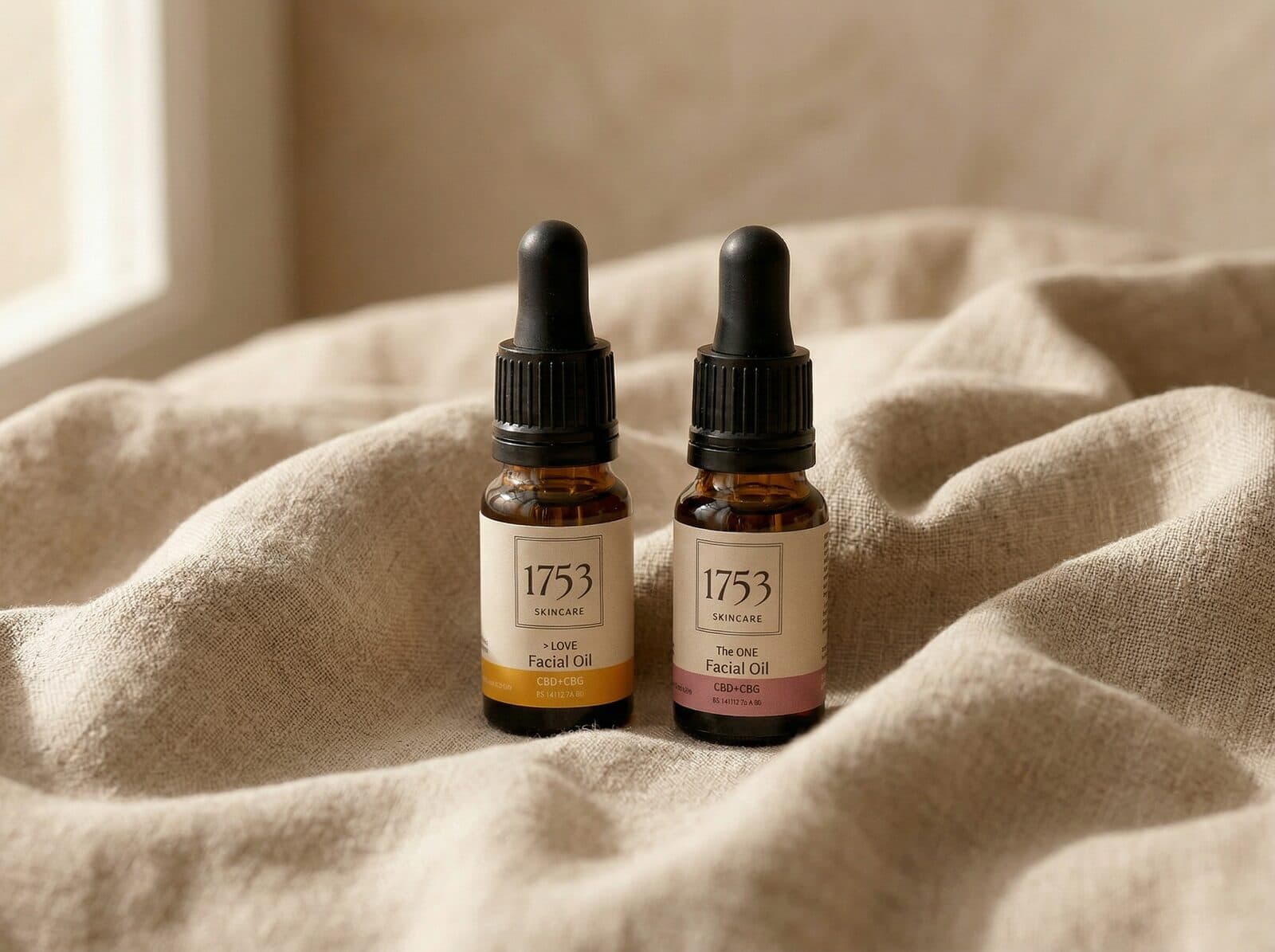
DUO kit
Two face oils, one for morning and one for evening. Simple skincare that works with your skin, not against it.
 Save €60
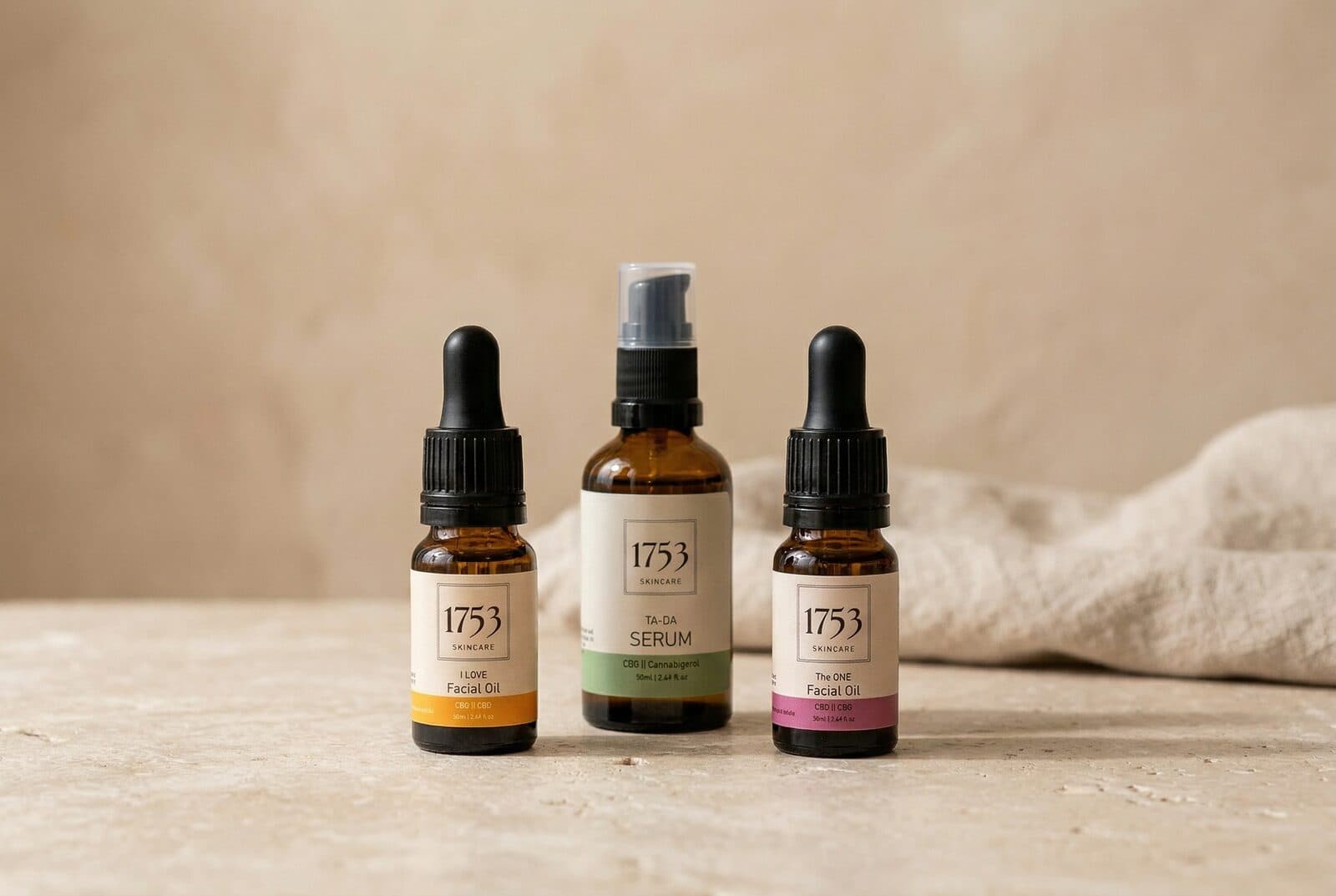
DUO kit + TA-DA Serum
The full routine in one: three products that help skin become calmer, stronger and more resilient.
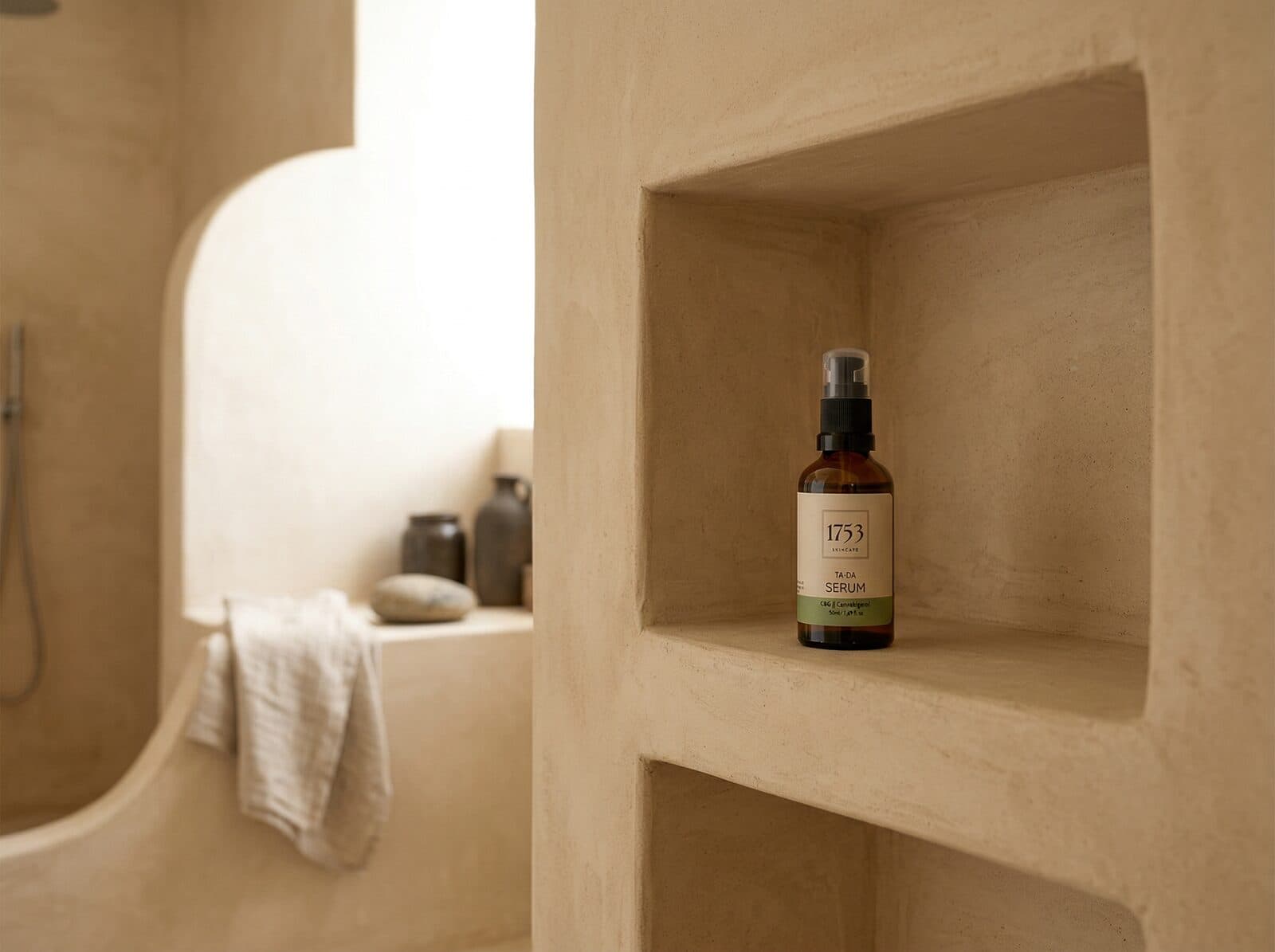
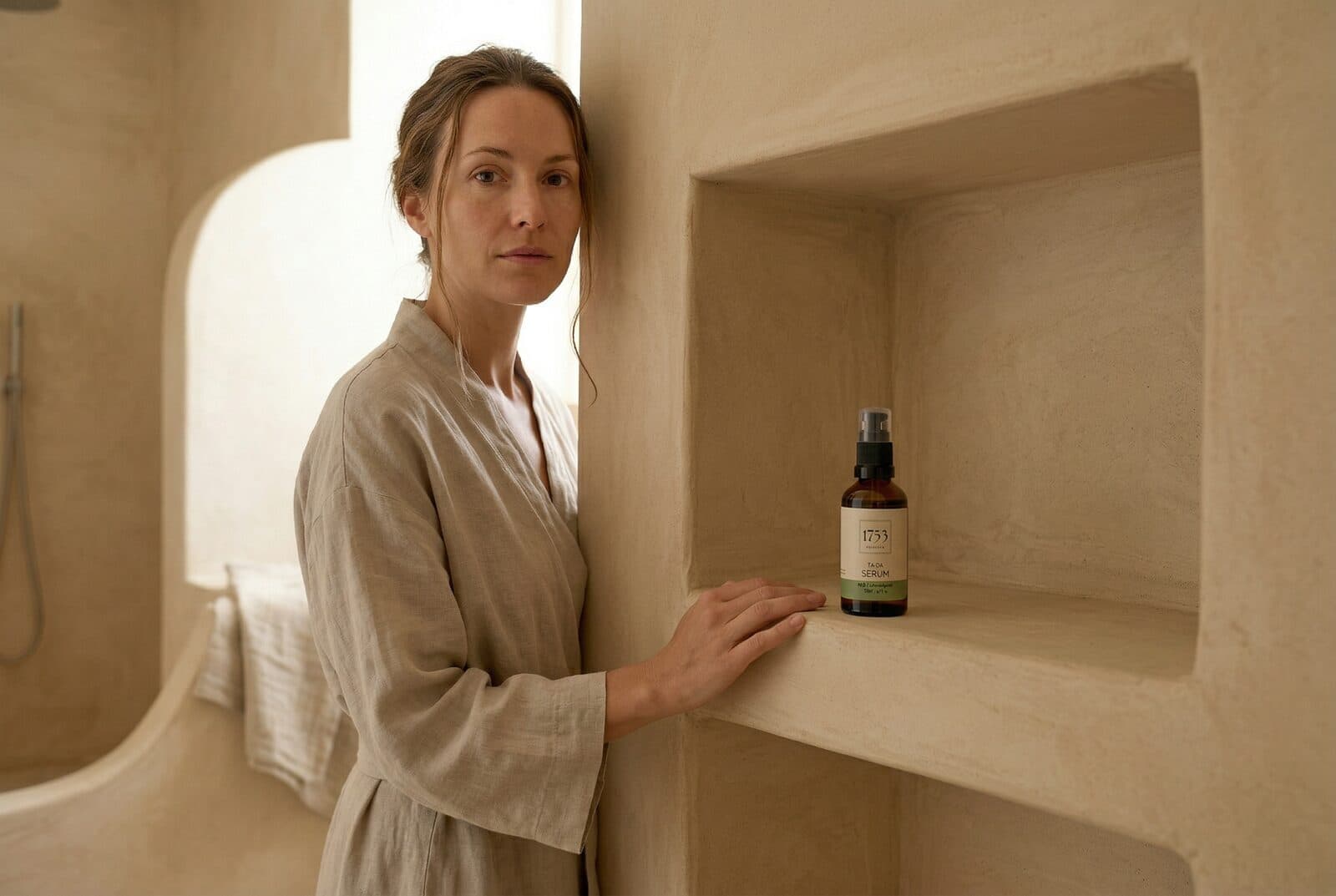
TA-DA Serum
A CBG-powered serum that seals in moisture and adds glow, whatever the season.
Frequently asked questions
Is sebum the same as oily skin?
No. Sebum is the skin’s natural oil, while oily skin is just a description of how it looks or feels. You can have plenty of sebum without being out of balance, especially if the barrier is calm.
Why does skin get shinier on some days?
Sebum is influenced by hormones, temperature, stress and sleep. That is why skin can look noticeably shinier around your cycle, in warm weather or after a rough week.
Does washing your face more often help?
Not necessarily. Too much cleansing can disturb surface lipids and push skin toward more shine or irritation. Gentle cleansing is usually the better move.
What does squalene do in skin?
Squalene is a natural lipid in sebum that supports softness and protection. It is also prone to oxidation, which is one reason antioxidant support can make sense.
Sources
- Bíró T, Tóth BI, Haskó G, Paus R, Pacher P. The endocannabinoid system of the skin in health and disease. Trends Pharmacol Sci 2009;30(8):411–420.
- Tóth KF, Ádám D, Bíró T, Oláh A. Cannabinoid signaling in the skin: therapeutic potential of the c(ut)annabinoid system. Molecules 2019;24(5):918.
- Byrd AL, Belkaid Y, Segre JA. The human skin microbiome. Nat Rev Microbiol 2018;16(3):143–155.
Article reviewed by Christopher Genberg, founder of 1753 SKINCARE.
Related articles
Science
Endocannabinoid system skin guide – your skin’s built-in calm
Your skin is not just a surface. It is a living control system trying to stay calm, resilient, and b...
SKIN SCIENCE
CB1 CB2 receptors skin – let the skin lead for once
Skin is not a passive surface. It has its own signalling network, where CB1 and CB2 help shape calm,...
Science
ECS and stress – your body’s built-in brake
Stress is not just a mindset problem. It starts as a biological chain reaction: the HPA axis fires, ...
Ingredient Portrait
cbd for skin – less noise, more balance
CBD for skin is interesting because it doesn’t try to bully the skin into behaving. It works with th...
Ingredient Portrait
cbg for skin – the mother cannabinoid that calms and renews
CBG usually lives in CBD’s shadow, but skin can tell the difference. This is the cannabinoid that ma...
Ingredient Portrait
Shea butter skin – rich, warm, not for everyone
Shea butter is one of skincare’s most loved butters, and one of the most misunderstood. It comes fro...