
The basics
How often should you do a skin analysis?
A single skin analysis gives a snapshot. The real value comes when you repeat it regularly and see how your skin develops. But how often is right?
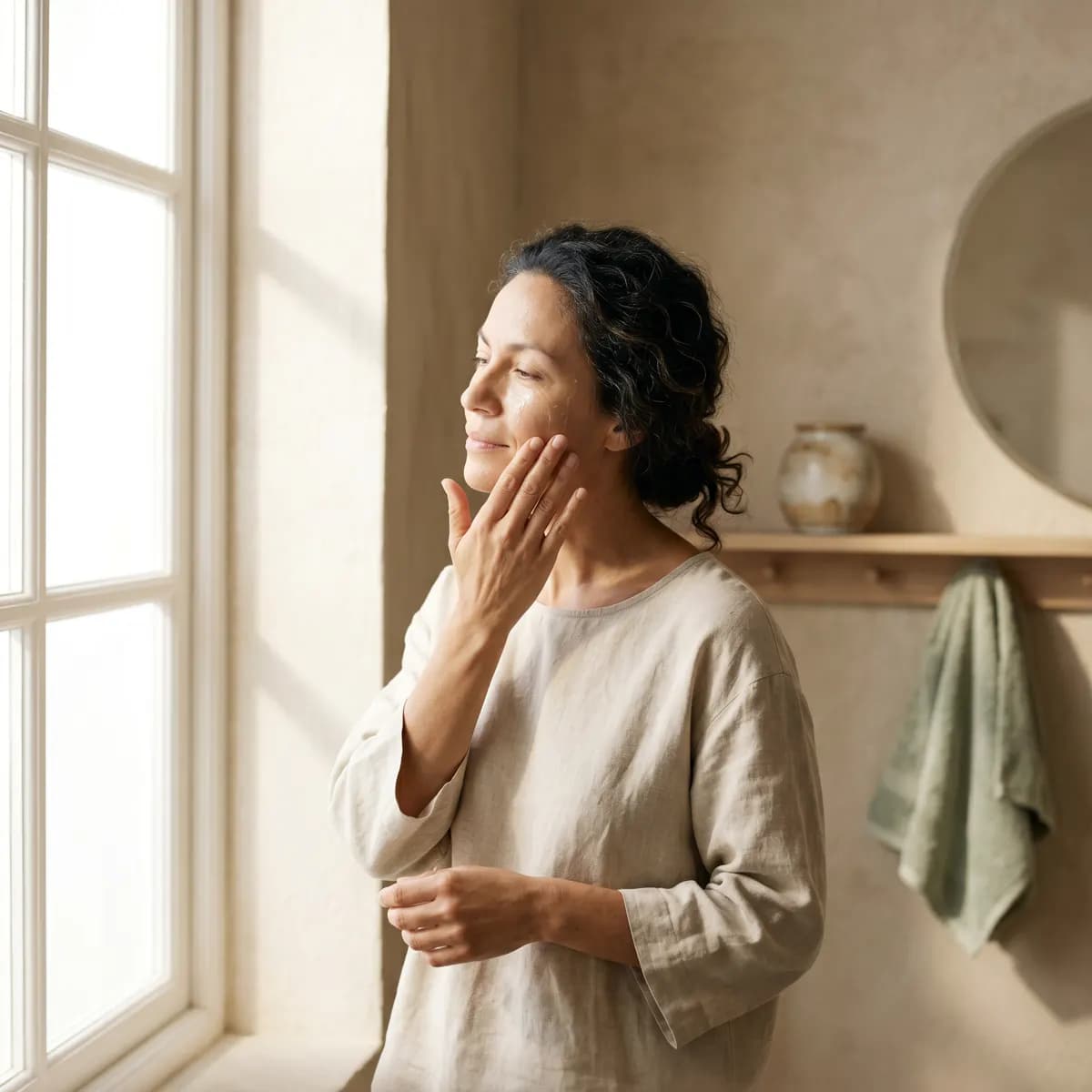
Too rarely – or too often
Do the analysis too rarely and you miss the link between what you changed and how the skin responded. Do it every day and you react to noise – skin naturally varies with sleep, light and hydration. The key is an interval where real changes have time to show.
Recommended interval
Baseline first
Do your first analysis as a starting point. Save the result – it's the reference you compare against.
Every 4–6 weeks
A good interval for most people. Skin has time to respond to changes in routine or lifestyle without getting lost in day-to-day variation.
At routine changes
Switching product or adding an active? Do an analysis before and one 4–6 weeks after to measure the effect.
At season changes
Skin changes between winter and summer. An analysis each season helps you adapt the routine.
Same conditions
Take the photo in the same light and time of day each time, so the comparison is fair.

Make measuring a habit
Since a skin analysis is free and takes under a minute, there's no barrier to doing it regularly. Set a monthly reminder and treat it as a quick health check for your skin.
And remember: if the values stay flat despite a good routine, look beyond the products. Sleep, stress, diet and movement affect the skin at least as much. The analysis shows what's happening – lifestyle often decides why.
Questions fréquentes
Can I do a skin analysis too often?
It's not harmful, but results just days apart are affected by natural daily variation. Every 4–6 weeks gives clearer trends.
Are my previous results saved?
With an account you can follow your skin journey over time and compare analyses directly against each other.
What do I do if the values get worse?
Back out your latest change. Often it's enough to step back one part of the routine or review sleep and stress.
Sources
- Byrd AL, Belkaid Y, Segre JA. The human skin microbiome. Nat Rev Microbiol 2018;16(3):143–155.
- Bíró T, Tóth BI, Haskó G, Paus R, Pacher P. The endocannabinoid system of the skin in health and disease. Trends Pharmacol Sci 2009;30(8):411–420.
Article relu par Christopher Genberg, fondateur de 1753 SKINCARE.
Articles connexes
The basics
What is a skin analysis – and what can it actually reveal?
A skin analysis is a structured assessment of your skin's condition. It used to require a therapist ...
The basics
What is skin age – and how is it measured?
Skin age describes how old your skin looks biologically, regardless of how many years you've lived. ...
Équilibre Cutané
Système endocannabinoïde peau – pourquoi la peau veut se réguler seule
Ta peau n’est pas faite pour être bousculée en permanence. Elle possède son propre système de régula...
Skincare Cyclique
Cycle menstruel et peau – pourquoi une seule routine ne suffit pas
La peau ne vit pas en mode fixe, elle suit le corps. Pendant le cycle menstruel, les hormones bougen...
Peau Post Partum
Peau post partum – pourquoi elle change autant
Après une grossesse, la peau peut donner l’impression de ne plus parler le même langage. Chute hormo...
Ingrédient
cbd pour la peau – moins de bruit, plus d’équilibre
Le cbd pour la peau est intéressant parce qu’il ne cherche pas à forcer la peau à obéir. Il agit ave...